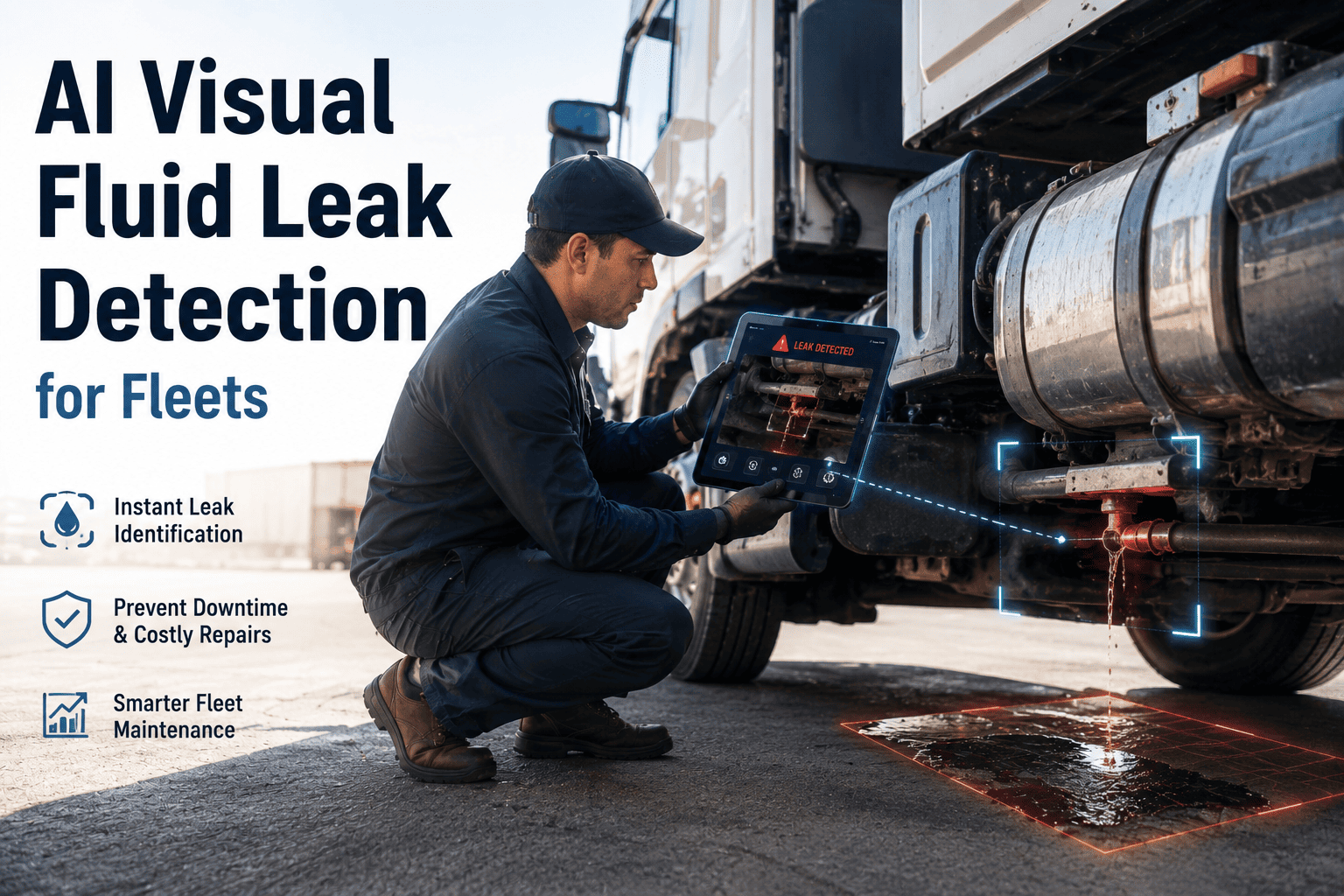
A fluid leak rarely announces itself. A hairline crack in a hydraulic line or a slow coolant weep looks identical to a wet patch of dirt to a driver doing a 5-minute walkaround, and by the time it is visible enough to notice, the damage is often already done. AI visual leak detection closes that gap by running the same camera view a driver sees through a model trained to recognize fluid signatures — color, sheen, and spread pattern — at a level of consistency no human eye maintains inspection after inspection. Fleets running mixed equipment with hydraulic lifts, PTOs, or aging engines see the fastest payback from catching leaks this early. OxMaint's leak detection workflow turns every flagged leak into a scheduled repair automatically.
70%
Of catastrophic hydraulic and engine failures are preceded by a detectable fluid leak weeks in advance
4 sec
Average time for an AI model to classify a leak from an inspection photo
$3,000+
Typical avoided repair cost when a hydraulic leak is caught before line failure
5 types
Of fluid signatures classified automatically, including transmission and power steering fluid
Know the Leak Before It Becomes a Breakdown
Coolant
Green, orange, or pink fluid with a sweet smell. Left unaddressed, it leads to overheating and head gasket failure.
Engine Oil
Dark amber to black, slick to the touch. Slow leaks often go unnoticed until oil pressure drops and engine wear accelerates.
Hydraulic Fluid
Red or clear amber, found near lifts, PTOs, and dump mechanisms. A ruptured line under pressure can fail without warning.
Fuel
Clear to pale yellow with a strong odor, evaporates quickly. The highest-priority leak type due to fire risk.
Transmission Fluid
Bright red to brownish-red, found near the transmission housing. A steady leak signals a failing seal that worsens quickly under load.
Catch the Leak Before the Roadside Call
AI visual detection classifies fluid leaks from routine inspection photos
How AI Visual Leak Detection Works
1
Capture During Routine Inspection
The driver or technician photographs the undercarriage, engine bay, or lift area as part of the standard walkaround — no separate leak-check step required.
2
Visual Classification
The AI model identifies fluid color, sheen, and spread pattern to classify the leak type and estimate severity from the image alone.
3
Severity Prioritization
Fuel and hydraulic leaks route to the top of the queue automatically, while minor seepage gets logged for the next scheduled service.
4
Work Order Creation
A classified, photo-documented work order is created in the maintenance system, ready for a technician before the vehicle leaves the yard.
5
Trend Tracking Per Vehicle
Recurring leak locations on the same vehicle are tracked over time, surfacing chronic problem areas that a single inspection would never reveal on its own.
Manual Walkaround vs. AI Visual Detection
Turn Every Walkaround Into a Leak Check
OxMaint classifies leaks from the photos your team already takes and builds the work order automatically.
70%
of major failures show an earlier leak signal
4 sec
average classification time per photo
Auto
work order generation on flagged leaks
5 fluids
classified from a single inspection photo set
Our lift trucks had hydraulic seepage nobody flagged because it looked like normal grime. Once we started running inspection photos through leak detection, we caught three lines close to failure before they ever ruptured on the job.
— Maintenance Supervisor, construction equipment fleet
Where Leaks Hide Longest
Not every leak location gets the same attention during a routine walkaround. Undercarriage lines, the underside of a lift cylinder, and the back of a PTO housing are rarely photographed at an angle that reveals a slow weep, which is exactly why these spots account for a disproportionate share of leaks caught too late. Prompting a specific photo angle at these points during inspection closes most of that blind spot without adding meaningful time to the walkaround.
Frequently Asked Questions
Do we need special cameras for AI leak detection?
No. Standard phone photos taken during a routine walkaround are enough for the model to classify most leaks accurately.
Can it tell the difference between a leak and a water puddle?
Yes, the model is trained on fluid color and sheen characteristics specifically, which distinguishes fuel, oil, coolant, and hydraulic fluid from water or dirt.
How are severity levels decided?
Fluid type, spread size, and location combine to set a priority score, with fuel and hydraulic leaks always ranked highest by default regardless of how small the visible spread appears.
Does this integrate with our existing maintenance software?
How do we get started?
Upload a batch of recent inspection photos on a call and see classification results live —
book a demo to walk through it.
Stop Leaks Before They Stop a Vehicle
Turn your existing inspection photos into an automatic leak detection layer.