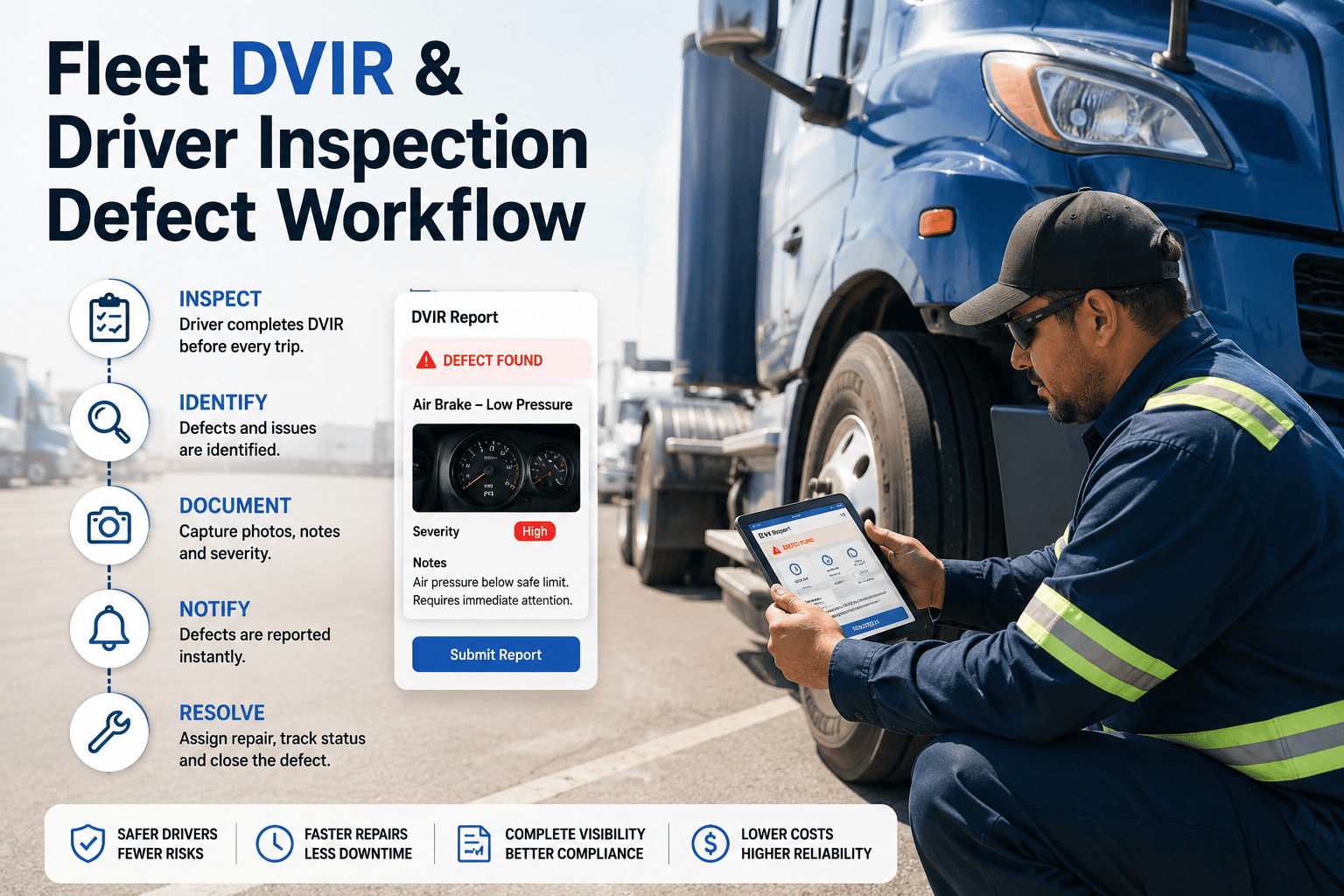
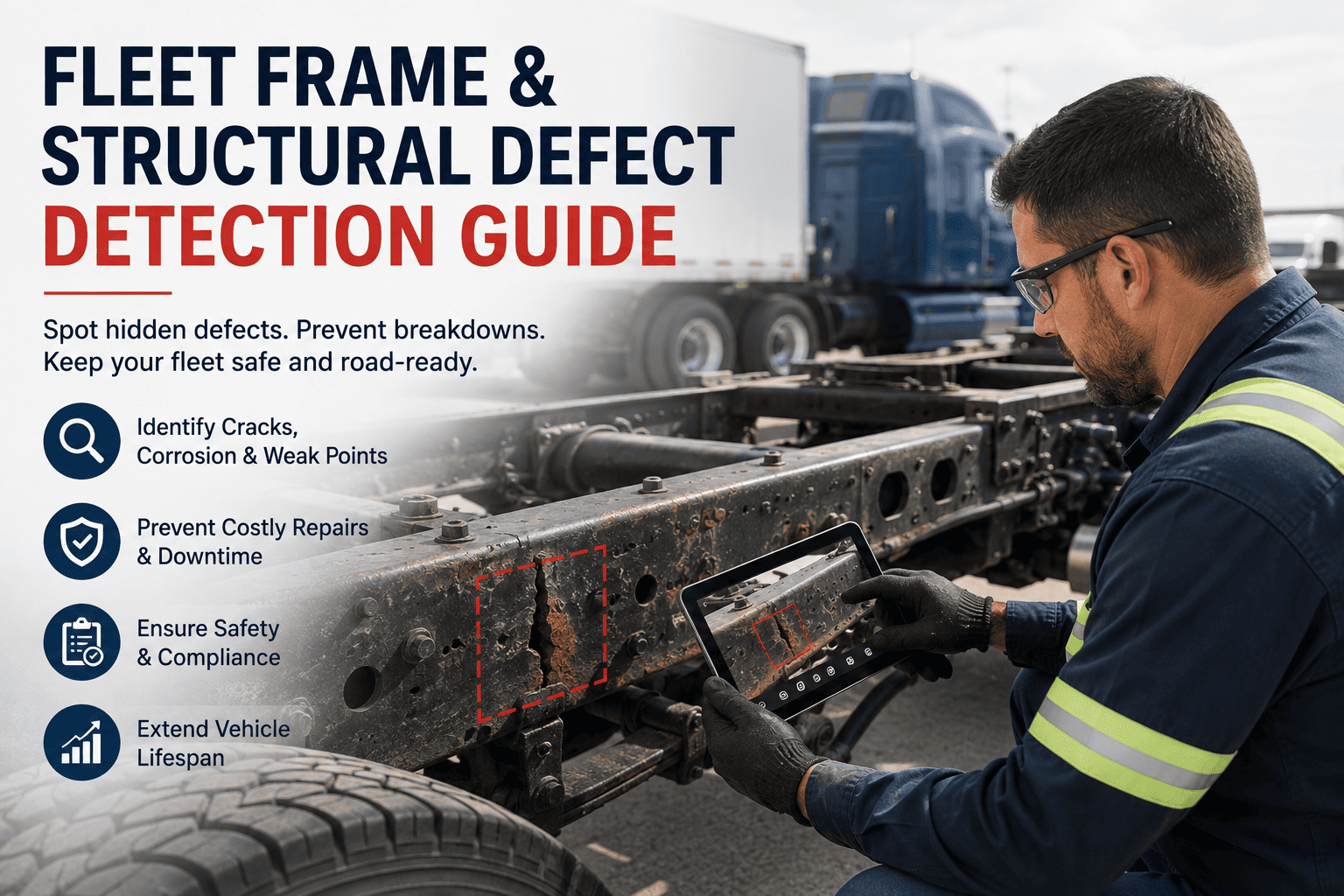
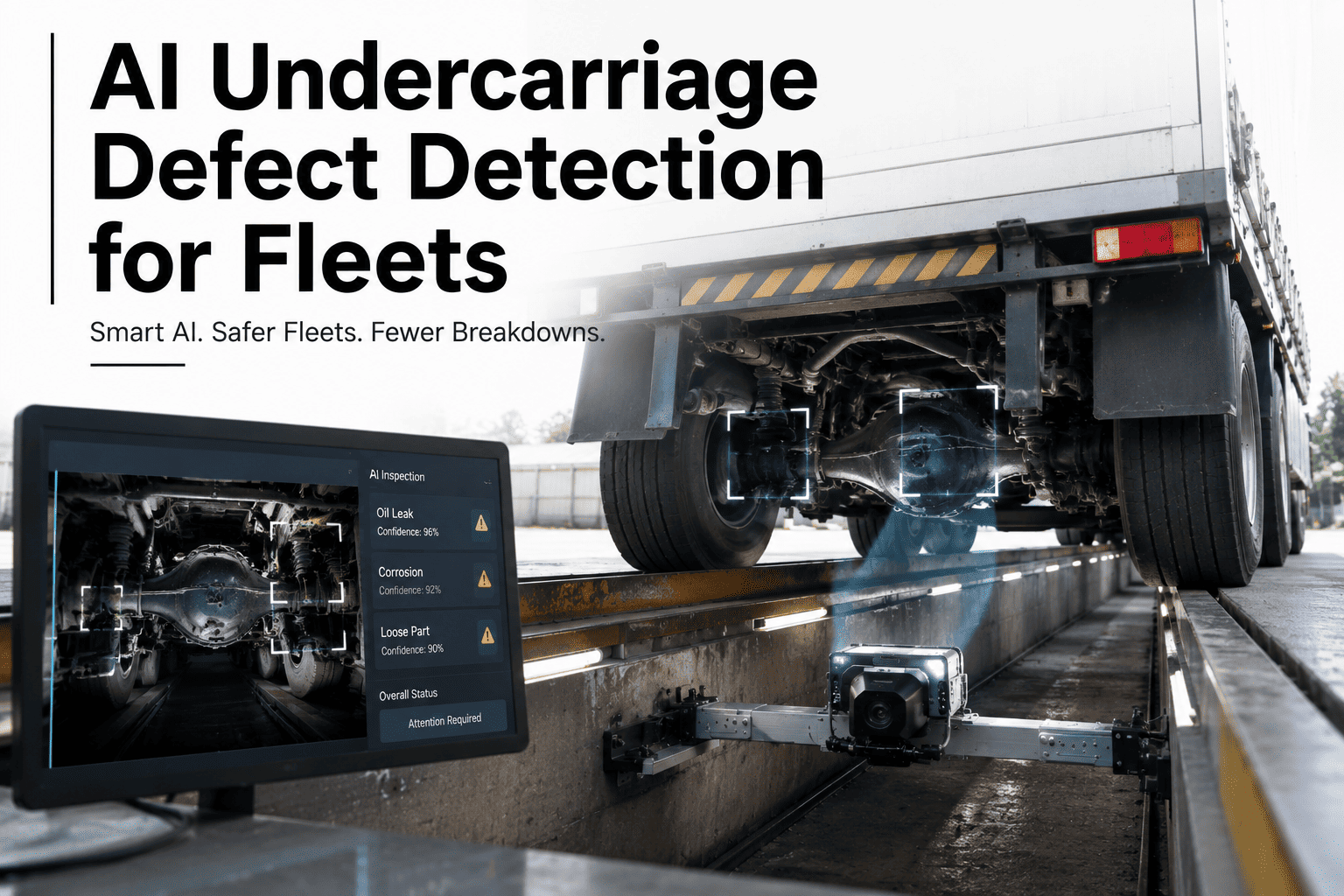
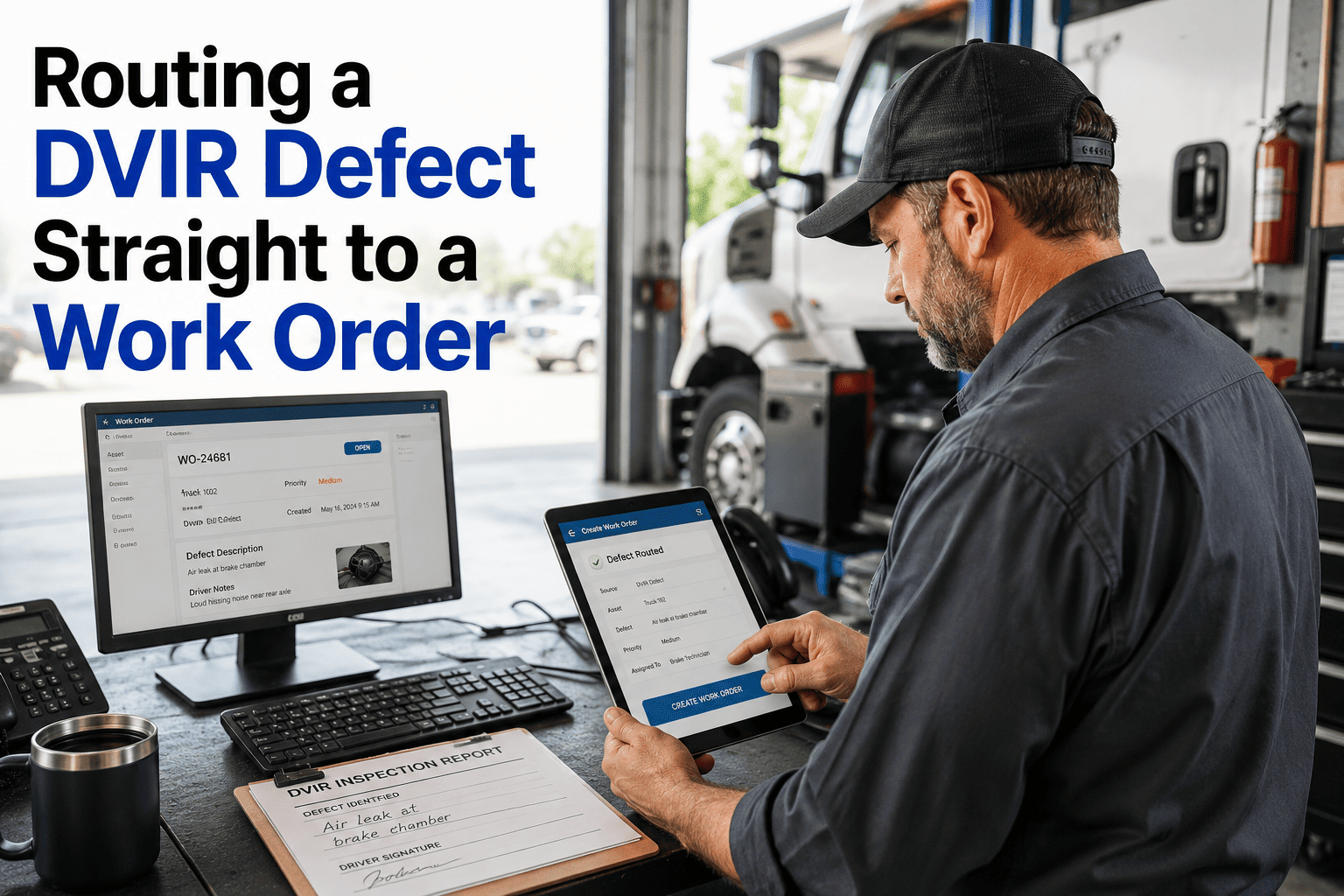
AI defect-to-work-order automation is the 2026 benchmark for fleet maintenance: a defect is detected, a work order is created, and no one touches a keyboard. Closed-loop fleet inspection closes the gap between AI defect detection and completed repair — automatically generating, prioritizing, and verifying work orders inside your CMMS so nothing falls through the cracks. Fleets that build this loop cut defect-to-repair cycle time by 40–70% and eliminate the paper-and-spreadsheet drag that lets minor defects become roadside failures. OxMaint turns AI inspection output into scheduled, completed maintenance work — see it on your assets with a Start Free Trial or book a demo today.
CLOSED-LOOP FLEET MAINTENANCE
What happens to a defect between detection and repair?
For most fleets the answer is: someone writes it on paper, someone else types it into a spreadsheet, and a third person forgets to order the part. AI defect-to-work-order automation kills that chain — defect detected, work order created, prioritized, assigned, verified. No manual entry. No lost tickets. No roadside surprises.
73%
of detected defects never become a work order within 72 hours when the loop is manual
THE BROKEN LOOP
Why Most Fleet AI Inspection Projects Stall at Detection
Fleets spend $15K–$80K on AI inspection cameras and analytics, then watch the output die in a PDF report no one actions. The problem isn't detection accuracy — it's the broken handoff between the AI layer and the CMMS layer where work actually gets done.
01
Detection without routing
AI flags a cracked brake pad. The alert lands in a dashboard. No one owns it. The truck rolls for another 11 days until the next scheduled PM — or until it doesn't stop in time.
02
Manual work order creation
A technician reads the defect report, opens the CMMS, types the work order, attaches a photo, assigns priority. At 4 minutes per defect and 40 defects per week, that's 2.7 hours/week of pure data entry — and 1 in 6 tickets has a typo in the asset ID.
03
No verification loop
The work order is closed but no one confirms the defect was actually repaired. The AI re-flags it next inspection cycle. The same brake pad shows up in three consecutive reports — each time as a "new" defect.
04
Compliance blind spots
FMCSA and DOT audits demand a defensible chain: defect found, work order created, repair completed, verified. A spreadsheet screenshot doesn't survive an audit. Fleets without a closed loop pay $3K–$12K per violation and face CSA score penalties that drive up insurance premiums.
BUILD THE LOOP
How to Build a Closed-Loop Fleet Defect-to-Repair Workflow
A true closed loop has five stages, each triggering the next automatically. Here is the step-by-step architecture that turns AI inspection data into completed, verified maintenance work.
STEP 01 · DETECT
AI inspection captures the defect
Drive-through cameras, undercarriage scanners, or handheld AI inspection tools capture images as the vehicle enters or exits the yard. The AI classifies the defect type (tire wear, brake issue, light failure, body damage, fluid leak), assigns severity (critical / major / minor), and tags the asset by VIN or unit number. Detection-to-classification should take under 8 seconds — if it's slower, the vehicle is gone before the system can act.
STEP 02 · CREATE
Work order auto-generated in the CMMS
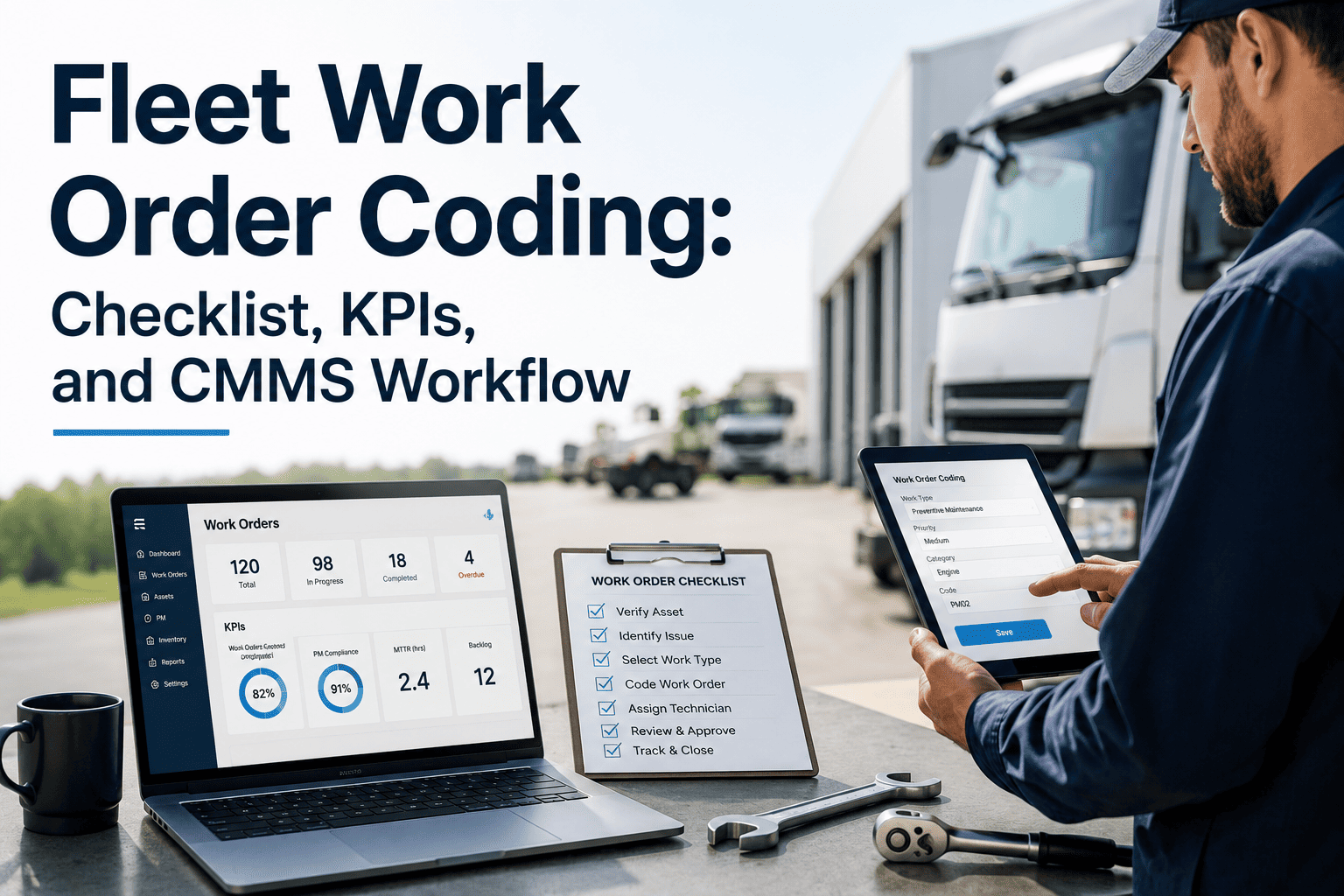
The defect payload — asset ID, defect type, severity, photo, timestamp, location — is pushed via API directly into OxMaint. A work order is created instantly with a standardized title, pre-filled task checklist, required parts list, and priority level mapped to your maintenance policy. No technician types a word. This is where most "AI inspection" projects fail: they detect but never create the work order inside the system of record.
STEP 03 · PRIORITIZE & ASSIGN
Routing rules send the work order to the right bay
Critical defects (out-of-service criteria) trigger a hold on the vehicle and route to the next available bay with a 2-hour SLA. Major defects queue for the next PM window. Minor defects batch into a deferred-work list reviewed weekly. Assignment considers technician skill, parts availability, and bay scheduling — automatically, based on rules you configure once.
STEP 04 · REPAIR
Technician completes the work with full context
The technician opens the work order on a tablet or phone and sees the defect photo, AI classification, parts needed, and repair procedure. They document the fix with before/after photos, log labor hours, and close the ticket. Parts are auto-deducted from inventory. The repair record is timestamped and linked to the asset's full maintenance history for FMCSA compliance.
STEP 05 · VERIFY & CLOSE
AI confirms the defect is gone — the loop is closed
On the next inspection cycle, the AI specifically checks whether the previously flagged defect still exists. If clear, the work order is verified-closed with a clean image. If still present, the original work order is automatically reopened and escalated — preventing the "fixed but never verified" failure that costs fleets $8K–$25K/year in repeat repairs on the same asset.
BEFORE VS AFTER
Manual Defect Handling vs AI Defect-to-Work-Order Automation
The difference between a semi-automated inspection process and a true closed loop is not incremental — it's the difference between a defect report that sits in an inbox and a work order that's already assigned before the truck parks.
| Dimension |
Manual / Semi-Automated |
Closed-Loop AI Automation (OxMaint) |
| Time from defect to work order |
4–72 hours (depends on who reads the report) |
< 30 seconds — auto-created on detection |
| Data entry effort |
2.5–4 hrs/week of technician typing |
Zero — API push, no manual entry |
| Defect-to-repair cycle time |
6–18 days average for non-critical defects |
1–4 days — prioritized routing, parts pre-staged |
| Defects that become work orders |
55–70% (rest lost in reports and emails) |
100% — every flagged defect generates a ticket |
| Repair verification |
None — closed work orders are trusted |
AI re-inspection confirms defect is resolved |
| FMCSA / DOT audit readiness |
Paper logs, screenshots, gaps in chain |
Full digital chain: detect → WO → repair → verify |
| Repeat defects on same asset |
12–20% of defects recur within 90 days |
< 3% — verification catches incomplete repairs |
Stop detecting defects you never repair.
See how OxMaint closes the loop from AI inspection to verified work order in under 30 seconds — book a 30-minute demo on your fleet data.
HOW OXMAINT HELPS
How OxMaint Closes the AI Defect-to-Work-Order Loop
OxMaint is built to be the CMMS side of the closed loop — the system of record where AI defects become work orders, work orders become completed repairs, and repairs become verified, auditable maintenance history.
Automated Work Order Creation
OxMaint ingests AI inspection payloads via API and instantly generates structured work orders — title, checklist, parts, priority, asset — with zero manual entry. Cuts defect-to-WO time from hours to under 30 seconds.
Cut admin time 80%
Priority Routing & SLA Enforcement
Severity-based rules route critical defects to the next available bay with automatic vehicle holds, while minor defects batch into deferred work. SLAs are enforced — not suggested — so nothing ages silently.
Eliminate missed SLAs
AI Verification on Re-Inspection
When the AI scanner next inspects the asset, OxMaint checks whether the flagged defect persists. If it does, the original work order auto-reopens and escalates. If clear, the ticket is verified-closed with a clean image.
Repeat defects down 85%
FMCSA-Ready Audit Trail
Every defect, work order, repair, and verification is timestamped, photo-linked, and stored against the asset's lifecycle history. Export a full compliance chain in one click — no paper, no gaps, no scramble before a DOT audit.
Audit-ready in minutes
REAL-WORLD IMPACT
What a Closed-Loop Fleet Looks Like in Practice
A worked example shows why the loop matters. Consider a 220-vehicle regional fleet running drive-through AI inspection cameras at two yard exits, processing roughly 480 inspection events per week.
BEFORE — BROKEN LOOP
$184K
annual cost of defects detected but not actioned within 72 hours
- Average 47 defects/week flagged by AI; only 31 became work orders
- 16 defects/week lost in PDF reports, emails, and shift handoffs
- 14 repeat defects/quarter on assets "repaired" but never verified
- 2 DOT violations ($8,500 each) from un-repaired defects found during roadside inspection
- 3.2 hrs/week of technician time spent re-entering defect data into the CMMS
AFTER — OXMAINT CLOSED LOOP
$52K
annual cost after implementing OxMaint auto work order + verification
- 100% of flagged defects auto-generate a work order in under 30 seconds
- Zero defects lost in handoffs — API push eliminates the report-to-CMMS gap
- Repeat defects dropped to under 2/quarter — AI verification catches incomplete repairs
- Zero DOT violations in 12 months — full audit chain for every defect and repair
- 3.2 hrs/week of data entry eliminated — technicians spend time turning wrenches
FAQ
AI Defect-to-Work-Order Automation — Frequently Asked Questions
What is AI defect-to-work-order automation?
It's the automatic creation of a CMMS work order directly from an AI inspection result — no manual data entry. When the AI detects a defect (tire wear, brake issue, light failure), the defect data is pushed via API into the maintenance system, which generates a structured work order with asset ID, severity, photo, parts, and priority in under 30 seconds. OxMaint handles this end-to-end — you can see it live by booking a
demo with our team.
How does closed-loop fleet inspection differ from regular AI inspection?
Regular AI inspection stops at detection — it flags defects and produces a report. Closed-loop fleet inspection connects detection to action: the defect auto-generates a work order, gets routed to a bay, is repaired, and then is verified by AI on the next inspection cycle. The "closed loop" means every detected defect has a confirmed repair — not just a flag in a dashboard that someone may or may not read.
Can OxMaint integrate with our existing AI inspection cameras or scanners?
Yes. OxMaint accepts defect payloads via REST API from any AI inspection system — drive-through cameras, undercarriage scanners, handheld tablets, or drone-based exterior inspections. The API maps your AI vendor's defect classification to OxMaint work order templates, so the integration is configuration-driven, not a custom build. Most integrations are live in 2–4 weeks.
How long does it take to deploy a closed-loop defect-to-repair workflow?
A typical fleet of 100–300 vehicles goes live in 4–6 weeks: week 1–2 for API integration with your AI inspection system, week 3–4 for work order templates and routing rules, week 5–6 for technician training and pilot. OxMaint handles data migration from spreadsheets or legacy CMMS as part of onboarding — start a
free 14-day trial to test the workflow on your assets.
What ROI can a fleet expect from defect-to-work-order automation?
Fleets typically see 40–70% reduction in defect-to-repair cycle time, 80% reduction in manual data entry, and 85%+ drop in repeat defects — translating to $50K–$150K/year in savings for a 200-vehicle fleet (lost defect repairs, repeat labor, DOT violations, admin time). Most deployments pay back in under 90 days. The exact figure depends on your current defect volume, repair costs, and compliance exposure.
Close the loop on every defect.
Book a 30-minute demo and see OxMaint turn your AI inspection data into verified, completed repairs — automatically.
Free 14-day trial · No credit card