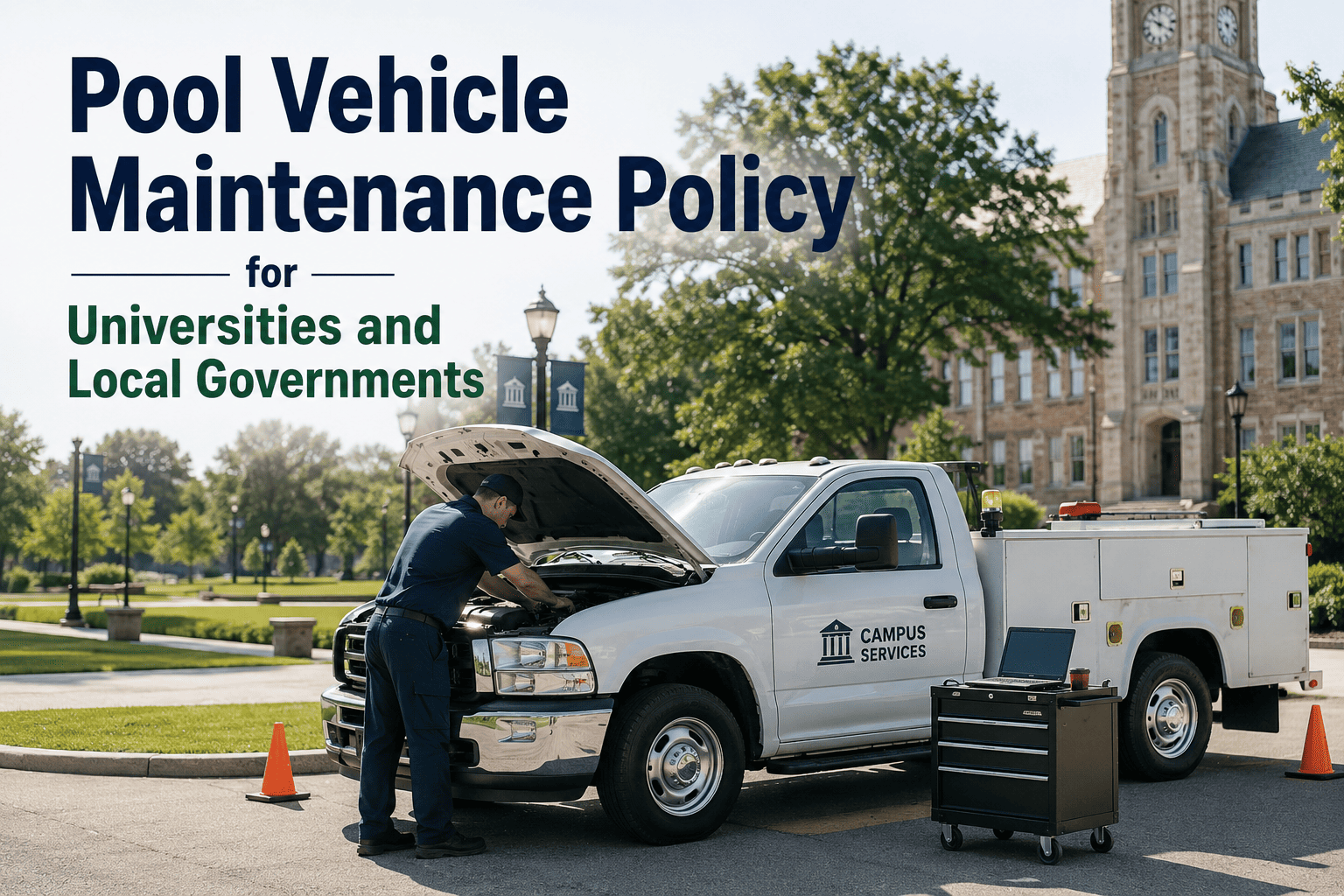
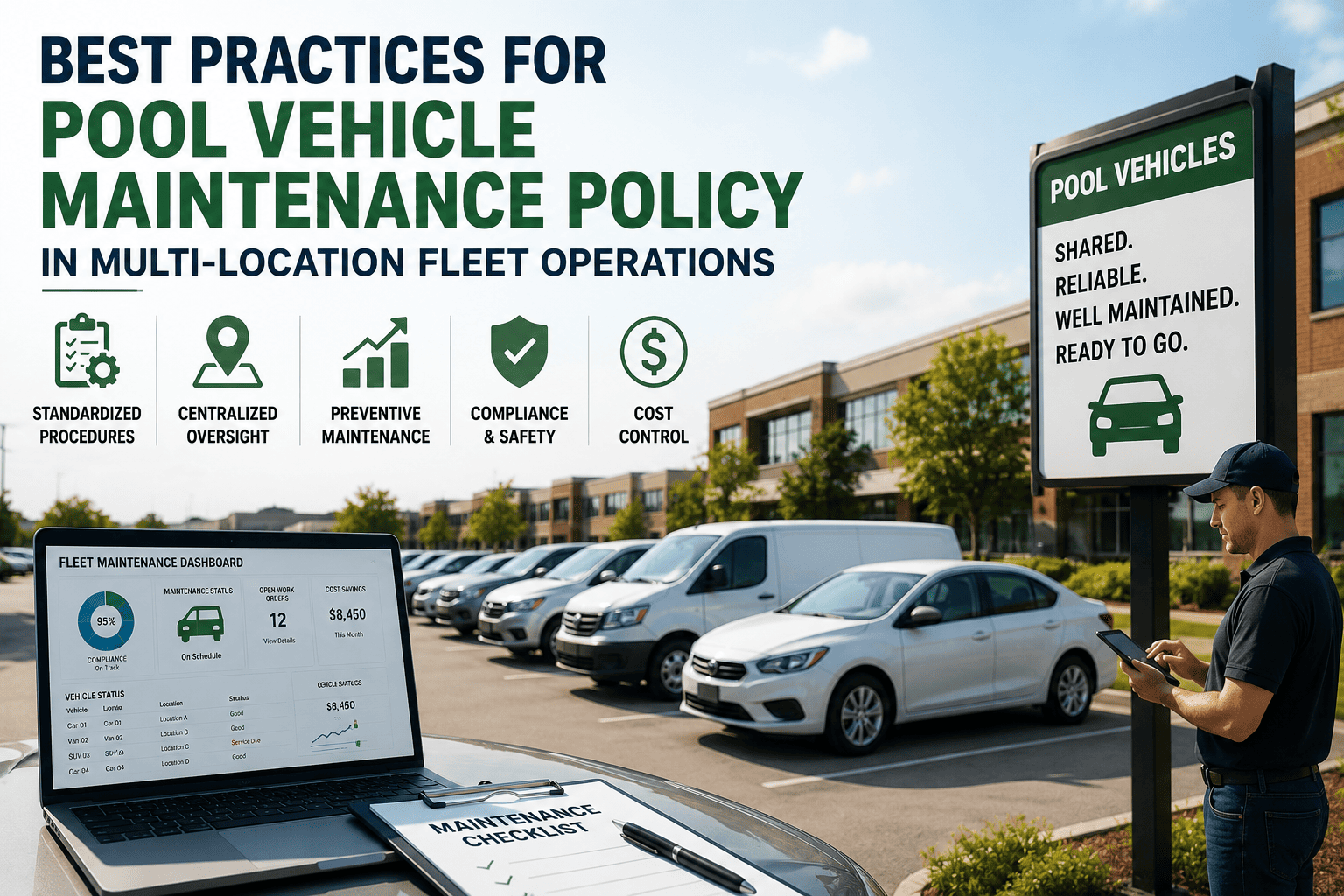
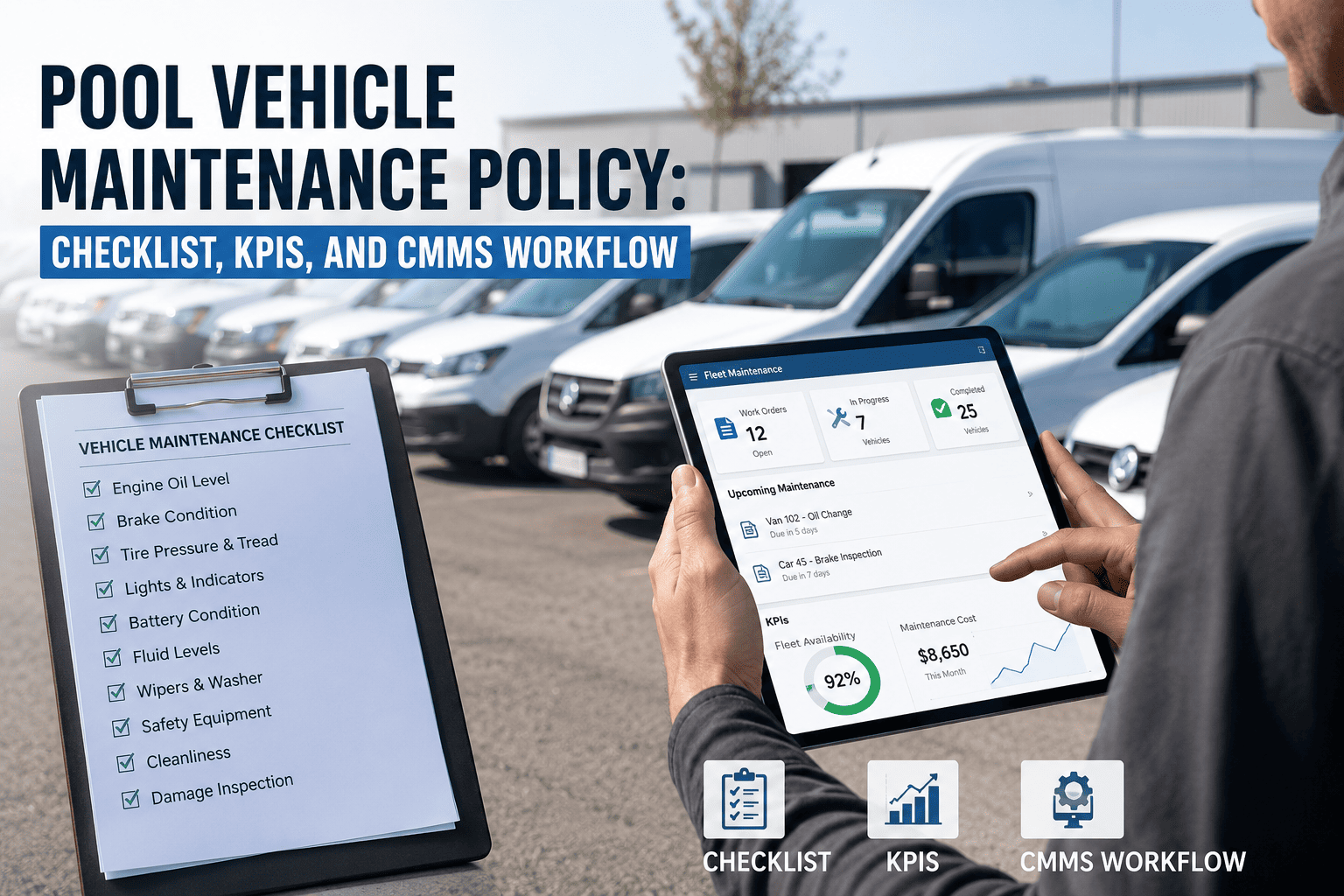
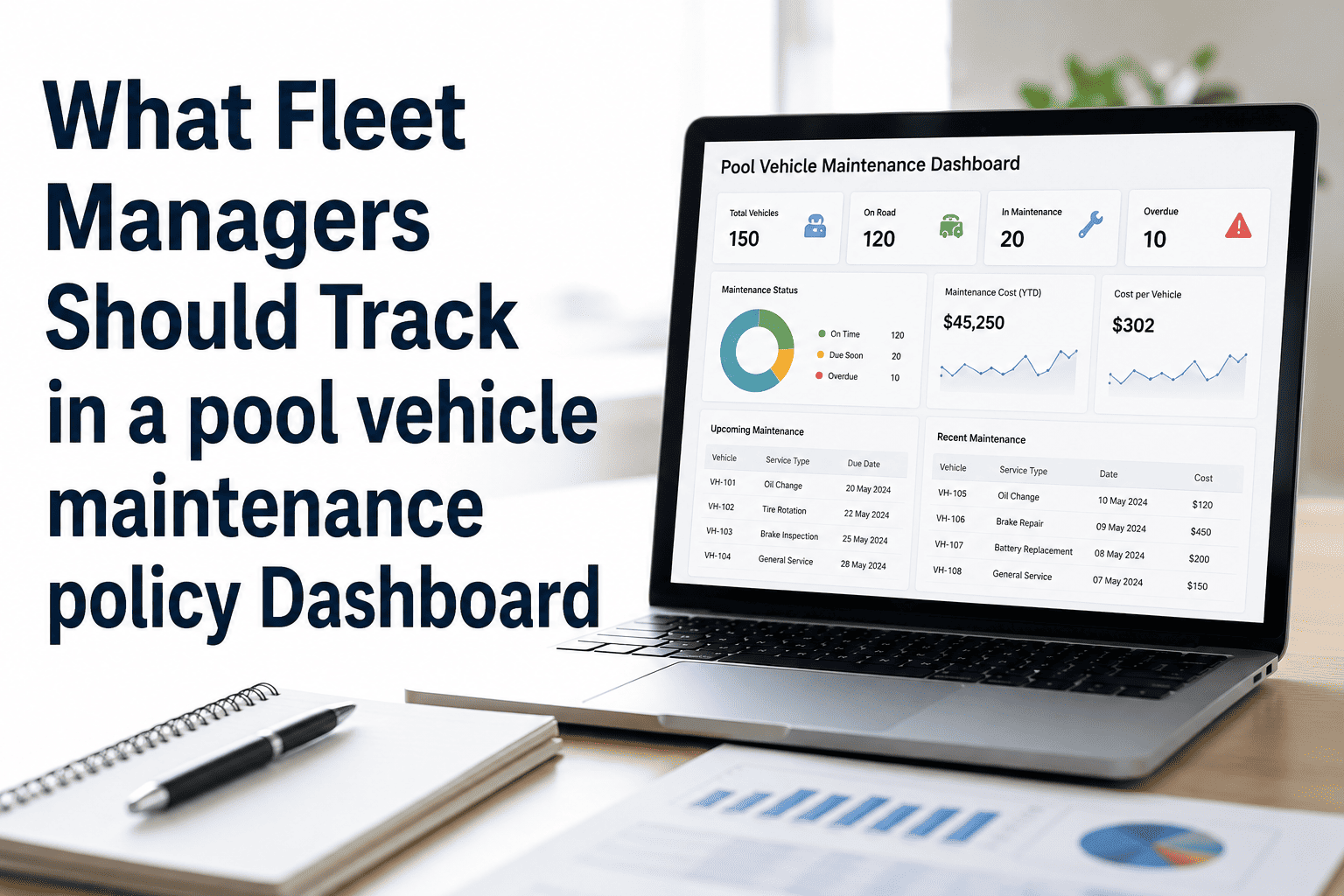
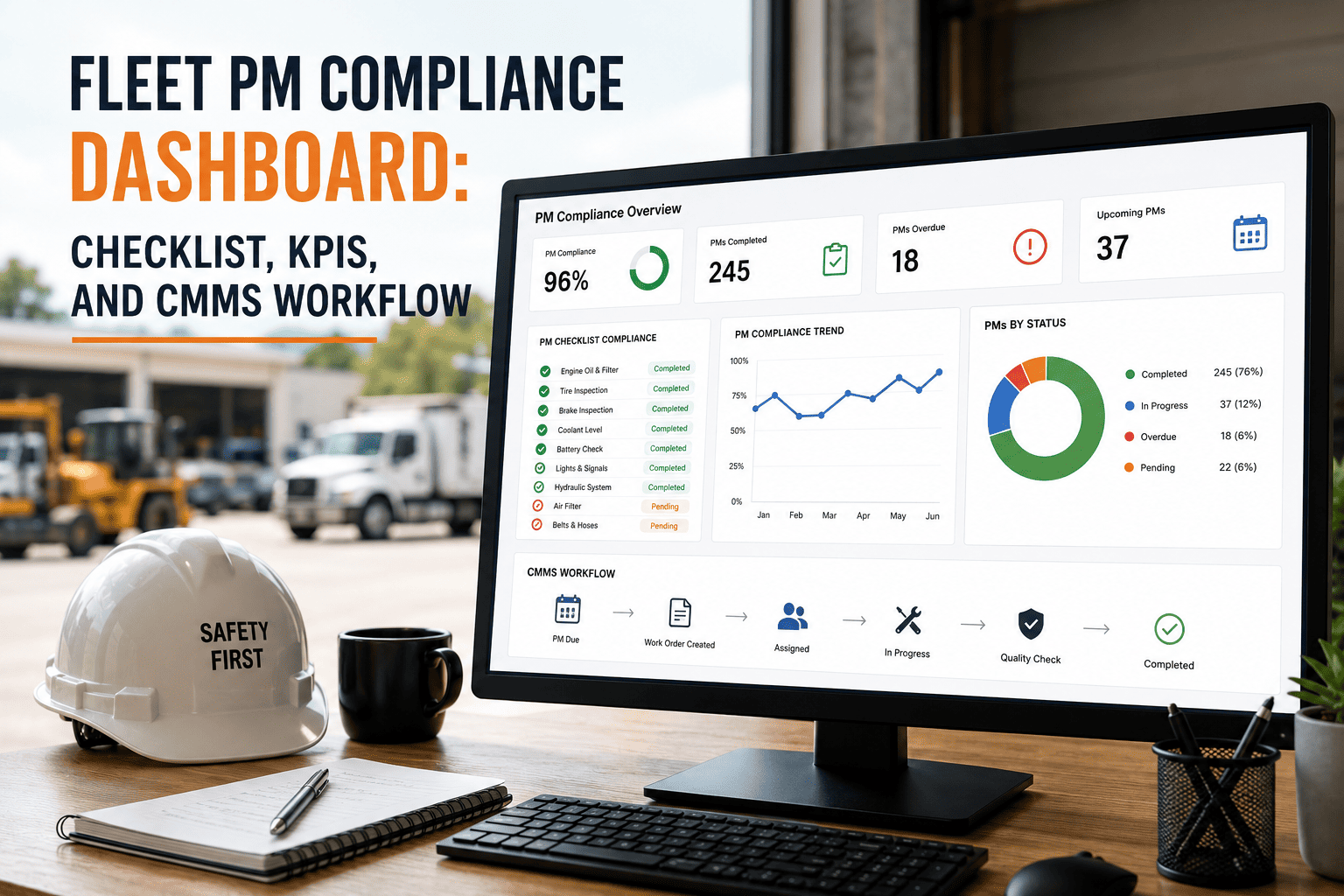
A vehicle sitting idle in a decentralized government or campus fleet still carries roughly $8,000–$12,000 a year in depreciation, insurance, maintenance, and storage — whether it moves or not. Centralizing those vehicles into a shared pool with a clear maintenance policy is how universities and local governments cut 20–35% of their fleet while improving driver access. But a pool without a maintenance policy simply spreads the neglect: vehicles miss service windows, coverage lapses, and downtime hits everyone at once. The policy is what turns a parking lot of shared cars into a reliable, right-sized fleet.
OxMaint · Pool Vehicle Maintenance Policy · Public Sector & Higher Ed
A shared vehicle pool only works when maintenance is owned centrally, scheduled proactively, and never left to whoever drove it last.
$8K–$12K
annual carrying cost per idle vehicle
20–35%
of fleet eliminated by pooling
24/7
driver access with centralized control
Why Pool Vehicles Need Their Own Maintenance Policy
A permanently assigned car has an owner who notices the warning light. A pool vehicle is everyone's and no one's — so responsibility must be written into policy, not assumed.
No Default Owner
When a dozen drivers share one vehicle, a rattle or dashboard light gets ignored by each of them in turn. Policy must name who owns the preventive schedule so issues are caught, not passed along.
Maintenance Means Work Stoppage
With a limited pool, pulling one vehicle for service can strand a department. A shared pool means fleet staff own scheduling so drivers never stop working when maintenance comes due.
Public Accountability
Government and university fleets answer to taxpayers, auditors, and boards. Every trip, odometer reading, and service record must be logged automatically for a complete, defensible audit trail.
Utilization Drives Right-Sizing
A policy that captures usage data reveals which vehicles are surplus. That data is what lets a county cut vehicles worth hundreds of thousands in avoided replacement and upkeep.
The Six Pillars of a Pool Vehicle Maintenance Policy
Build your policy on these six sections. Together they cover the full lifecycle from reservation to service to replacement.
I
Centralized Maintenance Ownership
Fleet staff — not drivers or departments — own the preventive maintenance schedule, coordinate garage work, authorize repairs, and document everything. Drivers report issues; they do not authorize their own repairs.
II
Preventive Schedules by Mileage and Time
Automated triggers based on mileage, time interval, or usage bring vehicles in before they miss a service window. Oil and fluids follow manufacturer intervals, with oil analysis backing any attempt to extend them.
III
Driver Reporting at Return
Every driver logs mileage, fuel, and any mechanical issue when returning the vehicle. A comments field on the return process catches small problems before they become expensive, and feeds them straight to fleet staff.
IV
Out-of-Rotation Handling
The system checks a vehicle out of the pool when it goes in for work and back in when complete — so reservations never land on a car that is in the shop, and availability stays honest.
V
Policy Acceptance Built Into Booking
Drivers accept the use-and-care policy before a reservation completes — covering licensure, insurance, safety training, idling limits, and personal-use prohibitions. Consent is captured with every trip.
VI
Lifecycle and Replacement Rules
Reassign high-mileage pool cars to lower-distance on-campus roles to extend useful life, and set data-driven replacement goals so aging vehicles are retired before repair costs overtake their value.
Run the Policy, Not Just the Document
OxMaint turns a written pool policy into an operating system: automated PM triggers, out-of-rotation control driver issue capture at return, and an audit trail on every trip and service to build your pool maintenance workflow or tailored to public-sector and campus fleets.
What a Well-Run Pool Policy Delivers
Universities and local governments that centralize maintenance under a clear policy consistently report the same set of gains.
Fewer Vehicles
Utilization data exposes surplus assets. One county cut 50 replacement-eligible vehicles and avoided roughly $800,000 in replacement cost alone, before ongoing maintenance savings.
Lower Cost Center
A central maintenance budget replaces scattered departmental spending, so each department pays only for actual use and the fleet negotiates service at pooled, discounted rates.
Less Downtime
Proactive PM scheduling and out-of-rotation control mean vehicles are serviced on time and drivers never wait on a car stuck in the shop unexpectedly.
Cleaner Audits
Automatic logging of trips, credentials, odometer readings, and service history produces the complete records that public-sector accountability demands — without manual entry.
Frequently Asked Questions
OxMaint · Pool Fleet · Universities & Local Governments · CMMS
A pool vehicle policy is only as good as the system that runs it. OxMaint enforces preventive schedules, controls out-of-rotation service, and logs every trip — so your shared fleet stays reliable, right-sized, and audit-ready.
Centralized maintenance ownership. Automated PM triggers. Driver issue capture. Full utilization and service audit trail across every site.