The stadium operations director opens Monday's energy report and discovers the facility consumed 2.3 million kWh over the weekend—for a single college football game. Field lighting ran 4 hours past the event, HVAC systems cooled empty concourse sections overnight, and 340 concession refrigeration units operated at full capacity despite only 60% being stocked. The energy bill hits $285,000 for 72 hours of operation, but without granular data governance, identifying which systems wasted power versus which performed efficiently remains impossible.
Stadiums represent some of the most energy-intensive facilities in commercial real estate—massive lighting arrays, climate control for 50,000+ seats, industrial kitchen equipment, broadcast infrastructure and irrigation systems that collectively consume more electricity in a single event than many office buildings use annually. Yet most stadium maintenance teams operate blind to real-time energy performance, discovering waste only when utility bills arrive weeks later.
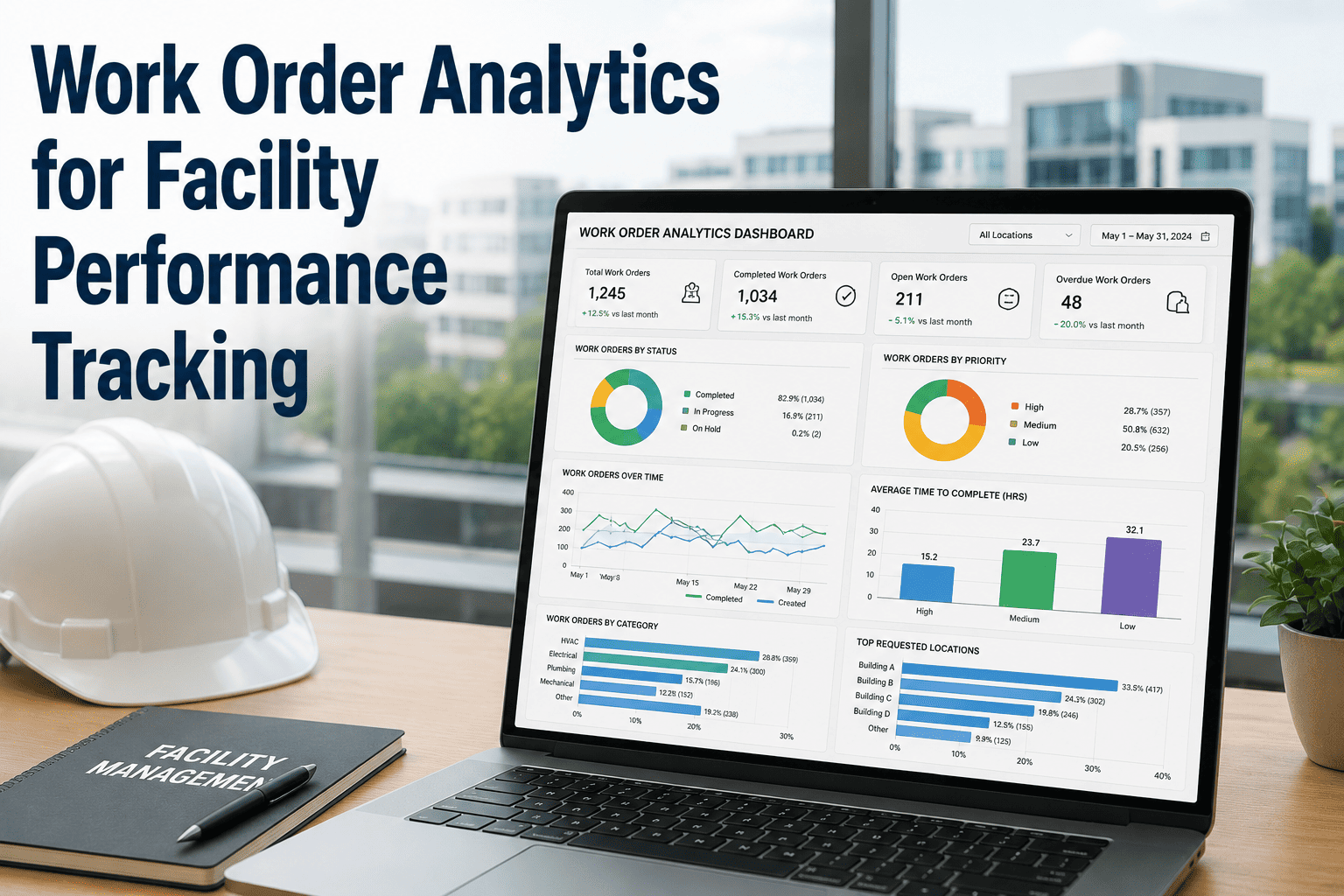
This playbook establishes CMMS data governance frameworks that transform stadium energy management from reactive bill-paying to proactive waste elimination, creating audit trail documentation that proves efficiency improvements and identifies optimization opportunities before costs accumulate. Stadiums implementing integrated maintenance software facility management with energy tracking achieve 20-35% reduction in energy waste while maintaining optimal conditions for athletes, fans, and broadcast requirements. Teams ready to connect maintenance to energy performance can sign up free to track equipment efficiency and energy consumption.
What if every piece of equipment reported its energy consumption in real-time, automatically triggering work orders when efficiency drops below threshold—before waste accumulates?
Where Stadiums Waste Energy
Stadiums waste energy differently than traditional commercial buildings—intermittent high-demand events followed by extended low-occupancy periods create unique optimization challenges. Understanding waste patterns by system enables targeted CMMS interventions.
| System | Energy Share | Common Waste Pattern | CMMS Solution |
|---|---|---|---|
| Field & Event Lighting | 35-45% | Lights at broadcast intensity for non-TV events; running hours past needed | Automated scheduling tied to event calendar; intensity presets per event type |
| HVAC & Climate Control | 25-35% | Entire facility conditioned when only sections occupied | Zone-based automation; occupancy-driven setpoints; PM for efficiency |
| Concession Equipment | 15-20% | All refrigeration/cooking runs regardless of which stands open | Asset tracking by location; equipment status tied to stand activation |
| Pumps & Irrigation | 5-10% | Irrigation on calendar regardless of weather; pump inefficiency | Weather integration; VFD monitoring; predictive maintenance on pumps |
Accelerate Facility Management Safety with Oxmaint CMMS
Energy waste and safety risks often share the same root cause—equipment operating outside optimal parameters. Overheating motors waste energy while creating fire hazards; malfunctioning HVAC affects both efficiency and air quality. CMMS data governance connects energy monitoring to safety protocols, creating work order automation that addresses both simultaneously.
Risk Scoring for Energy Waste Prioritization
Not all energy waste demands equal urgency. Risk scoring enables maintenance teams to prioritize interventions based on waste magnitude, safety implications, and correction complexity—ensuring limited resources address highest-impact opportunities first per facility management CMMS best practices.
| Priority | Score Range | Criteria | Response Time | Example |
|---|---|---|---|---|
| Critical | 85-100 | Waste exceeding $5,000/day OR safety system affected | Within 2 hours | Main chiller at 40% efficiency during sold-out event |
| High | 70-84 | Waste $1,000-5,000/day OR degradation trending | 24-48 hours | Concourse lighting running 6 hours past events |
| Moderate | 50-69 | Waste $200-1,000/day OR below baseline efficiency | Next PM cycle | AHU filters reducing airflow efficiency 15% |
| Low | 0-49 | Minor variance OR optimization opportunity | Quarterly review | LED retrofit opportunity in back-of-house |
Work Order Automation Flow
Manual energy monitoring fails at stadium scale—thousands of assets across hundreds of zones generating millions of data points per event. Work order automation transforms energy anomalies into actionable maintenance tasks without human interpretation delays.
AI analytics identify consumption exceeding baseline by 15-25% threshold
System correlates anomaly to specific equipment via asset tracking facility management
Automated ticket with risk score, location, equipment history, suggested action
Assignment based on skill match, location, priority—mobile notification with context
Stadium Zone Energy Management
Stadiums operate as collections of distinct zones with different energy profiles and occupancy patterns. Effective data governance segments energy tracking by zone, enabling targeted optimization without compromising areas where full capacity is required.
| Stadium Zone | Event Mode | Non-Event Mode | Savings Potential |
|---|---|---|---|
| Field/Playing Surface | 100% lighting, irrigation standby | Maintenance lighting only, scheduled irrigation | 60-80% reduction |
| Seating Bowl | Full HVAC, event lighting | Minimal circulation, security lighting | 70-85% reduction |
| Concourse & Concessions | Full operation, all equipment | Refrigeration standby, equipment off | 50-65% reduction |
| Premium Suites | Individual climate control | Setback temperatures, minimal ventilation | 40-55% reduction |
| Press/Broadcast | Full power, broadcast cooling | Equipment standby, base cooling | 55-70% reduction |
| Back-of-House | Operational support | Minimal staffing requirements | 30-45% reduction |
Predictive Maintenance for Energy Systems
Equipment efficiency degrades gradually—a chiller losing 2% efficiency monthly doesn't trigger alarms until it's wasting 25%+ of input energy. Predictive maintenance facility management identifies degradation trends before they impact performance, scheduling interventions during non-event windows.
| System | Monitored Parameters | Failure Warning | Energy Impact Prevented |
|---|---|---|---|
| Chillers & Cooling | COP trending, refrigerant pressure, condenser approach temp | 4-8 weeks advance | Prevents 15-30% efficiency loss |
| Lighting Systems | Driver efficiency, lumen depreciation, thermal cycling | 2-4 weeks advance | Prevents 10-20% over-consumption |
| Motors & Pumps | Vibration signature, current draw, bearing temperature | 6-12 weeks advance | Prevents 20-40% efficiency loss |
| Air Handling Units | Static pressure, fan efficiency, coil delta-T | 3-6 weeks advance | Prevents 10-25% airflow waste |
Designing a Data-Driven Program — A Facility Management Playbook with KPIs
Implementation Roadmap
Document current consumption by zone, system, and operational mode; identify top 10 waste sources
Add energy attributes to asset tracking; link equipment to meters and zones
Configure work order triggers for energy anomalies; define risk scoring thresholds
Enable AI analytics on critical systems; establish efficiency degradation alerts
Train maintenance staff on energy-aware work orders; establish response protocols
Standardize framework across venue portfolio; enable comparative benchmarking
ROI Summary — 65,000-Seat Stadium
Stop discovering energy waste on utility bills. Start eliminating it in real-time with CMMS-driven data governance.