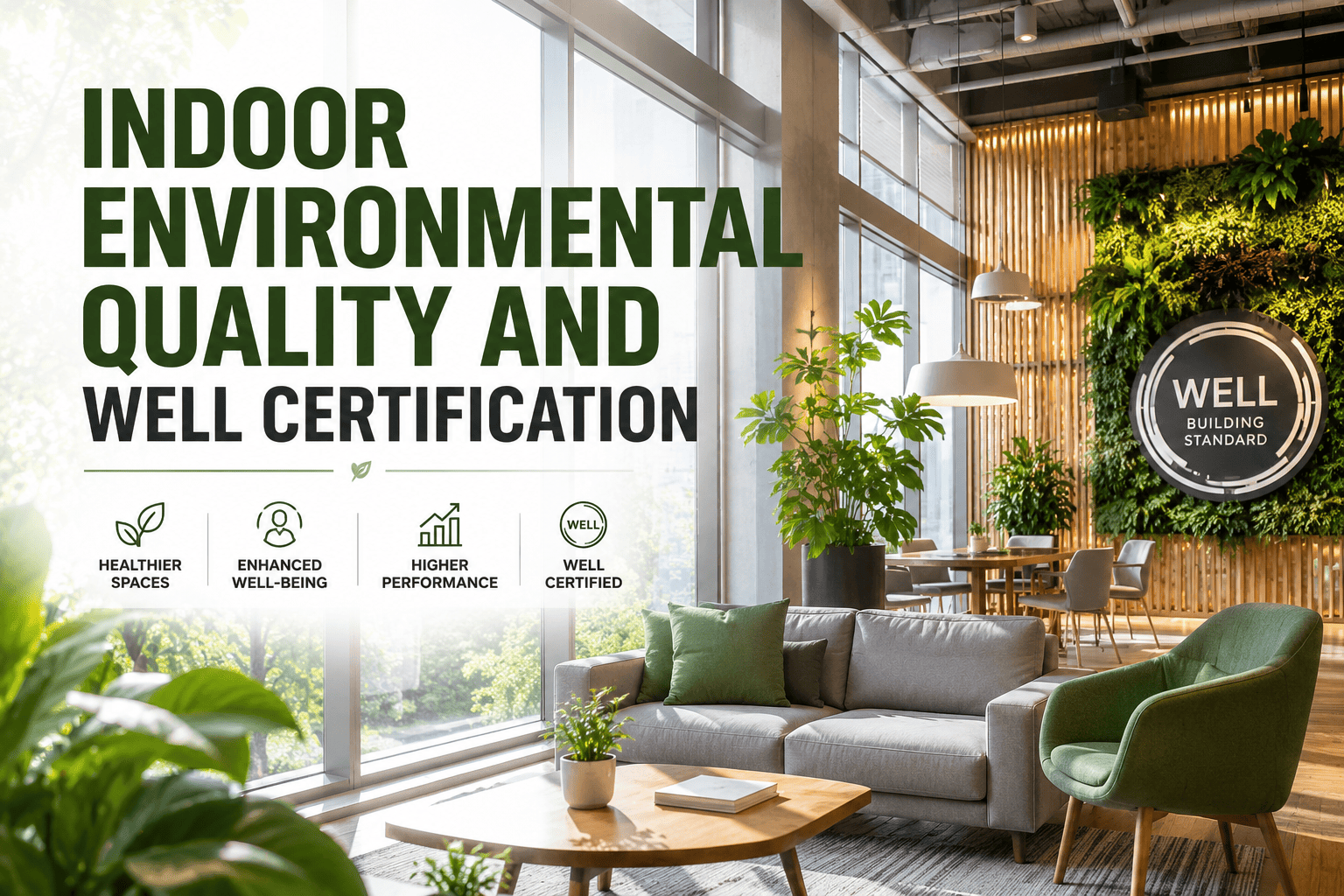
Indoor environmental quality and WELL certification place occupant health, comfort, and performance directly within the facility management operating scope — IEQ is no longer a passive outcome but an actively measured, published, and audited performance metric. The WELL building standard FM program demands continuous IEQ monitoring facility management for air, water, light, and thermal comfort, tying these metrics to verifiable wellbeing claims that leasing teams, investors, and occupants now expect. Facility teams that manage indoor environment quality building performance through manual logs, disconnected sensors, or spreadsheet trackers face escalating audit failure rates, costly recertification gaps, and reactive maintenance workflows that degrade the indoor environment FM experience. OxMaint solves this by unifying IEQ management facility workflows — from sensor-triggered work orders to preventive maintenance scheduling and audit-ready documentation — in one AI-powered CMMS, so your team can maintain a WELL certified building FM standard without administrative overload. Start Free Trial to see how quickly your IEQ data becomes automated maintenance action.
Can your FM team prove the indoor environmental quality your WELL certification promises?
WELL recertification isn't a one-time event — it requires continuous, documented IEQ performance across air, water, light, and thermal comfort. Manual tracking fails. OxMaint turns every IEQ sensor reading and preventive task into audit-ready evidence, automatically.
What the WELL building standard demands from facility management
The WELL building standard v2 organizes IEQ into ten concept categories — Air, Water, Light, Thermal Comfort, Sound, Materials, Mind, Community, Movement, and Nourishment — and facility teams own the operational delivery of at least six of them. Here is what each core IEQ domain requires your team to measure, maintain, and document.
Ventilation & Filtration
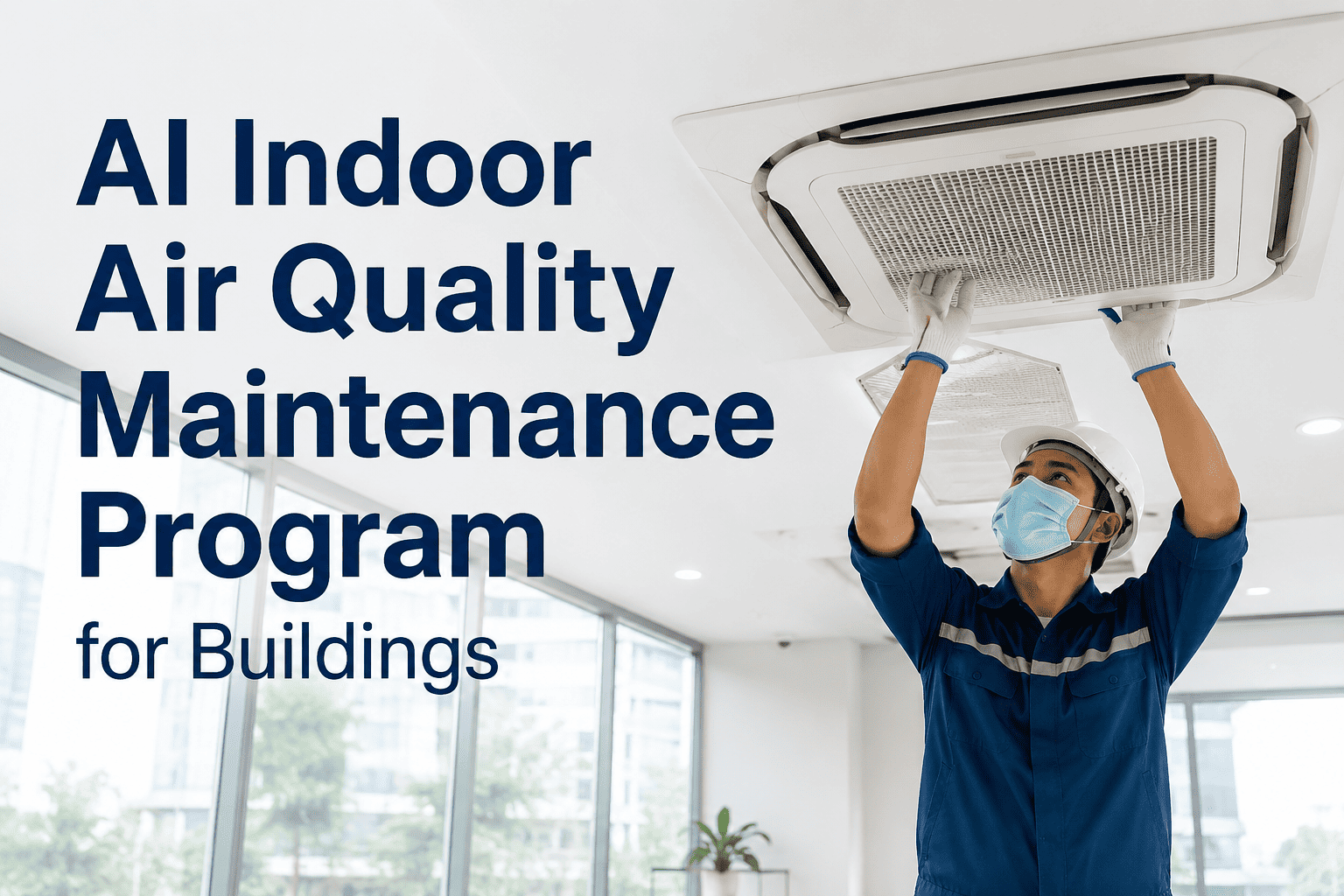
MERV-13+ filter replacement cycles, CO₂ below 800 ppm, VOC sensors, and routine duct inspection. Every filter change and sensor calibration must be logged with timestamps and technician attribution.
Water Quality & Treatment
Quarterly Legionella testing, monthly dispense-point checks, and continuous treatment-system maintenance. WELL requires documented corrective action within 24 hours of any threshold breach.
Circadian & Task Lighting
Automated dimming schedules, lamp degradation tracking, and lux-level audits at occupied workstations. Failed lamps and drifting sensors must trigger work orders before occupant complaints arise.
Thermal Comfort Control
Operative temperature within ASHRAE-55 bands, humidity 30–60%, and quarterly occupant surveys. HVAC PM schedules must align with seasonal load shifts and be verifiable for every air-handler unit.
Acoustic Comfort
Background noise below NC-40 in open offices, mechanical-equipment vibration monitoring, and scheduled sound-attenuation inspections on AHUs, pumps, and chillers.
Materials & Source Control
Asbestos and lead remediation records, HVAC coil-cleaning logs, and entryway-system maintenance. WELL auditors want a 12-month trail of every material-related FM intervention.
The real cost of manual IEQ tracking for WELL certification FM
A 250,000-sq-ft commercial office pursuing WELL building certification typically manages 40–60 IEQ-related preventive tasks per month, plus 10–15 reactive sensor-triggered work orders. When those tasks live in spreadsheets, emails, or paper logs, the cost compounds quickly.
"We failed our WELL air-feature re-verification because three months of MERV-13 filter changes were logged on paper that nobody could find. The recertification delay cost us six weeks of leasing at a premium rate — a $90K revenue hit."
— Facilities Director, Class-A commercial portfolio
A step-by-step IEQ management facility program for WELL certification
Building a WELL-certified building FM program is not about adding tasks — it is about structuring existing maintenance workflows so every action generates IEQ evidence. Here is a five-step timeline your team can execute in a single quarter.
Asset & Sensor Mapping
Inventory every IEQ-critical asset — AHUs, filtration banks, water-treatment skids, lighting controls, IAQ sensors — into OxMaint with location, model, criticality, and WELL feature mapping. This creates the single source of truth your auditors need.
PM Schedule Alignment
Map each WELL feature requirement to a preventive maintenance task with the correct frequency — quarterly Legionella testing, semi-annual MERV-13 replacement, monthly lux audits. OxMaint auto-generates the full year's work-order calendar.
Sensor-Triggered Work Orders
Connect IEQ sensor data (CO₂, VOC, humidity, lux) to OxMaint's work-order engine. When a reading breaches the WELL threshold, a corrective work order generates automatically — assigned, prioritized, and documented within minutes, not hours.
Audit-Ready Documentation
Every completed work order captures technician name, timestamp, before/after readings, parts consumed, and photo evidence. OxMaint's analytics dashboard rolls this into a WELL-feature compliance view — no manual report assembly required.
Predictive IEQ Optimization
After 90 days of data, OxMaint's AI identifies IEQ degradation patterns — a filter bank trending toward pressure-drop failure, a coil drifting toward microbial-growth temperature — and recommends intervention before the sensor ever breaches threshold.
WELL feature requirements vs. FM operational responsibilities
This matrix maps the highest-weighted WELL v2 features to the specific FM maintenance tasks, monitoring frequency, and documentation evidence required to maintain certification. Use it as a gap-analysis checklist against your current program.
| WELL Feature | IEQ Parameter | FM Maintenance Task | Frequency | Evidence Required |
|---|---|---|---|---|
| A01 Fundamental Air Quality | PM2.5 < 15 μg/m³ | Replace MERV-13 filters; inspect duct seals | Every 6 months | Work order, filter batch #, photo of old/new filter |
| A05 Enhanced Air Quality | CO₂ < 800 ppm | Calibrate CO₂ sensors; verify OA dampers | Quarterly | Calibration cert, sensor log, damper position record |
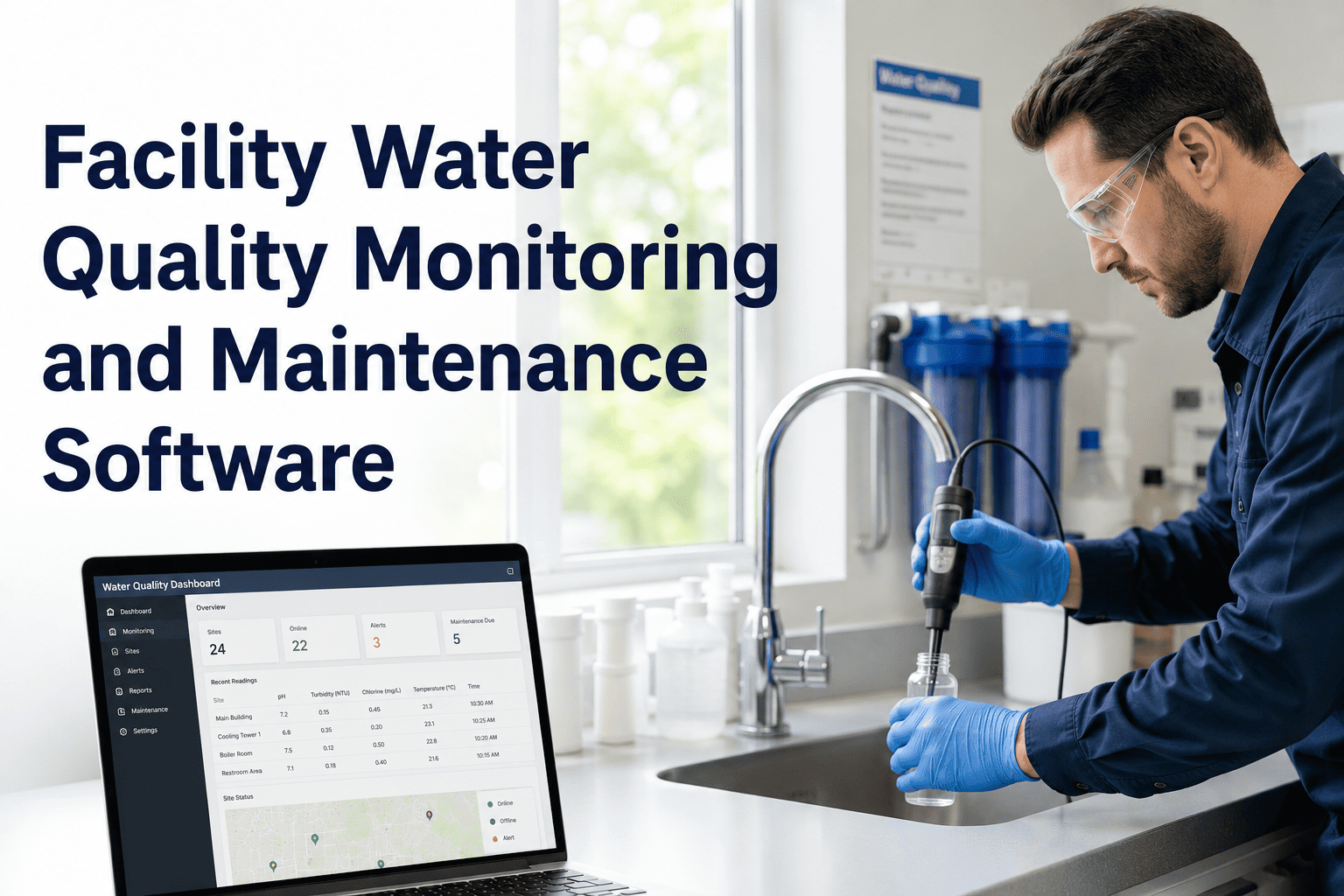
| W01 Fundamental Water Quality | Legionella: non-detect | Test dispense points; flush low-use outlets | Quarterly | Lab report, corrective action log if positive |
| T01 Thermal Performance | ASHRAE-55 compliance | PM on VAV boxes; seasonal HVAC recommissioning | Semi-annual | PM checklist, recommissioning report, occupant survey |
| L01 Light Exposure | Circadian EML ≥ 150 | Lux audit; lamp degradation tracking | Monthly | Lux survey data, lamp-hour log, replacement work order |
| S02 Sound Barriers | NC < 40 (open office) | Vibration analysis on mechanical equipment | Semi-annual | Vibration spectrum report, corrective work orders |
How OxMaint powers IEQ monitoring FM for WELL-certified buildings
OxMaint was built for the maintenance and reliability teams who carry the operational weight of WELL certification. These four capabilities map directly to the IEQ challenges that cause audit failures and recertification delays.
Automated IEQ Compliance Work Orders
Connect any IAQ sensor API to OxMaint. When CO₂, VOC, or humidity breaches the WELL threshold, a corrective work order generates automatically — assigned to the right technician with the correct priority and 24-hour SLA clock started.
Preventive Maintenance Scheduling
Pre-load every WELL feature requirement as a PM template — filter changes, sensor calibrations, water testing, lux audits. OxMaint generates the full annual work-order calendar and auto-assigns each task based on technician availability and certification.
Audit-Ready Evidence Trail
Every completed work order captures technician identity, timestamp, before/after sensor readings, parts consumed, and photo evidence. OxMaint's analytics dashboard compiles this into a WELL-feature compliance report — exportable in one click for any auditor.
Predictive IEQ Degradation Alerts
OxMaint's AI analyzes 90+ days of sensor and maintenance data to identify IEQ degradation trends — a filter approaching pressure-drop failure, a coil drifting toward condensation temperature — and recommends intervention before a threshold breach ever occurs.
See OxMaint on your assets — book a 30-minute demo
Watch how sensor-triggered work orders, automated PM scheduling, and one-click WELL audit reports transform your IEQ program from manual burden to competitive advantage.
IEQ and WELL certification FM: what teams ask most
What is indoor environmental quality in facility management?
Indoor environmental quality (IEQ) in facility management is the active measurement, monitoring, and maintenance of air quality, water quality, lighting, thermal comfort, and acoustics within a building. Unlike passive building design features, IEQ in FM requires continuous operational intervention — filter replacements, sensor calibrations, water testing, and HVAC tuning — to keep parameters within certification thresholds. Facility teams own the documentation that proves sustained performance to standards like WELL and WELL building standard FM programs.
How does WELL certification affect facility management operations?
WELL certification shifts FM from reactive repair to documented preventive performance. Teams must maintain 40–60 additional PM tasks per month per building, respond to IEQ threshold breaches within 24 hours, and produce timestamped evidence for every intervention. Without a CMMS like OxMaint to automate scheduling, trigger work orders from sensor data, and compile audit reports, the administrative load alone consumes 10–14 hours per week per facility. Book a Demo to see the workflow live.
How often does a WELL-certified building need IEQ monitoring?
WELL v2 requires continuous IEQ monitoring for air quality (CO₂, PM2.5, VOCs) and thermal comfort, with discrete testing frequencies for water (quarterly), lighting (monthly lux audits), and acoustics (semi-annual). Performance verification occurs at the 1-year and 3-year recertification milestones, but the underlying FM tasks — filter changes, sensor calibrations, water treatment — run on fixed preventive schedules year-round. Any gap in the documented maintenance record can trigger point loss at recertification.
Can a CMMS help maintain WELL certification?
Yes — a CMMS is the most effective tool for maintaining WELL certification because it connects every IEQ requirement to a scheduled, documented, and verifiable maintenance task. OxMaint goes further by integrating sensor data to trigger automatic corrective work orders, tracking parts inventory for IEQ-critical consumables like MERV-13 filters, and generating audit-ready compliance reports. Teams using OxMaint report zero missed-PM findings at WELL recertification and 60% faster audit preparation.
What is the difference between IEQ and indoor air quality (IAQ)?
Indoor air quality (IAQ) is a subset of indoor environmental quality (IEQ). IAQ covers only airborne parameters — particulate matter, CO₂, VOCs, humidity, and ventilation effectiveness. IEQ encompasses IAQ plus water quality, lighting quality (including circadian metrics), thermal comfort, and acoustic performance. The WELL building standard addresses all IEQ domains through its ten concept categories, meaning FM teams must manage a broader set of assets and maintenance tasks than a pure IAQ program requires. Start Free Trial to map your full IEQ asset register today.
Make WELL certification a maintenance outcome, not an administrative burden
OxMaint turns IEQ sensor data, preventive schedules, and work-order evidence into a continuous, audit-ready WELL compliance program — managed from one AI-powered CMMS.
Free 14-day trial · No credit card