The defect liability period is the most legally exposed window in any building's lifecycle — typically 12 to 24 months after practical completion, during which contractors are obligated to rectify defects at their own cost. Yet most facility teams track these obligations in spreadsheets that have no connection to warranty claim status, no automated contractor reminders, and no evidence trail that holds up when a developer disputes liability. Oxmaint's facility maintenance defect liability tracking software creates a single structured record for every defect, links each item to the responsible contractor, captures repair evidence, and flags items approaching warranty expiry before the claim window closes. If your building has recently been handed over or is currently in a DLP, book a demo to see how facility teams recover contractor repair obligations they would otherwise miss.
Capital Projects
Asset Management
Defect Liability
Facility Maintenance Defect Liability Tracking Software
Track every building defect, warranty claim, and contractor repair obligation through the full defect liability period — with evidence, escalation, and expiry alerts built in.
$240K
Average contractor repair value recovered per project when DLP is tracked digitally
38%
Of warranty claims are missed or expired in manually tracked DLP programmes
2.4x
More defects resolved by contractors when digital evidence and escalation is active
Why DLP Management Fails
The Gap Between Handover Documentation and Actual Contractor Accountability
Most defect liability periods start with a handover report and end with a dispute. The gap in between is an untracked spreadsheet where contractors do not respond, items expire unnoticed, and facility managers have no evidence that defects were even reported — let alone repaired correctly.
Common Failure
No expiry tracking
Warranty and DLP end dates exist in contracts, not in any system. Claims miss their filing window and liability reverts to the building owner.
Common Failure
Contractor non-response
Defects reported by email are easy to ignore. Without automated escalation, contractors delay repairs past the DLP without consequence.
Common Failure
No repair evidence
Contractors claim repairs are complete. Facility teams have no photo record to verify or dispute the work — and disputes cost more than the repair itself.
Common Failure
Asset history gap
Defects fixed under warranty are never linked to the asset record, creating a maintenance history gap that affects future cost forecasting and resale valuation.
Core Capabilities
What Oxmaint Tracks Through the Full Defect Liability Period
01
Defect logging with asset linkage
Every defect is logged against a specific asset — structural element, system, or component — with location, severity, discovery date, and photographic evidence. The defect record travels with the asset through repair, re-inspection, and closure.
02
Warranty and DLP expiry tracking
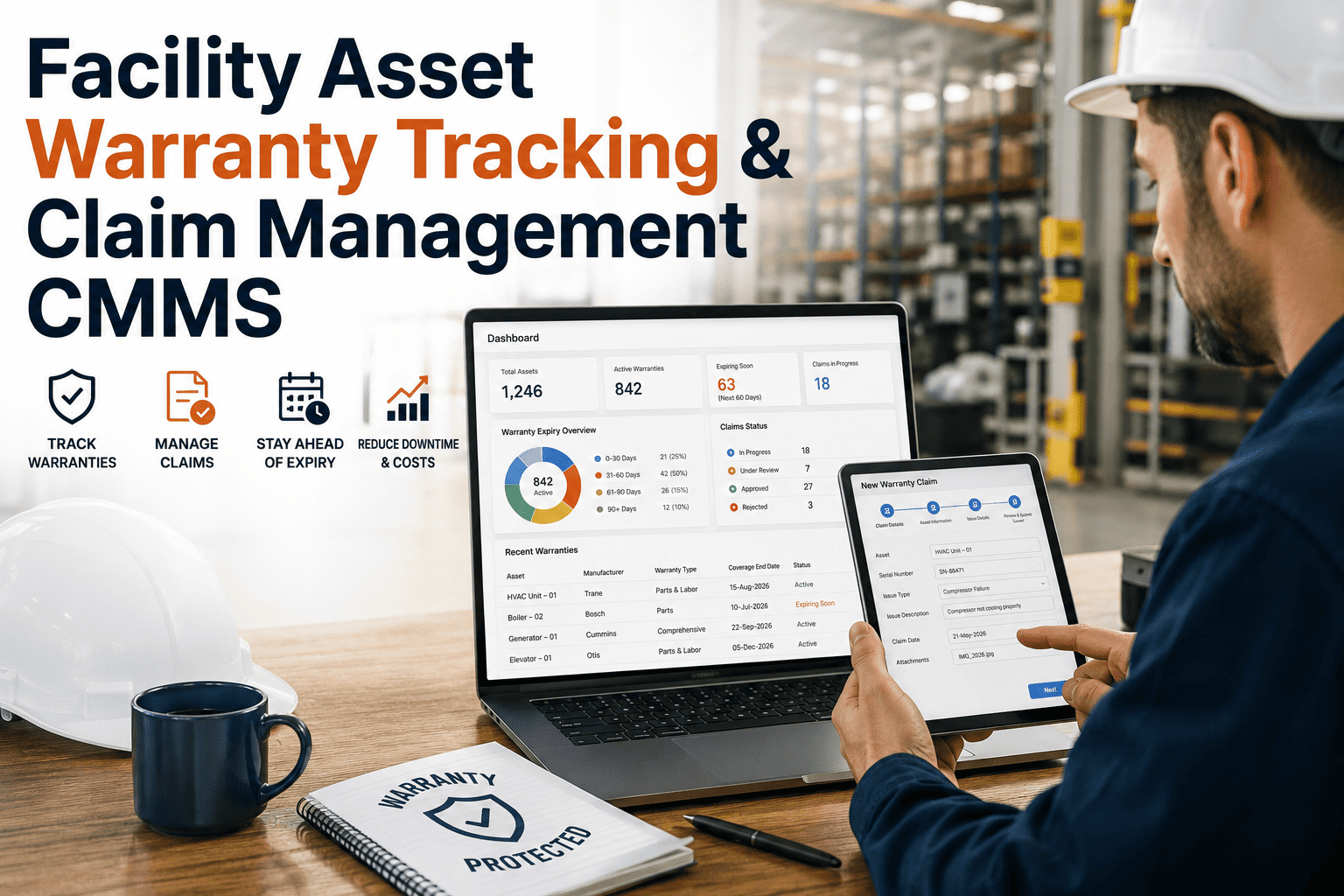
Each defect category or contractor obligation carries its warranty end date. Oxmaint generates automated alerts 30, 60, and 90 days before expiry — giving facility managers time to inspect, document, and file claims before the window closes.
03
Contractor obligation routing
Defects are assigned to the responsible contractor by trade type, zone, or contract reference. Contractors receive work orders with defect details, access the portal to upload repair photos, and are automatically escalated to the main contractor or facility manager when overdue.
04
Repair status and evidence trail
Before and after photos, repair dates, technician sign-off, and re-inspection approval are all stored against each defect record. The complete evidence chain is exportable as a PDF for legal, insurance, or handover documentation.
DLP Tracking Matrix
Defect Types, Responsibility, and Tracking Requirements
| Defect Category |
Typical DLP Period |
Responsible Party |
Evidence Required |
Oxmaint Action |
| Structural defects |
5–10 years |
Main contractor |
Engineer report + photo |
Auto-escalate at 30 days |
| MEP system failures |
12–24 months |
Sub-contractor / OEM |
Service report + test result |
Expiry alert + work order |
| Finish and cosmetic defects |
6–12 months |
Finishing contractor |
Before/after photo |
Contractor portal routing |
| Roofing and waterproofing |
5–10 years |
Specialist contractor |
Inspection + test certificate |
Multi-tier escalation |
| Equipment warranty claims |
Per OEM terms |
Equipment supplier |
OEM claim reference + photo |
Claim reference tracking |
Stop losing contractor repair obligations to expired warranty windows
Oxmaint tracks every defect, every contractor, and every warranty end date — automatically escalating overdue items before the liability window closes.
Expert Review
What Asset and Project Managers Say About DLP Tracking
"We had a 400-unit residential handover where the DLP was tracked in a shared Excel file. Within 90 days, contractors had stopped responding and items were expiring without repair. Oxmaint gave us automated escalation and a legal-grade evidence trail — we recovered over $180,000 in contractor repair obligations that would have reverted to our maintenance budget."
AM
Asset Manager
Residential Developer, GCC Region
"The biggest risk in our post-handover process was not knowing which defects were approaching their warranty expiry. Oxmaint's 60-day expiry alerts changed everything — our facility team could file and escalate claims proactively rather than discovering expired liabilities during the annual asset review."
PD
Project Director
Commercial Real Estate, South Asia
FAQ
Frequently Asked Questions
How does Oxmaint differentiate between defects under warranty and standard maintenance work orders?
Oxmaint's defect liability tracking uses a separate work order classification for DLP and warranty items — distinct from routine corrective or preventive maintenance. Each warranty defect carries a liability flag, a responsible contractor reference, and an expiry date. This ensures warranty work is never accidentally absorbed into the facility's own maintenance budget and remains separately reportable for cost recovery and auditing purposes throughout the defect liability period.
Can Oxmaint handle defect liability tracking across multiple contractors on the same project?
Yes. Oxmaint allows each defect to be assigned to a specific contractor by trade, zone, or contract package — and manages multiple concurrent contractor obligations within the same building. When a main contractor is responsible for coordinating sub-contractor repairs, the escalation chain follows the contract structure.
Book a demo to see multi-contractor DLP workflows configured for your project structure.
What happens when a contractor disputes that a defect falls within their scope of liability?
Oxmaint's defect records include the discovery date, defect category, asset location, original photo evidence, and the contract reference used for assignment — all timestamped and immutable. This documentation provides the factual baseline for dispute resolution without relying on email chains or verbal records. The complete evidence package is exportable as a PDF report that can be shared with legal teams, insurance assessors, or project arbitrators directly from the platform.
Does Oxmaint integrate with existing project management or asset management systems?
Oxmaint integrates via REST API with EAM platforms, project management tools, and document management systems — allowing defect records to reference existing asset registers and contract documents without re-entering data. For facilities already using SAP PM or IBM Maximo, Oxmaint DLP records sync bidirectionally, maintaining a consistent asset maintenance history from construction through the full operational lifecycle of the building.
Every warranty obligation tracked. Every contractor accountable. Every claim filed in time.
Oxmaint manages your full defect liability period — from defect discovery to contractor repair evidence to DLP closure sign-off — with zero items falling through the gap.