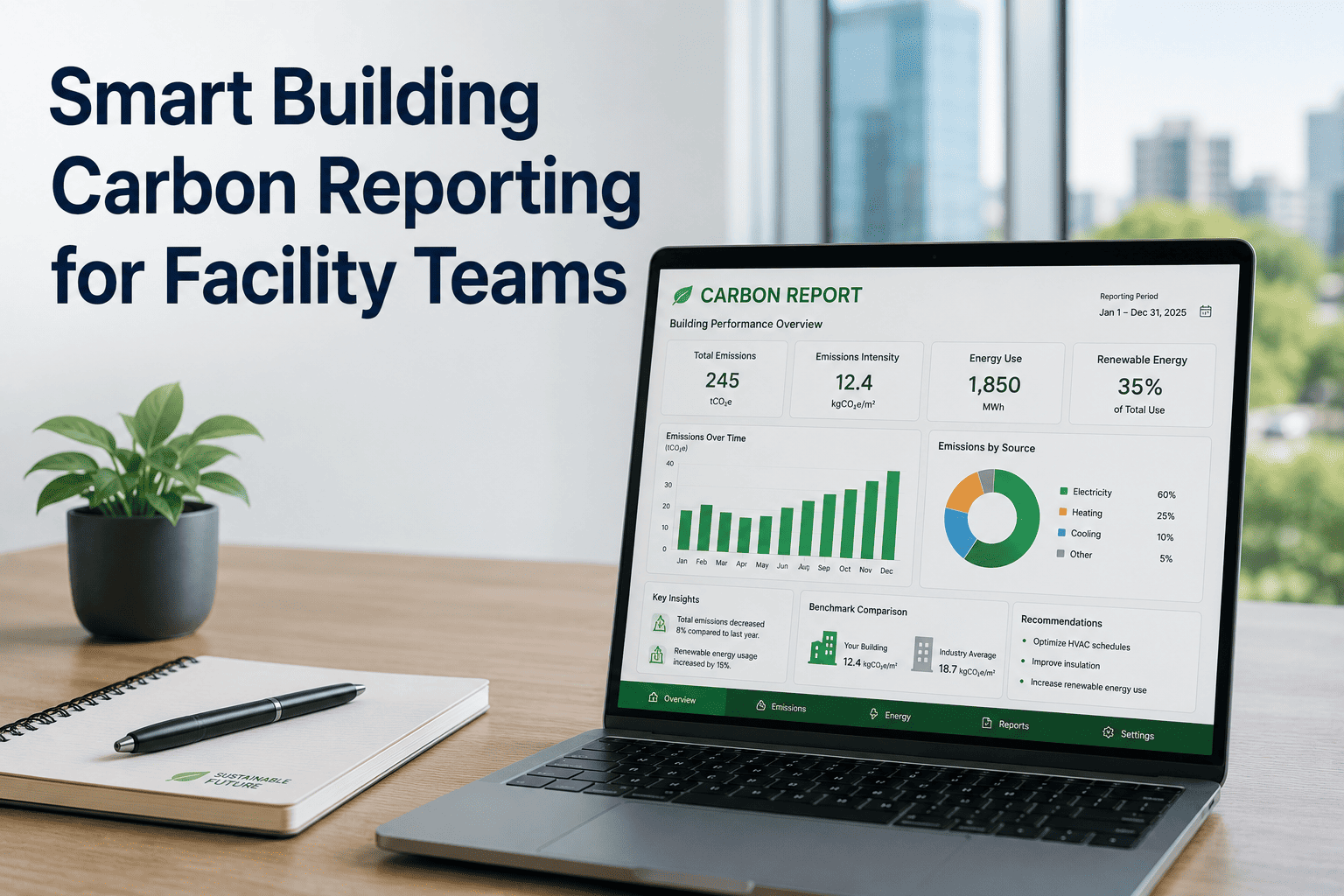
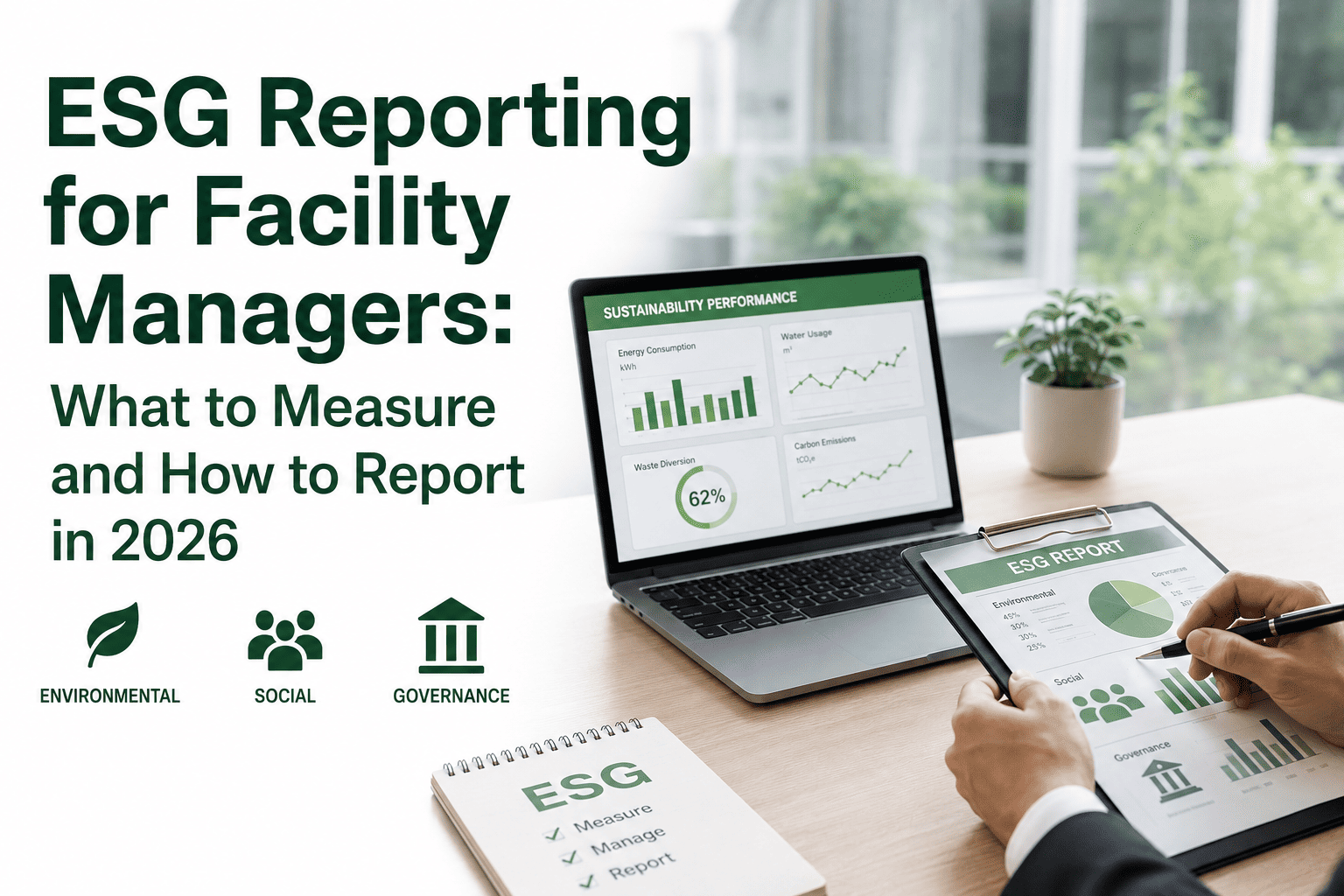
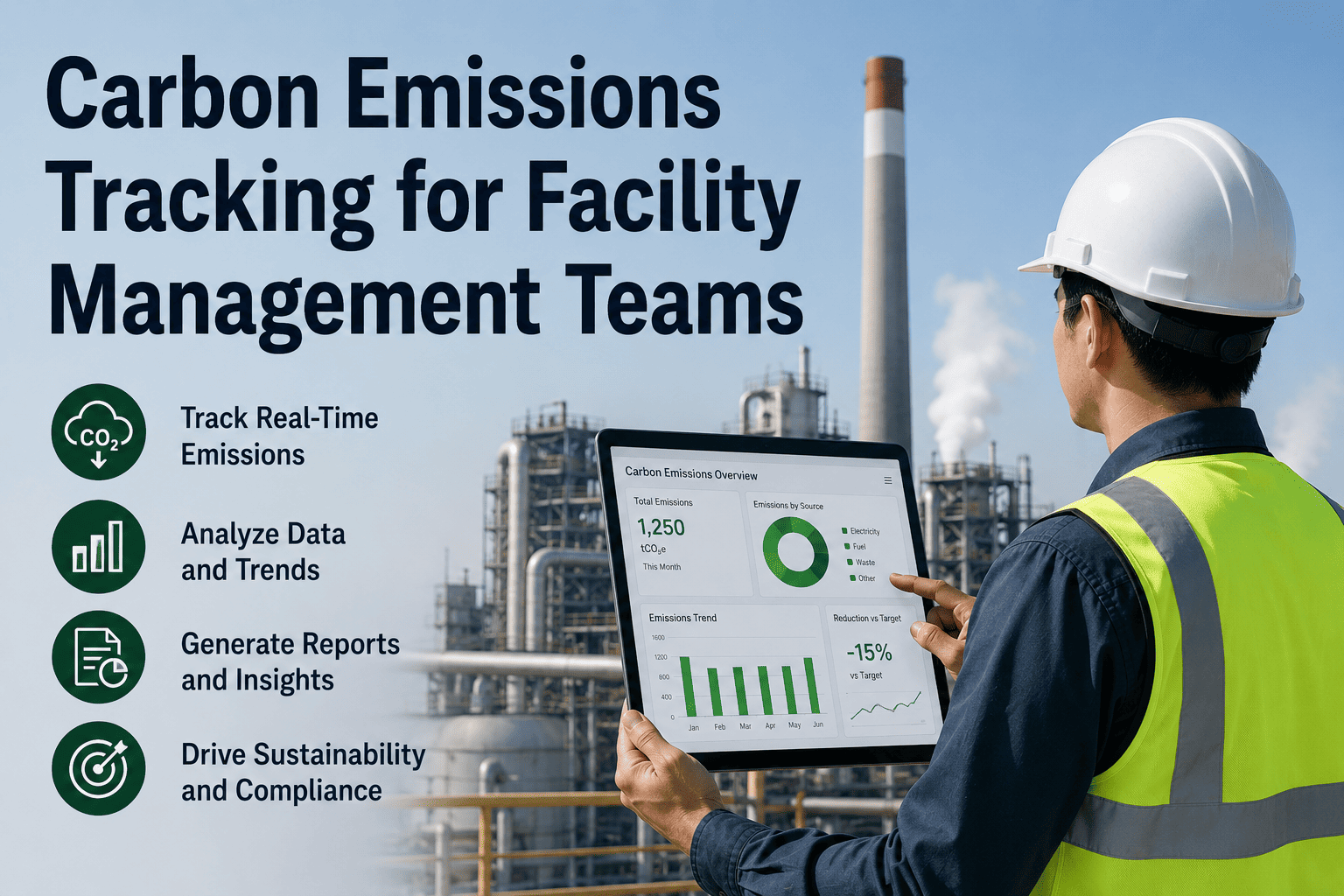
ESG reporting for facilities has moved from voluntary disclosure to a compliance obligation in most institutional real estate markets. SEC climate disclosure rules in the US, CSRD in Europe, and GRESB assessments in real estate investment require facility teams to track, verify, and report Scope 1, 2, and 3 emissions alongside water, waste, and indoor environment quality data. Most facility operations teams are producing this data already — in spreadsheets, utility bills, and CMMS work order records — but not in the structured, audit-ready format regulators and investors now require. This guide covers the ESG reporting framework, data requirements, and CMMS integration approach that converts existing facility data into defensible, auditable sustainability reports. Sign up free on Oxmaint to begin structured ESG data collection, or book a demo for a compliance reporting walkthrough.
Build Audit-Ready ESG Reports From Your Existing Facility Data
Oxmaint's sustainability module structures Scope 1-3 emissions, water, and waste data from maintenance records and utility feeds into GRESB, GRI, and SEC-ready reports automatically. No separate data collection tool required.
ESG reporting is not a separate data collection project. It requires structuring data that already exists in facility operations: energy bills become Scope 2 emissions records, refrigerant top-up records become Scope 1 fugitive emissions, maintenance records on emission-related equipment become audit evidence, and water meter readings become water intensity KPIs. The gap is not data collection — it is data structuring and continuous documentation discipline.
What This Guide Covers
- 1Scope 1, 2, and 3 Emissions: Facility Manager's Mapping Guide
- 2ESG Frameworks Relevant to Commercial FM: GRESB, GRI, SEC
- 3ESG KPIs: What to Track and at What Frequency
- 4CMMS as ESG Data Source: Connecting Maintenance to Reporting
- 5Audit Readiness: Evidence Standards for ESG Verification
- 6Frequently Asked Questions
Scope 1, 2, and 3 Emissions: Facility Manager's Mapping Guide
| Emission Scope | Definition | Facility Sources | Data Source in CMMS |
|---|---|---|---|
| Scope 1 Direct | Direct emissions from owned or controlled sources | Natural gas combustion (boilers, generators), refrigerant leakage, diesel gensets, vehicle fleet fuel | Utility meter readings, refrigerant top-up work orders, fuel purchase records |
| Scope 2 Indirect | Indirect emissions from purchased electricity, steam, or cooling | Electricity for HVAC, lighting, plug loads; district cooling or heating purchases | Electricity utility data, BMS energy feeds, sub-meter readings |
| Scope 3 Value Chain | Indirect emissions from value chain activities | Tenant energy use, waste disposal, embodied carbon in capital replacements, contractor travel to site | Tenant energy sub-meters, waste disposal records, CapEx asset records with embodied carbon factors |
ESG Frameworks Relevant to Commercial FM in 2026
The dominant ESG benchmark for real estate investment funds and REITs. GRESB assessments score portfolios on energy, emissions, water, waste, and building certifications with ratings benchmarked against peer portfolios. GRESB 4-star or higher is now required by many institutional LPs as an investment condition for new fund commitments.
Required by: REITs, open-end funds, institutional CREGlobal Reporting Initiative standards define the most widely used sustainability disclosure format. GRI 302 (Energy), 303 (Water), 305 (Emissions), and 306 (Waste) are the sections most directly relevant to facility operations. GRI reporting is adopted by corporate occupiers, healthcare systems, and government agencies as their primary sustainability disclosure vehicle.
Required by: corporates, healthcare, governmentSEC rules require public company disclosure of material climate risks and Scope 1 and 2 emissions data. For large accelerated filers, Scope 1 and 2 data must be third-party verified. Facility teams at corporate real estate occupiers and REITs are directly responsible for the data systems that feed SEC climate disclosures from 2026 onwards.
Required by: US public companies, REITsCorporate Sustainability Reporting Directive requires EU-regulated companies and large non-EU companies with significant EU operations to disclose detailed environmental, social, and governance information under European Sustainability Reporting Standards. UK-based firms managing European portfolios are within scope.
Required by: EU-regulated companies, large non-EU firmsESG KPIs: What to Track and at What Frequency
| ESG KPI | Unit | Minimum Frequency | Framework Relevance | Data Source |
|---|---|---|---|---|
| Energy Use Intensity | kBtu/sq ft/yr | Monthly tracking; annual reporting | GRESB, ENERGY STAR, GRI 302 | Utility interval data, BMS feeds |
| Scope 1 GHG Emissions | mtCO2e/yr | Monthly calculated; annual verified | GRESB, GRI 305, SEC, CSRD | Gas meters, refrigerant records, fuel logs |
| Scope 2 GHG Emissions | mtCO2e/yr | Monthly calculated; annual verified | GRESB, GRI 305, SEC, CSRD | Electricity utility data with grid emission factors |
| Water Use Intensity | gal/sq ft/yr | Monthly; annual reporting | GRESB, GRI 303, LEED | Water utility bills, sub-meters |
| Waste Diversion Rate | % recycled | Monthly; annual reporting | GRESB, GRI 306, LEED | Waste hauler manifests, diversion reports |
| Refrigerant Leakage Rate | kg/yr per system | Per-event (CMMS record); annual aggregate | GRI 305-7, SEC, CSRD | Refrigerant top-up work orders in CMMS |
| Green Building Certification | % certified sq ft | Annual inventory | GRESB, GRI, LEED, BREEAM | Asset registry with certification records |
CMMS as ESG Data Source: Connecting Maintenance to Reporting
CMMS work order data is the most underutilised ESG data source in facility operations. Every refrigerant top-up work order contains Scope 1 data. Every energy equipment PM contains evidence of efficiency maintenance. Every capital replacement record contains embodied carbon data if the platform supports asset carbon factors.
ESG Audit Readiness: Evidence Standards for Verification
| ESG Data Category | Evidence Standard | CMMS Role | Common Audit Finding |
|---|---|---|---|
| Energy data | Utility invoice or interval meter data; third-party verified for SEC large accelerated filers | BMS and sub-meter integration stores interval data with timestamp; anomaly detection flags meter gaps | Missing interval data for periods when buildings were partially occupied |
| Refrigerant emissions | Service records with refrigerant type, quantity, and EPA Section 608 compliance | CMMS work orders with mandatory refrigerant quantity field; technician attribution and timestamp | Refrigerant service logs in paper or spreadsheet format without technician identification |
| Water consumption | Utility bills or sub-meter data; irrigation and process water separated from domestic | CMMS stores water meter readings from PM rounds; leak detection work orders document water loss events | Inability to separate process water from domestic water in buildings with cooling towers |
| Waste data | Waste hauler manifests and diversion certification; annual totals by waste stream | Work orders for waste equipment PM reference hauler contracts; manifest filing linked to asset records | Missing chain of custody for waste streams; reliance on estimations rather than manifests |
Frequently Asked Questions: ESG Reporting for Facilities
Generate GRESB, GRI, and SEC-Ready ESG Reports From Your Facility Data
Oxmaint structures emissions, energy, water, and waste data from maintenance records and utility feeds into audit-ready sustainability reports across your full portfolio. No separate ESG data tool required.