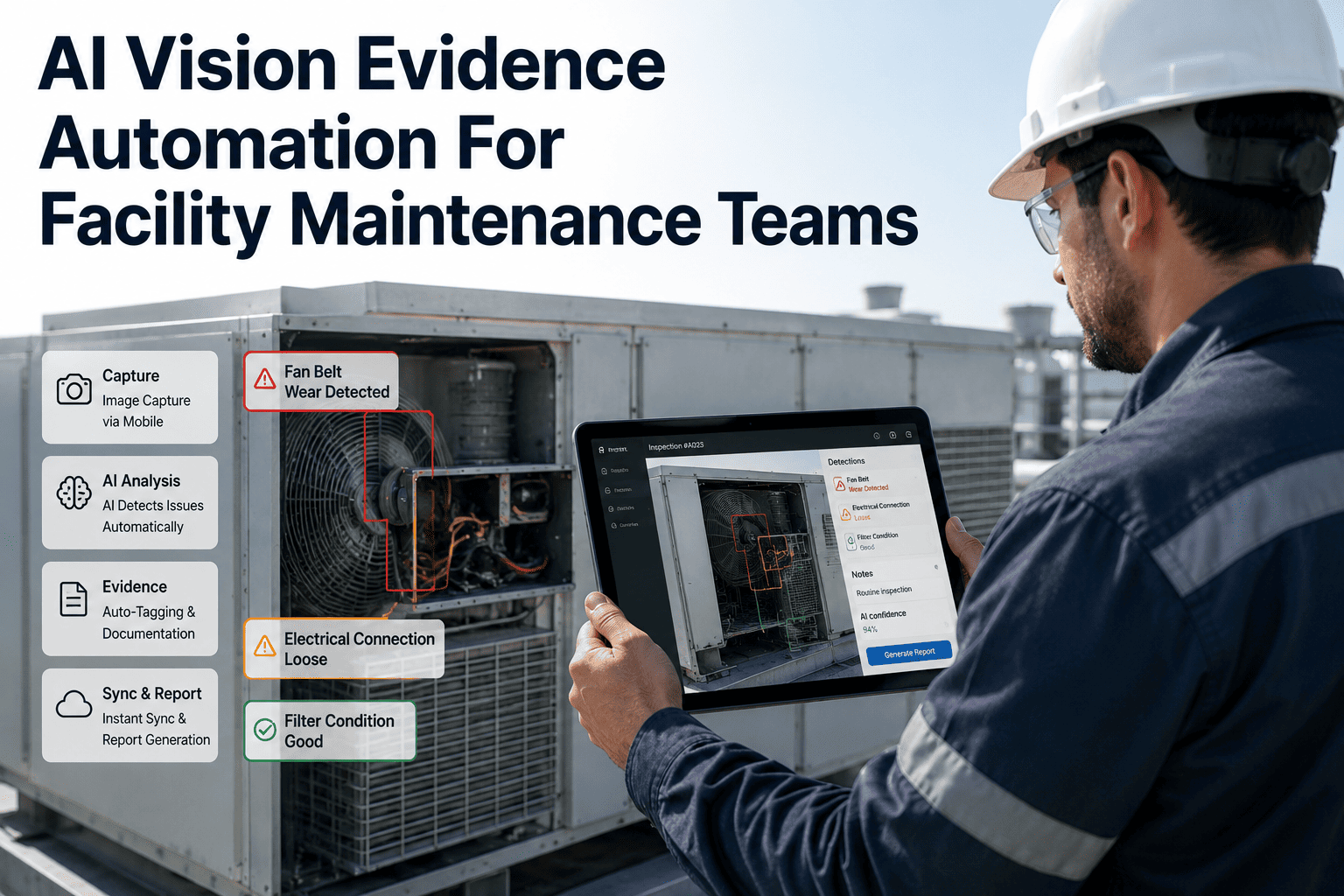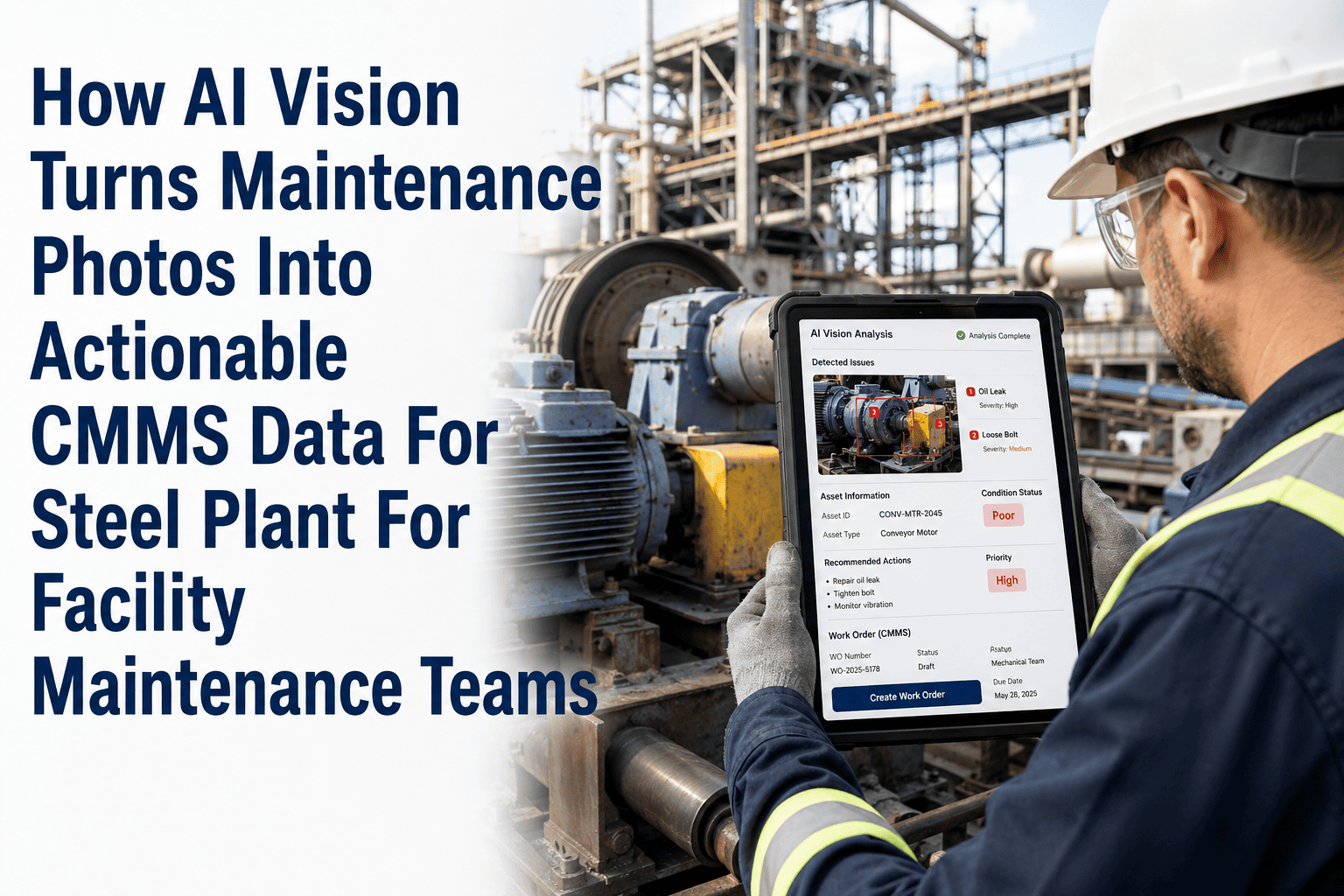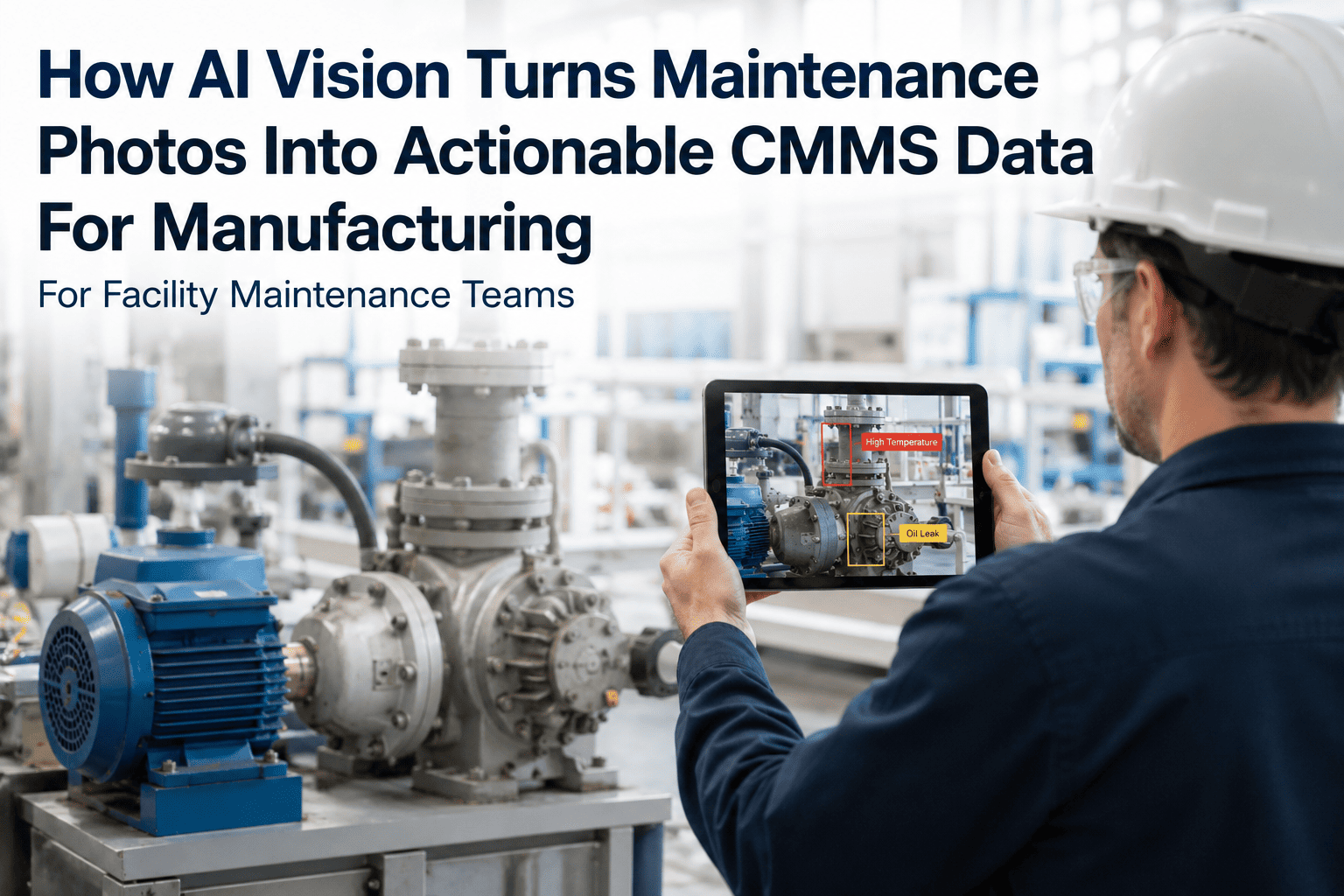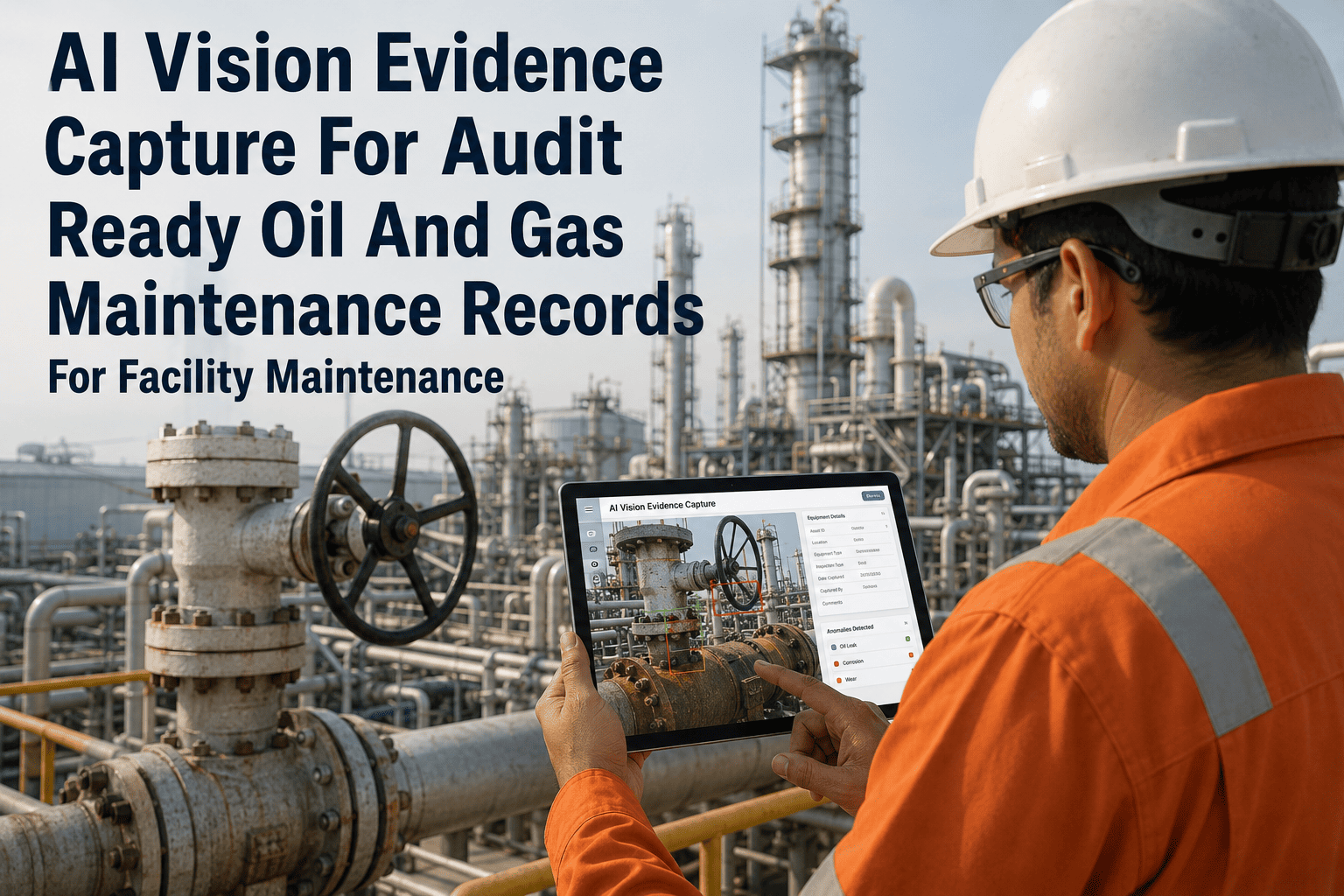
A human inspector walking an oil and gas facility misses an estimated 20–30% of early-stage defects during a routine visual round, and accuracy drops further after four continuous hours on the job. AI vision models trained on corrosion, cracks, leaks and mechanical damage hold steady at roughly 94% detection accuracy on every single pass, regardless of fatigue, lighting or how many assets came before it. That consistency is exactly what turns a photo taken during a normal walk-through into audit-grade evidence. AI vision evidence capture in OxMaint scores every defect, attaches it to the asset record, and auto-generates the work order — building your compliance trail one inspection at a time instead of one audit panic at a time. Book a demo to see it run on your own equipment photos.
The Camera Your Technician Already Carries Is Your Best Audit Tool
Oil and gas assets fail quietly — corrosion, hairline cracks, and seal degradation rarely announce themselves before an audit. AI vision closes the gap between what a human eye catches on a good day and what a trained model catches on every day, and turns every photo into a piece of dated, defensible evidence.
Why Human-Only Inspection Struggles to Hold Up in an Audit
This isn't about inspector skill — it's about consistency across hundreds of assets and long shifts in demanding environments. Human inspectors average 70–80% accuracy across a full shift, with performance degrading noticeably after four or more hours of continuous inspection work. An auditor doesn't ask whether your team is skilled. They ask whether the evidence was captured consistently, every time, on every asset.
From Camera to Compliance Record
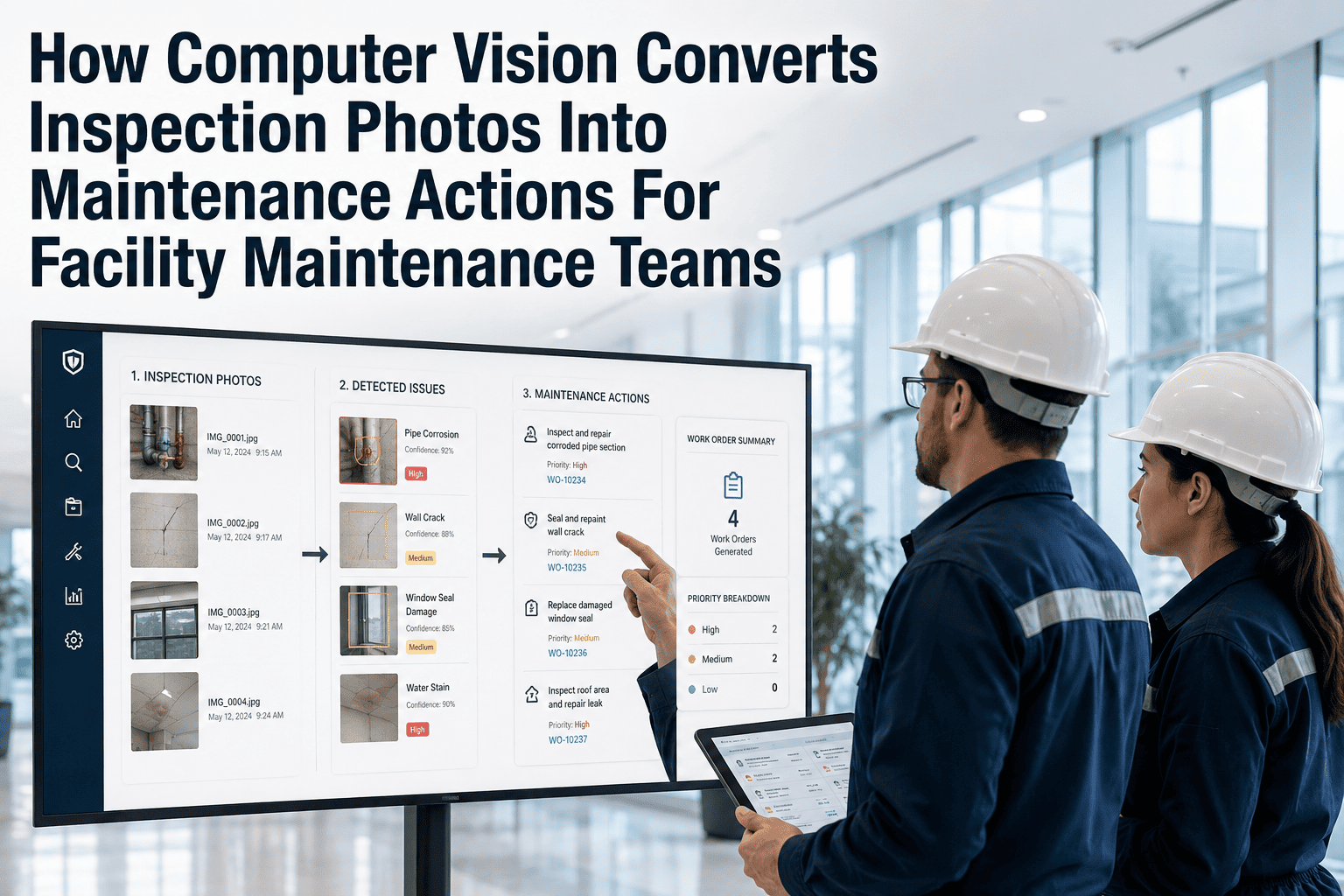
The workflow behind every piece of AI-captured evidence follows the same five steps, whether the technician is on a wellhead, a compressor station, or a refinery tank farm.
Turn the Next Routine Walk-Through Into Audit Evidence
OxMaint's AI vision runs on the phone your technicians already carry — no separate hardware, no cloud dependency required on remote sites.
Manual Inspection vs AI Vision Evidence Capture
The gap isn't just accuracy — it's what happens to the evidence after the walk-through ends.
| Dimension | Manual Visual Inspection | AI Vision Evidence Capture |
|---|---|---|
| Detection Accuracy | 70–80%, degrading after 4+ hours | ~94%, consistent on every asset |
| Early-Stage Defects | 20–30% typically missed | Flagged before progressing to failure |
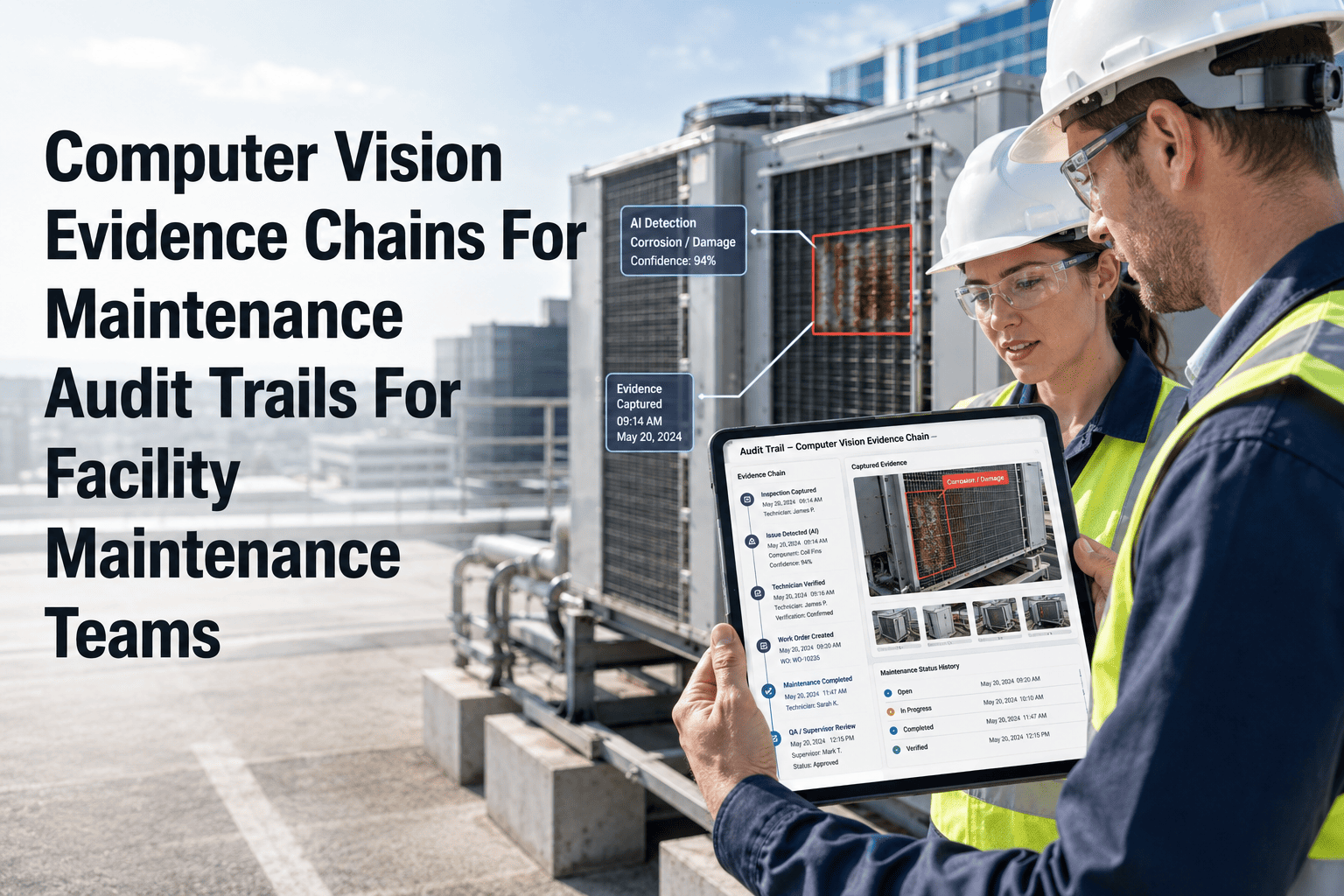
| Evidence Format | Handwritten notes, inconsistent photos | Timestamped, severity-scored, asset-linked |
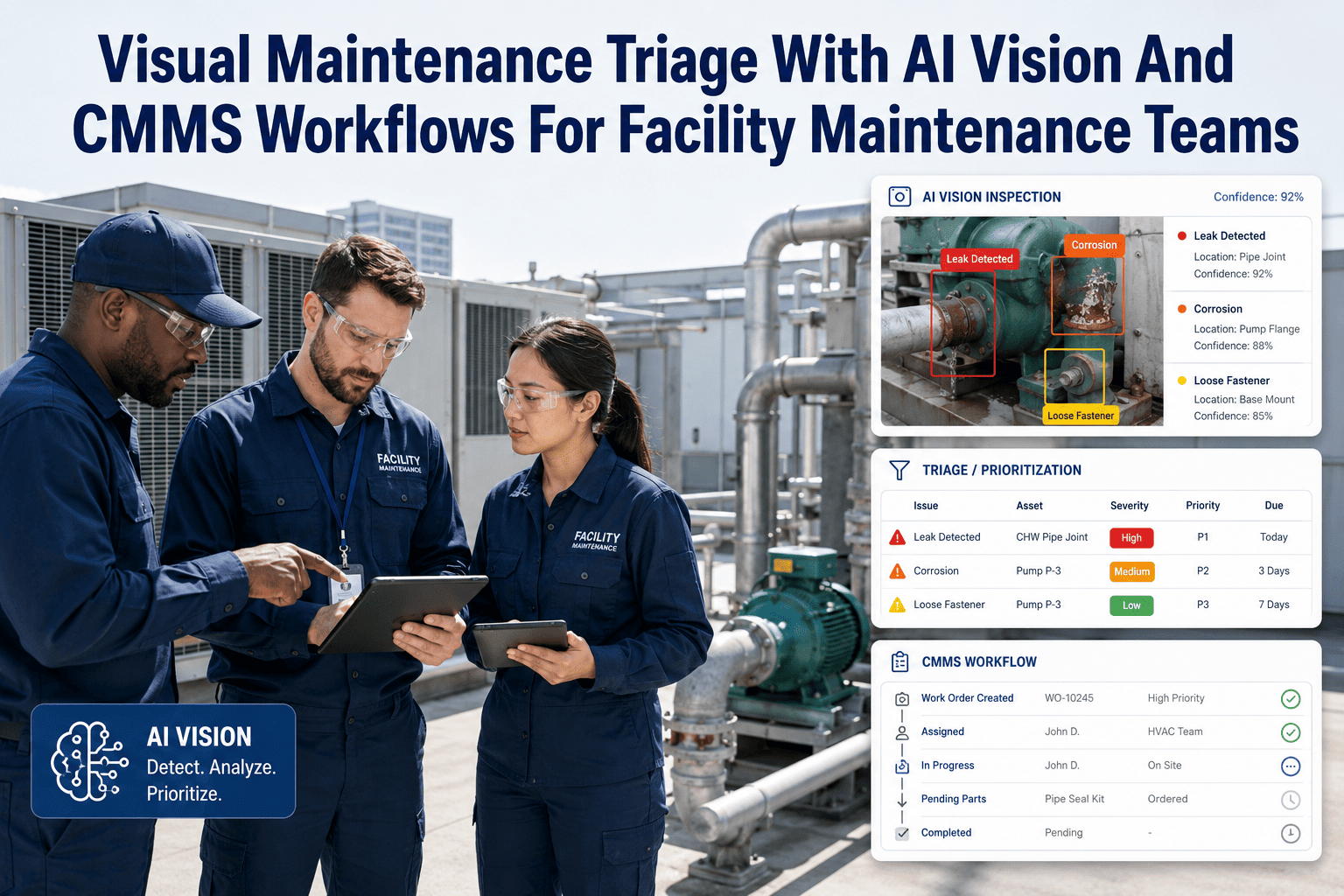
| Work Order Creation | Manual entry after the round is done | Auto-generated with defect context attached |
| Remote Site Coverage | Depends on inspector travel and access | Works offline, syncs when connectivity returns |
Built for Sites Without Reliable Connectivity
Wellheads, compressor stations and remote pipeline segments rarely have dependable network access — and audit evidence can't wait for a signal bar. AI vision analysis runs entirely on-device, so a technician on a remote pad gets the same instant defect scoring as one standing in a fully connected refinery control room. Sign in to OxMaint to see offline capture and sync in action.
Expert Review
Every operator I've worked with believes their inspection program is thorough right up until an auditor asks for the photo evidence behind a specific corrosion finding from eight months ago, and nobody can locate it. The value of AI vision isn't that it replaces the technician's eyes — it's that it never gets tired, never skips a step, and never forgets to attach the photo to the right asset. In a business where a missed corrosion finding can mean a pipeline failure, that consistency is the difference between an inspection program and an audit liability.
Frequently Asked Questions
Does AI vision inspection need special cameras or drones to work?
No. OxMaint's AI vision runs on any smartphone camera a technician already carries during a routine walk-through. No separate hardware, drones, or fixed cameras are required to get started. Start free to capture your first AI-scored inspection today.
How does this fit into our existing preventive maintenance checklists?
AI photo capture is added as a single step inside your existing PM checklist — no separate analytics tool or workflow to manage. The defect analysis happens inline with the inspection your team already performs. Book a demo to see it added to your current checklists.
Can auditors actually trace a finding back to the original inspection photo?
Yes. Every AI-scored defect stays attached to the source photo, timestamp, and the work order it generated on the asset record. That full chain is exactly what integrity auditors ask to see during an API-standard review.
What happens if the AI flags a defect that turns out to be a false positive?
Technicians review and confirm every AI-generated finding before the work order is finalized, so false positives get closed out rather than acted on blindly. The model assists judgment, it doesn't replace the technician's final call. Book a demo to see the review step in the workflow.
Stop Reconstructing Evidence After the Audit Is Already Scheduled
OxMaint's AI vision turns every routine inspection photo into a scored, dated, asset-linked compliance record — built continuously, not assembled under pressure.