A commercial office tower in Chicago — 28 floors, 620,000 square feet, 4,800 daily occupants — had its chiller system fail at 9:47 AM on the hottest Tuesday in August. By the time the emergency contractor was on-site and the root cause identified, 6.5 hours had elapsed. Emergency repair cost: $47,000. Tenant disruption claims: in progress. Root cause: bearing degradation that had been producing measurable vibration anomalies for 34 days. The chiller's building management system recorded those anomalies. Nobody was watching. That is the gap AI predictive maintenance closes. In 2026, the AI-based predictive maintenance market is valued at $12.8 billion and growing at 18.2% CAGR toward $105.6 billion by 2035. Yet only 27% of facilities have adopted predictive maintenance — meaning 73% are still paying for failures that sensor data and machine learning detected weeks before they happened. Book a demo to see how Oxmaint's AI monitoring turns your building equipment data into automatic work orders before failures occur.
Your Building Equipment Is Already Signalling Its Next Failure. Oxmaint AI Is Listening.
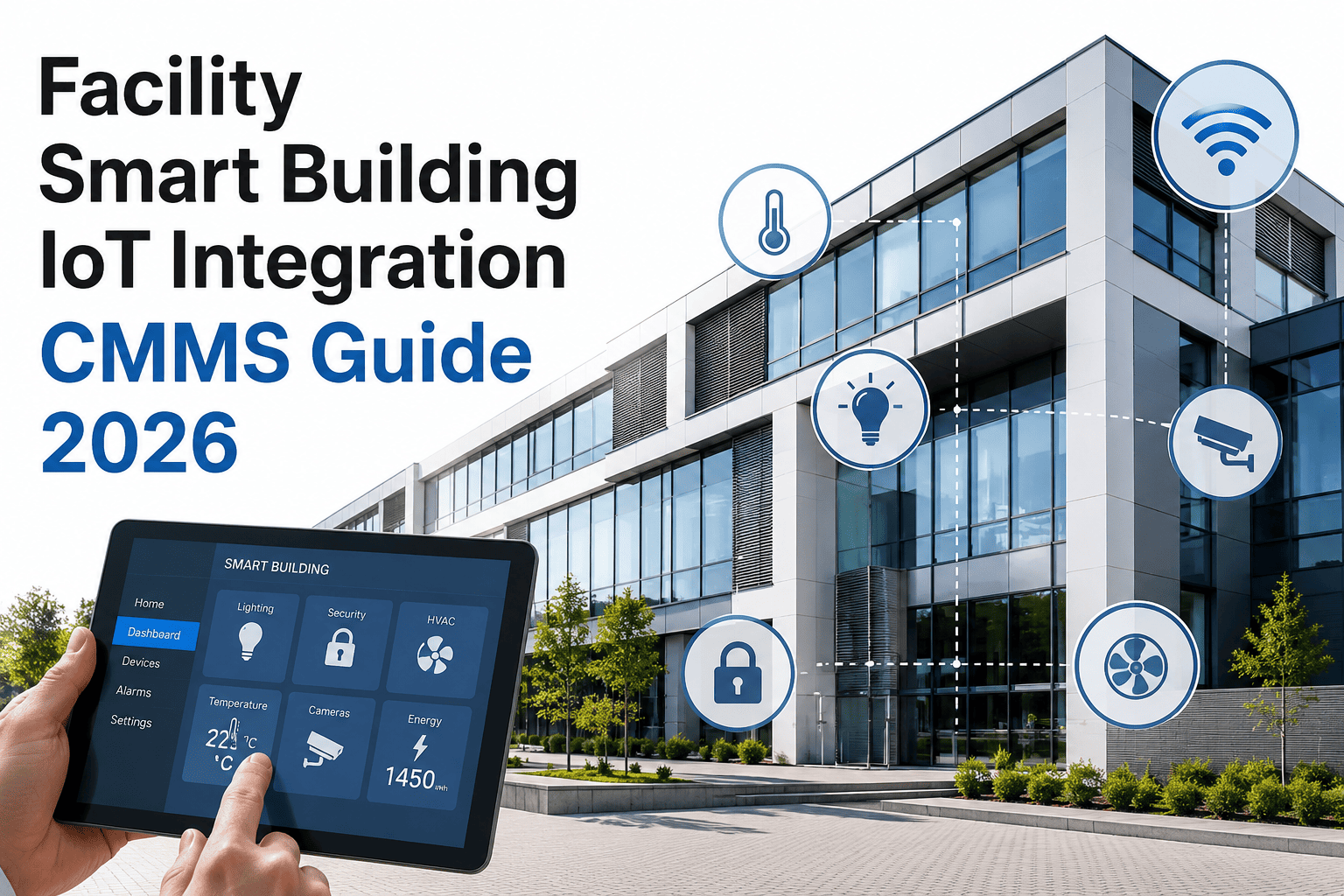
Oxmaint connects to IoT sensors across your HVAC, electrical, elevators, and critical systems — analysing performance data in real time, detecting anomalies weeks before failures, and auto-generating work orders when condition thresholds are crossed.
$12.8B
AI predictive maintenance market in 2025 — growing to $105.6B by 2035 at 18.2% CAGR
25%
Maintenance cost reduction achievable with AI predictive maintenance vs. traditional approaches — Deloitte
10:1–30:1
ROI ratio within 12–18 months — McKinsey data on AI predictive maintenance implementations
65%
Of maintenance teams plan to adopt AI by end of 2026 — but only 32% have fully or partially implemented it
WHAT AI PREDICTIVE MAINTENANCE IS
Predictive Maintenance vs Preventive vs Reactive: The Commercial Building Context
Most commercial building maintenance programmes operate somewhere between reactive (fix it when it breaks) and preventive (service it on a calendar). Both approaches waste money in different ways. AI predictive maintenance is architecturally different — it uses sensor data, machine learning, and condition monitoring to identify the specific moment when an asset needs attention. Not before. Not after.
Reactive
Run to Failure
Wait for equipment to fail, then repair. Lowest upfront cost, highest total cost. Emergency repairs cost 3–5x more than planned work. 38% of commercial facilities still use run-to-failure as their primary strategy for some equipment.
Cost multiplier: 3–5x
Preventive
Calendar-Based PM
Service equipment at fixed intervals regardless of actual condition. IBM research confirms 30% of preventive maintenance tasks are unnecessary — servicing assets that data shows have no degradation. 71% of facilities rely primarily on preventive maintenance.
30% of tasks unnecessary
Predictive AI
Condition-Triggered
Monitor actual equipment condition via sensors. AI detects anomalies 30–60 days before failure. Work orders trigger only when condition data demands it. Reduces maintenance costs 18–25% vs. preventive, up to 40% vs. reactive. Only 27% of facilities have adopted it — creating a major competitive gap.
Saves 18–40% vs. others
HOW AI PREDICTIVE MAINTENANCE WORKS
The 4-Layer AI Predictive Maintenance Architecture for Commercial Buildings
AI predictive maintenance is not a single product. It is a connected architecture — sensors, data pipelines, machine learning models, and CMMS workflows that must all function together to turn building equipment data into maintenance action. Here is how each layer works in a commercial facility deployment.
01
IoT Sensor Layer
Wireless vibration, temperature, pressure, current, and humidity sensors are retrofitted onto existing equipment — HVAC units, pumps, motors, cooling towers, electrical panels, and elevators. No equipment replacement required. Modern sensors attach in minutes with no wiring. Data streams continuously to the analytics layer at configurable frequencies — every second for critical assets, every 15 minutes for lower-risk equipment.
Retrofit — no new equipment needed
02
AI Analytics and Anomaly Detection
Machine learning models trained on thousands of historical failure datasets establish a unique performance baseline per asset. When live sensor readings deviate from baseline — a vibration signature that suggests bearing wear, a temperature differential indicating refrigerant loss, a current pattern suggesting motor winding degradation — the AI classifies the anomaly, estimates severity, and calculates remaining useful life (RUL). Detection typically occurs 30–90 days before traditional inspection methods would identify the issue.
30–90 days earlier detection
03
CMMS Integration and Work Order Automation
AI-generated alerts feed directly into the Oxmaint CMMS, triggering automatic work order creation with asset ID, anomaly classification, severity rating, recommended parts, and suggested maintenance window. High-confidence alerts auto-assign to qualified technicians. Lower-confidence alerts surface to the maintenance manager for review. The entire sequence — anomaly detection to work order assignment — executes without human input on critical assets.
Auto work order generation
04
Continuous Learning and CapEx Forecasting
Every confirmed prediction improves the model. Every repair outcome adds to the asset's condition history. Over time, the AI becomes more accurate for your specific equipment, operating conditions, and load patterns. This accumulated condition data also feeds Oxmaint's rolling CapEx forecasting — replacing capital planning guesswork with data-driven remaining useful life projections across every monitored asset in the portfolio.
Improves with every repair event
EQUIPMENT TYPES AND USE CASES
AI Predictive Monitoring for 8 Critical Commercial Building Systems
AI predictive maintenance is not applied uniformly — it delivers the highest ROI on assets where failure costs are highest, replacement lead times are longest, or failures affect tenant experience, compliance, or safety. These eight systems are the highest-value targets in commercial building portfolios.
HVAC
Chillers and AHUs
AI detects: refrigerant loss, bearing wear, coil fouling, compressor degradation
Emergency replacement cost: $15,000–$80,000. Lead time: 4–12 weeks for major components
Electrical
Transformers and Switchgear
AI detects: thermal anomalies, insulation degradation, harmonic distortion patterns
Transformer failure: $50,000–$500,000 replacement plus 2–12 week outage during replacement
Pumping
Cooling Tower Pumps
AI detects: cavitation, seal wear, impeller damage, shaft misalignment via vibration
Planned bearing replacement: $2,000. Failed pump seizure: $15,000–$25,000 plus chiller downtime
Elevators
Elevator Drive Systems
AI detects: motor current anomalies, brake wear, rope tension variations, controller faults
Elevator entrapment event triggers regulatory investigation plus tenant disruption claims
Generator
Emergency Generators
AI detects: fuel quality degradation, battery voltage drift, coolant temperature anomalies
Generator failure during power outage is a life-safety event with direct regulatory and liability exposure
Fire Pumps
Fire Suppression Pumps
AI detects: pressure deviation, jockey pump cycling frequency, motor current patterns
Fire pump failure during an active fire event creates catastrophic liability and insurance exposure
BMS
Building Automation Systems
AI detects: sensor calibration drift, controller response failures, setpoint deviation patterns
BMS failures cascade across HVAC, lighting, and access control — one failure affects all connected systems
Plumbing
Water and Steam Systems
AI detects: unusual flow patterns signalling leaks, pressure drops indicating pipe degradation
Undetected water leak average damage: $5,165 for minor events; $50,000+ for major pipe failures in occupied floors
WHY MOST FACILITIES HAVEN'T DEPLOYED IT YET
The 4 Barriers Holding Commercial Buildings Back From AI Predictive Maintenance in 2026
73%
Have Not Adopted Predictive Maintenance
Despite the proven ROI, 73% of facilities still rely primarily on reactive or calendar-based maintenance. The adoption gap is not created by technology availability — it is created by the perception that implementation requires major infrastructure changes, long project timelines, and specialist expertise that most facility teams do not have on staff.
40%
CRE Firms Using AI — But Many Stalled
A 2024 McKinsey report found 40% of commercial real estate firms are using AI for predictive maintenance, but only 5% of broader CRE AI programmes achieved their goals. The failure point is deploying AI on top of broken data infrastructure — siloed BMS, CMMS, and accounting platforms that cannot communicate. AI without connected data produces noise, not insight.
32%
Have Partially or Fully Implemented AI
Less than one-third of maintenance and operations teams have fully or partially implemented AI — despite 65% planning to do so by end of 2026. The gap between intention and implementation is the transition period. 2026 is the year that gap closes for operations that move quickly. Those who defer another 12–18 months will be benchmarking against competitors already generating 25% maintenance cost savings.
31%
Saw Downtime Costs Rise in 2025
31% of maintenance managers reported rising downtime costs in 2025 — not from more frequent failures but from higher severity events driven by aging equipment and inflation on emergency parts and labour. AI predictive maintenance addresses the severity driver directly: catching failures weeks earlier eliminates the cascading damage that turns a $2,000 bearing replacement into a $25,000 emergency.
HOW OXMAINT DELIVERS AI PREDICTIVE MAINTENANCE
Oxmaint AI Predictive Maintenance: From Sensor Data to Work Order in Minutes
Oxmaint connects the sensor layer, the AI analytics layer, and the CMMS work order layer into a single platform — eliminating the integration gaps that cause AI predictive maintenance programmes to stall. Every AI-detected anomaly becomes a traceable work order. Every repair outcome improves the prediction model. Every monitored asset contributes to portfolio-level CapEx forecasting.
IoT and SCADA Integration — No Middleware
Oxmaint connects to IIoT sensors, BMS systems, PLCs, and SCADA via OPC UA, MQTT, and REST API — without the middleware layer that causes most AI maintenance integrations to stall in IT projects. Sensor data flows directly into the CMMS asset record and analytics engine from the first day of connection.
Asset Condition Scoring Per Asset
Every monitored asset in Oxmaint carries a real-time condition score — calculated from sensor readings, maintenance history, and AI anomaly classification. A chiller dropping from a score of 87 to 61 over two weeks is immediately visible to the maintenance manager without manual analysis of raw sensor data.
Auto Work Order from AI Alert
When an AI anomaly threshold is crossed, Oxmaint auto-generates a work order with asset ID, anomaly type, severity classification, recommended parts list (checked against live inventory), and suggested scheduling window. High-confidence alerts auto-assign. Borderline alerts surface for manager review. Either way, no anomaly falls through the gap between detection and action.
Production-Based Maintenance Triggers
For equipment whose degradation rate depends on load — motors, compressors, elevators — Oxmaint triggers maintenance based on actual operating hours, cycles completed, and production units rather than calendar. An elevator running 40% above average daily cycles gets serviced on the cadence its actual load demands, not the one its age suggests.
Rolling CapEx Forecasting From Condition Data
AI condition monitoring accumulates the data that transforms CapEx planning from annual budget arguments to data-driven investment calendars. Oxmaint generates rolling 5–10 year CapEx forecasts from live asset condition scores — identifying which assets approach end of life this year versus next, and calculating the cost of planned replacement versus continued operation.
Portfolio Dashboard — All Buildings, One View
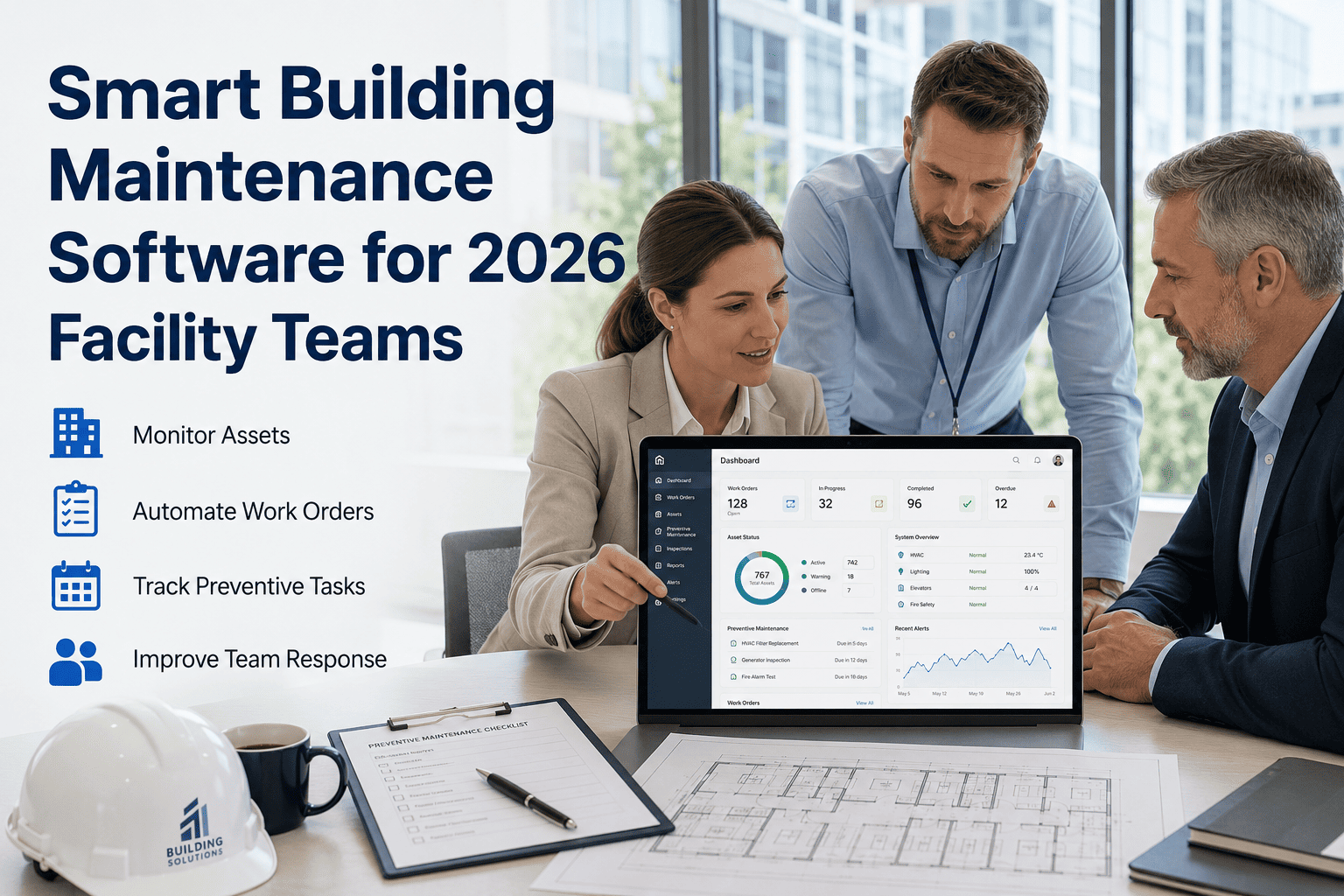
For multi-building commercial portfolios, Oxmaint surfaces AI-detected anomalies, asset condition scores, and predictive work order queues across all facilities from a single dashboard. Directors of Facilities and Asset Managers see which buildings have the highest-risk assets and where predictive maintenance ROI is being generated — without logging into eight separate systems.
BEFORE VS. AFTER
Commercial Building Maintenance: Without AI vs. With Oxmaint AI Predictive Maintenance
AI Predictive Maintenance Impact: Before and After Oxmaint Deployment
ROI AND RESULTS
What AI Predictive Maintenance Delivers in Commercial Buildings: Real Numbers
18–25%
Maintenance Cost Reduction
Deloitte: AI predictive maintenance reduces total maintenance costs by 18–25% vs. preventive approaches — and up to 40% vs. reactive maintenance — across commercial building deployments.
30–50%
Reduction in Unplanned Downtime
Organisations implementing AI predictive maintenance experience 30–50% reduction in unplanned downtime events — the primary driver of tenant disruption, emergency repair premiums, and liability exposure in commercial buildings.
6–12 mo
Typical Payback Period
Initial investment payback from anomaly detection and prevented emergency repairs typically occurs within 6–12 months. ROI ratios of 10:1 to 30:1 commonly reported within 18 months of full deployment.
20–40%
Equipment Lifespan Extension
AI-optimised maintenance intervals extend equipment lifespan by 20–40% vs. calendar-based PM. For a $250,000 chiller, a 40% lifespan extension represents $100,000 in deferred capital replacement cost.
$233B
Annual savings potential for Fortune 500 companies with full AI predictive maintenance adoption
40%
Energy use reduction with IoT and AI integration — IBM Corporation data
25%
Repair cost reduction — McKinsey: CRE early adopters who deployed AI predictive maintenance
FREQUENTLY ASKED QUESTIONS
AI Predictive Maintenance for Commercial Buildings — What Facility Teams Ask Most
Do we need to replace existing building equipment to deploy AI predictive maintenance?
No. Modern wireless IoT sensors retrofit onto virtually any existing equipment without disrupting operations. Vibration sensors clip onto motor housings. Temperature and current sensors attach to electrical panels with no wiring. Pressure transducers connect to existing gauge ports. Most commercial building deployments start with 5–10 critical assets and expand as ROI is confirmed — without any equipment replacement, without IT infrastructure projects, and without specialist on-site engineers. Oxmaint connects retrofitted sensors to the CMMS platform via standard API protocols, enabling the full predictive maintenance workflow from sensor data to auto-generated work order within the first week of deployment.
Sign up free to start your first asset monitoring configuration, or
book a demo to see the sensor-to-work-order workflow applied to your specific equipment types.
How does AI predictive maintenance integrate with an existing Building Management System (BMS)?
Oxmaint integrates with BMS platforms via OPC UA, BACnet, and REST API — the standard communication protocols used by all major commercial BMS vendors including Johnson Controls, Siemens, Honeywell, and Schneider Electric. BMS sensor data feeds directly into Oxmaint's AI analytics layer alongside IoT sensor streams, creating a unified condition monitoring view per asset. Critically, Oxmaint does not replace the BMS — it adds the AI analytics and work order automation layer that most BMS platforms lack. The BMS monitors the building. Oxmaint turns BMS data into maintenance actions. The integration typically completes in days, not months, using standard protocol connectors with no custom middleware development required.
How long does it take to see ROI from AI predictive maintenance in a commercial building?
Most commercial building deployments identify significant savings within the first 30–60 days of monitoring — typically from early anomaly detection on HVAC and electrical systems that were already approaching failure without anyone knowing. The first prevented emergency repair event — a chiller compressor, a cooling tower pump, a transformer thermal fault — typically covers multiple months of platform cost. Full payback from the broader programme (sensor hardware, platform cost, implementation) typically occurs within 6–12 months. McKinsey documents 10:1 to 30:1 ROI ratios within 18 months for facilities that deploy AI predictive maintenance comprehensively across critical assets. Properties averaging 50+ active work orders per month typically recover their full platform investment within 60–90 days.
Book a demo to build an ROI model for your specific portfolio, or
start free and begin monitoring your most critical assets today.
Can Oxmaint AI predictive maintenance handle a multi-building commercial portfolio?
Yes — multi-building portfolio deployment is one of Oxmaint's core use cases. The platform manages the full asset hierarchy across all facilities — Portfolio, Property, System, Asset, Component — from a single instance. AI-detected anomalies, asset condition scores, and predictive work order queues for every building appear in a consolidated portfolio dashboard. Directors of Facilities and Asset Managers see which buildings carry the highest-risk assets and which need capital attention — without logging into separate systems per building. Cross-building benchmarking surfaces which facilities are performing above or below portfolio norms on maintenance cost, PM compliance, and asset condition scores. For investors and ownership groups, Oxmaint generates the portfolio-level CapEx forecasting and asset condition reporting that institutional real estate management requires.
65% of Facility Teams Plan AI Adoption by 2026. The Question Is Whether You Lead or Follow.
Oxmaint delivers AI predictive maintenance for commercial buildings without enterprise implementation timelines, IT projects, or specialist data science teams. Connect your sensors, deploy in days, and start detecting anomalies weeks before they become failures. The first prevented emergency repair pays for months of platform cost.