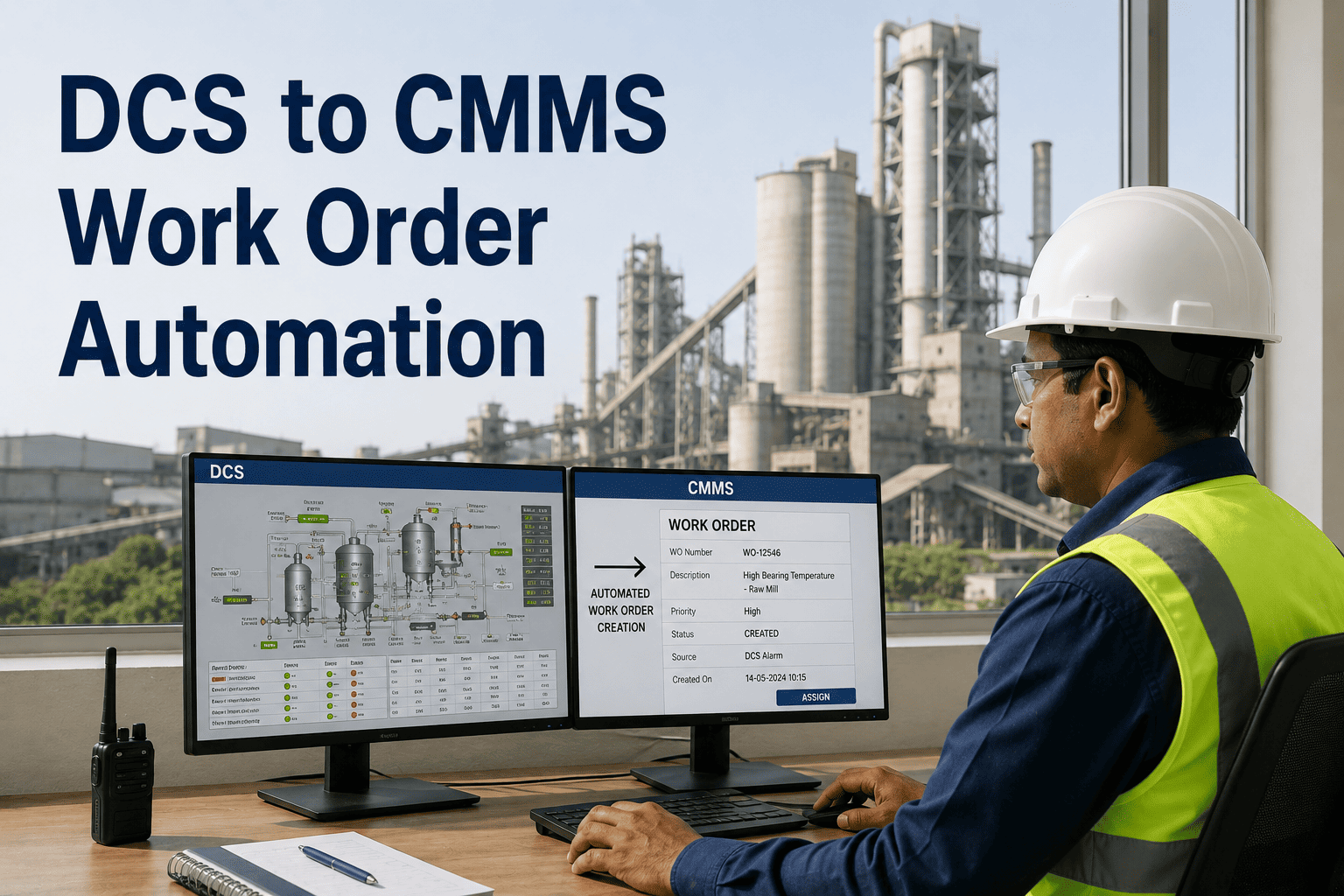
Predictive maintenance models are only as good as the failure history they learn from. In many cement plants that history is a mix of free-text notes, personal abbreviations and codes that mean different things to different crews. A kiln drive "bearing failure" may be logged as a seizure, a noise, a replacement or a lubrication fault, depending on who closed the job. Standard failure codes fix that at the source. This post shows how to design a failure code structure for cement equipment that both people and AI can use, supported by Oxmaint work order tools.
Cement Plant Failure Code Standardization for AI
Build a clean, consistent failure vocabulary so work order history can feed reliability analysis and predictive maintenance.
Why free-text failure records block AI
Models need repeatable categories. Free text can be rich for a human reader but hard for software to group, count or compare.
What each code layer answers
A common structure separates the visible problem, the underlying cause and the corrective action. International guidance such as ISO 14224 on reliability data for equipment follows a similar thinking, and you can adapt it to your plant.
Example codes for cement equipment
These examples are a starting point. Build your own list with maintenance, operations and reliability people who know the plant.
| Equipment class | Example problem codes | Example cause codes | Example remedy codes |
|---|---|---|---|
| Crusher | Excess vibration, blockage, liner damage | Wear, foreign material, overload | Replace liner, clear blockage, adjust setting |
| Mill (raw, coal, cement) | High bearing temperature, oil leak, abnormal noise | Lubrication fault, wear, misalignment | Replace bearing, top up lube, realign |
| Kiln drive | Gear wear, high motor current, vibration | Lubrication, alignment, mechanical wear | Adjust contact, change lubricant, repair |
| Fan | High vibration, imbalance, bearing overheating | Buildup, erosion, bearing wear | Clean, rebalance, replace bearing |
| Conveyor | Belt mistracking, roller seizure, spillage | Wear, misalignment, material buildup | Replace roller, realign, clean |
| Pump | Seal leakage, low flow, cavitation | Seal wear, suction restriction, contamination | Replace seal, clean strainer, adjust operation |
| Electrical | Trip, overheating, insulation alarm | Overload, moisture, loose connection | Reset after cause removed, tighten, dry, replace |
Start recording failures in a way your data team can use
Set up structured problem, cause and remedy fields on work orders, and watch your history become analyzable.
Rules for a failure code list that people will use
How coded data supports AI and analytics
Once failures are recorded consistently, several kinds of analysis become practical.
A practical rollout roadmap
Most plants do better with a staged rollout than a full redesign of every list at once.
Data quality checks to run monthly
Common standardization mistakes
- Copying a generic list. Codes that do not fit cement equipment will be ignored or misused.
- Designing without technicians. People who close the jobs know which categories are real.
- Making the list too detailed. Excess detail lowers quality, since crews pick the fastest option.
- No ownership. Someone must maintain the list, review quality and train new staff.
- Expecting AI to fix messy data. Models cannot recover meaning that was never recorded.
KPIs for failure data quality
How Oxmaint supports structured failure data
Oxmaint maintenance management software helps cement teams capture consistent work history by asset.
Frequently asked questions
Give your future predictive models a failure history they can trust
Standardize how failures are recorded today, and every work order will add useful evidence tomorrow.