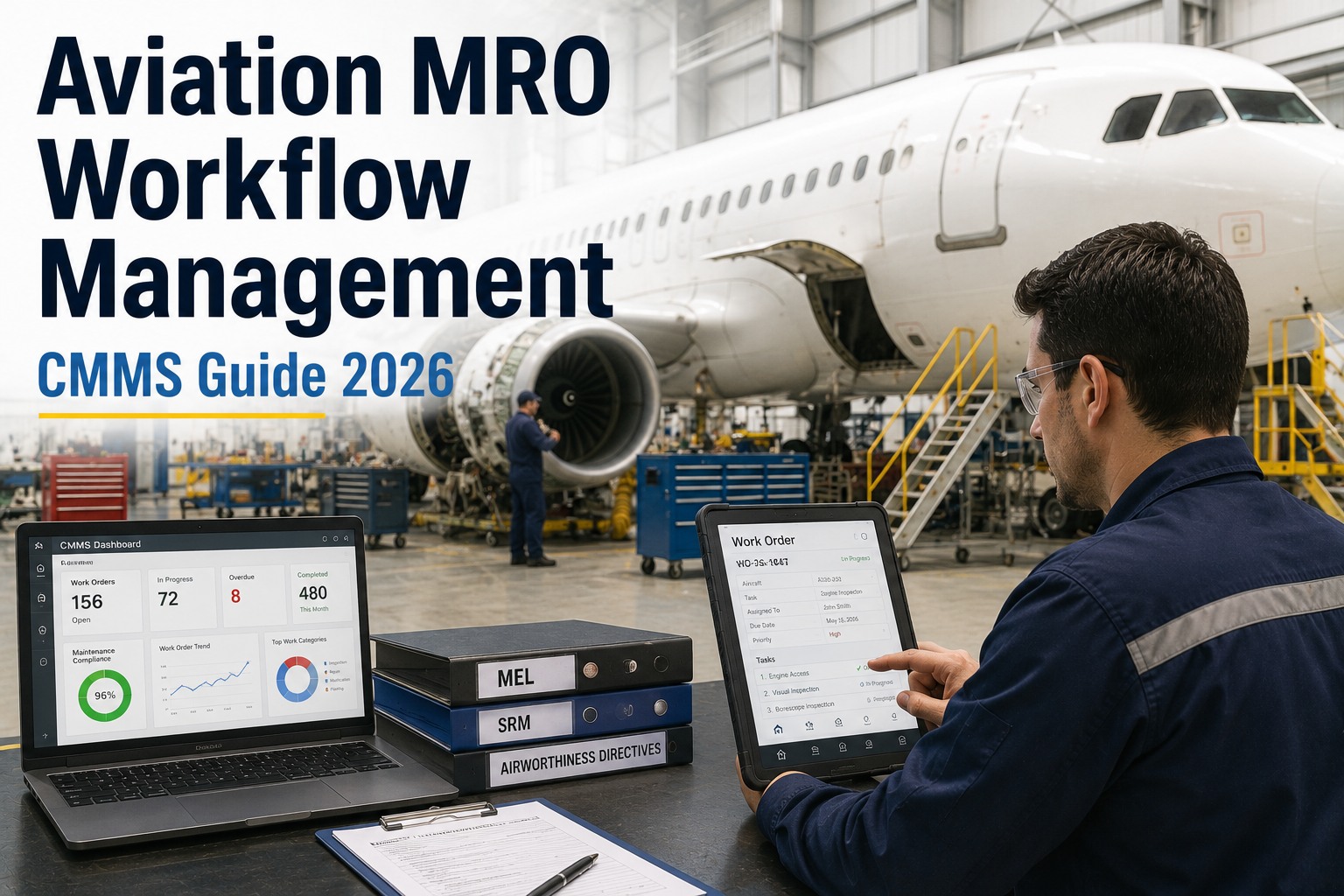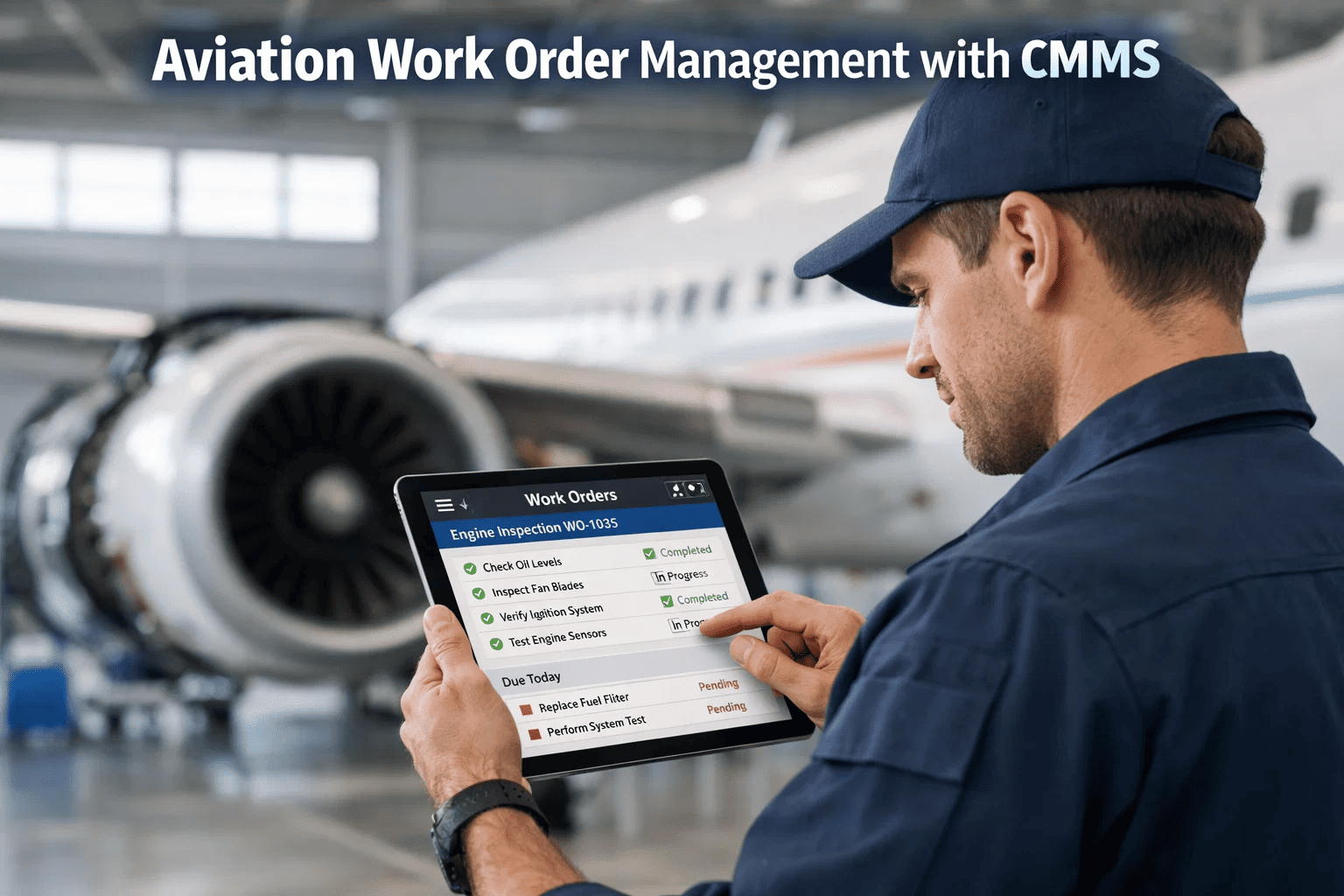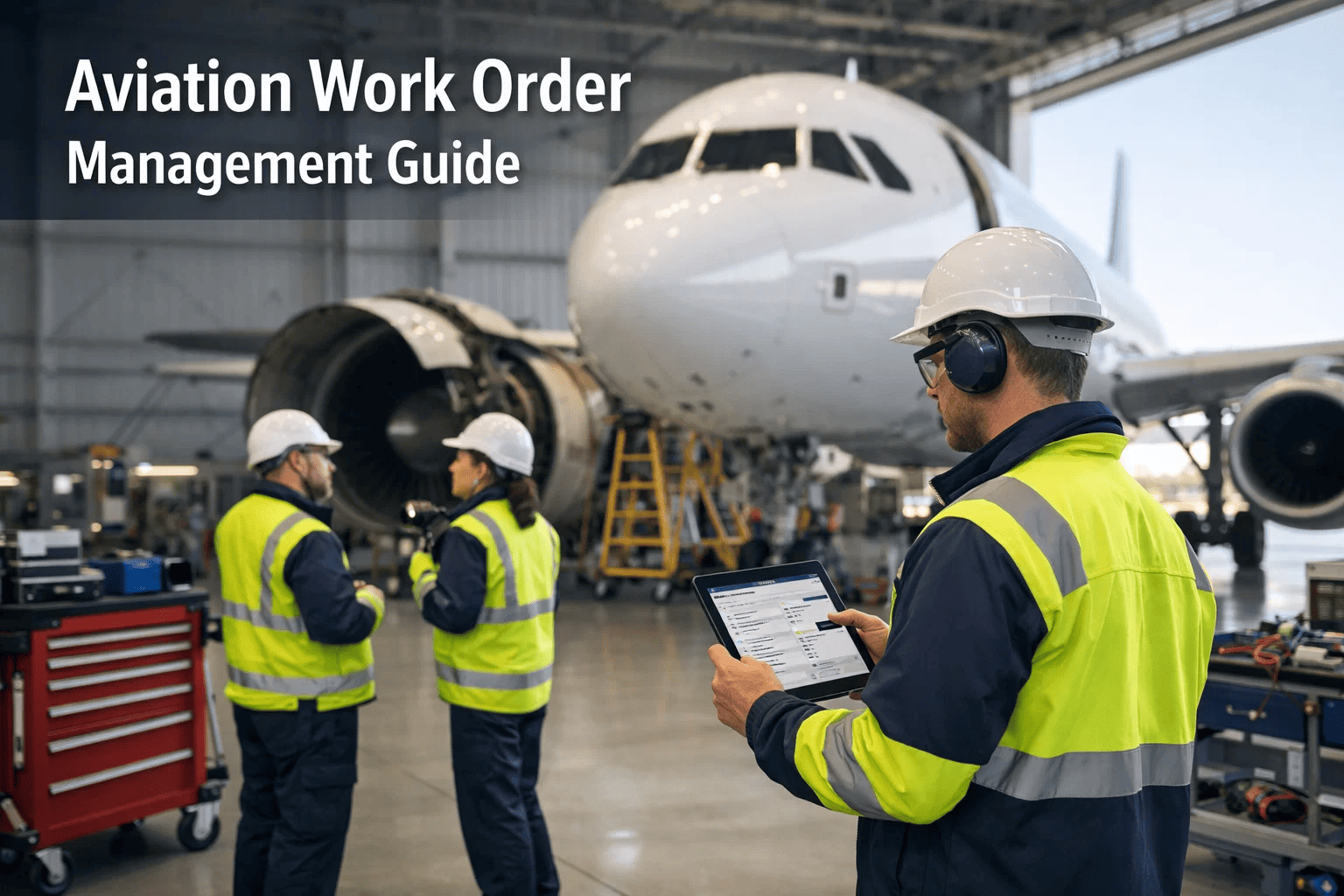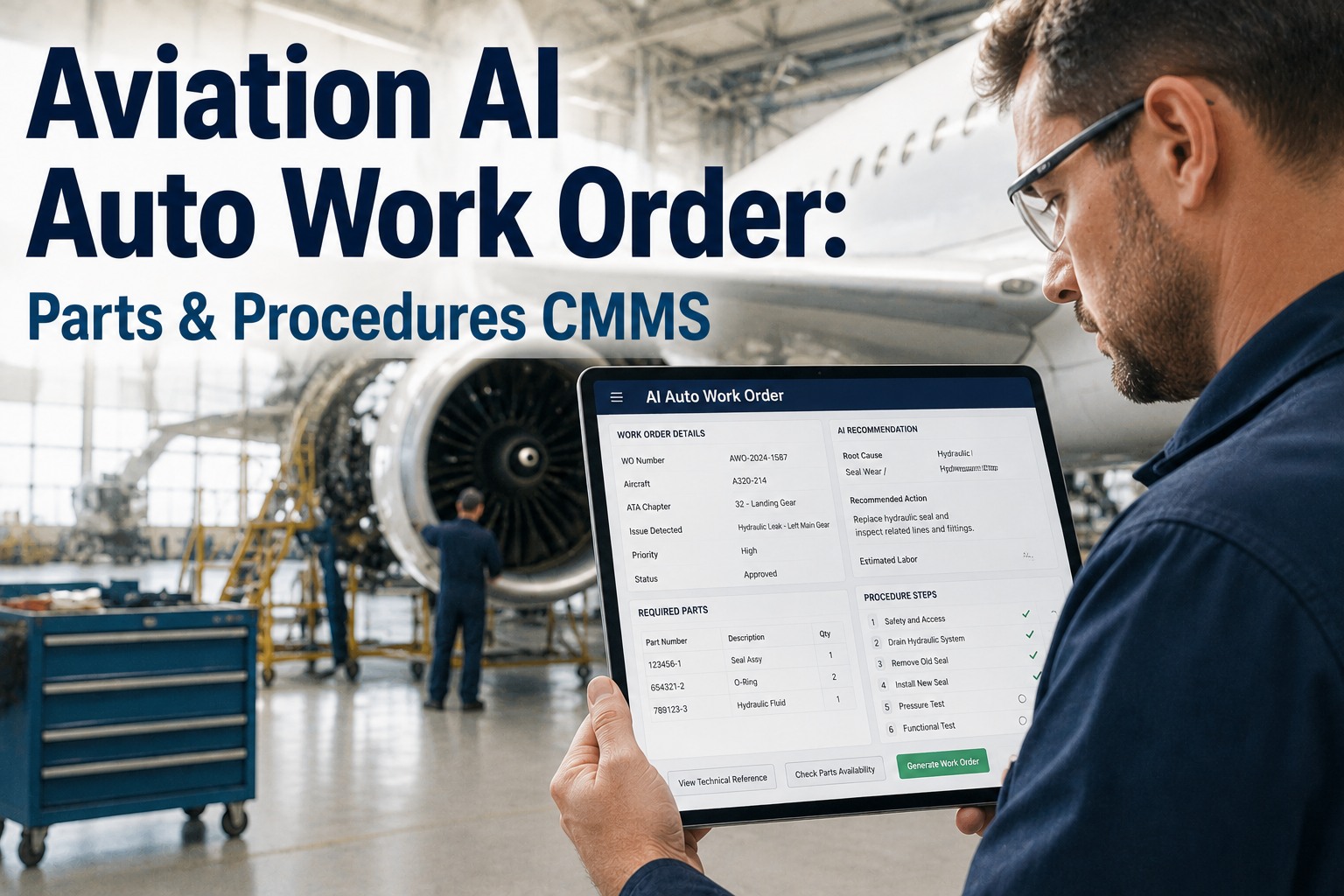
An aviation AI work order system transforms predictive maintenance alerts into ready-to-execute work orders — complete with required parts, step-by-step repair procedures and technician assignments — closing the gap between fault detection and tarmac action. In commercial aviation, where an AOG (aircraft on ground) event costs $10,000–$150,000 per hour, shaving minutes off the alert-to-WO cycle directly protects margins and on-time performance. Modern CMMS AI auto work order generation eliminates manual data entry, reduces human error and ensures the right parts are kitted before a technician ever touches the aircraft. This guide covers the full automatic work order workflow — from AI dispatch logic to parts and procedures attachment — and shows how OxMaint helps airlines cut mean time to notification by up to 80%. You can Start Free Trial to see it live on your fleet today.
CMMS AI AUTO WORK ORDER GUIDE 2026
Can your maintenance team turn a predictive alert into a kitted, assigned work order in under 90 seconds?
Aviation reliability demands zero lag between fault prediction and repair execution. OxMaint's AI-generated work orders automatically pull parts lists, attach OEM repair procedures and route to the right-certified technician — so your fleet spends more time flying and less time grounded.
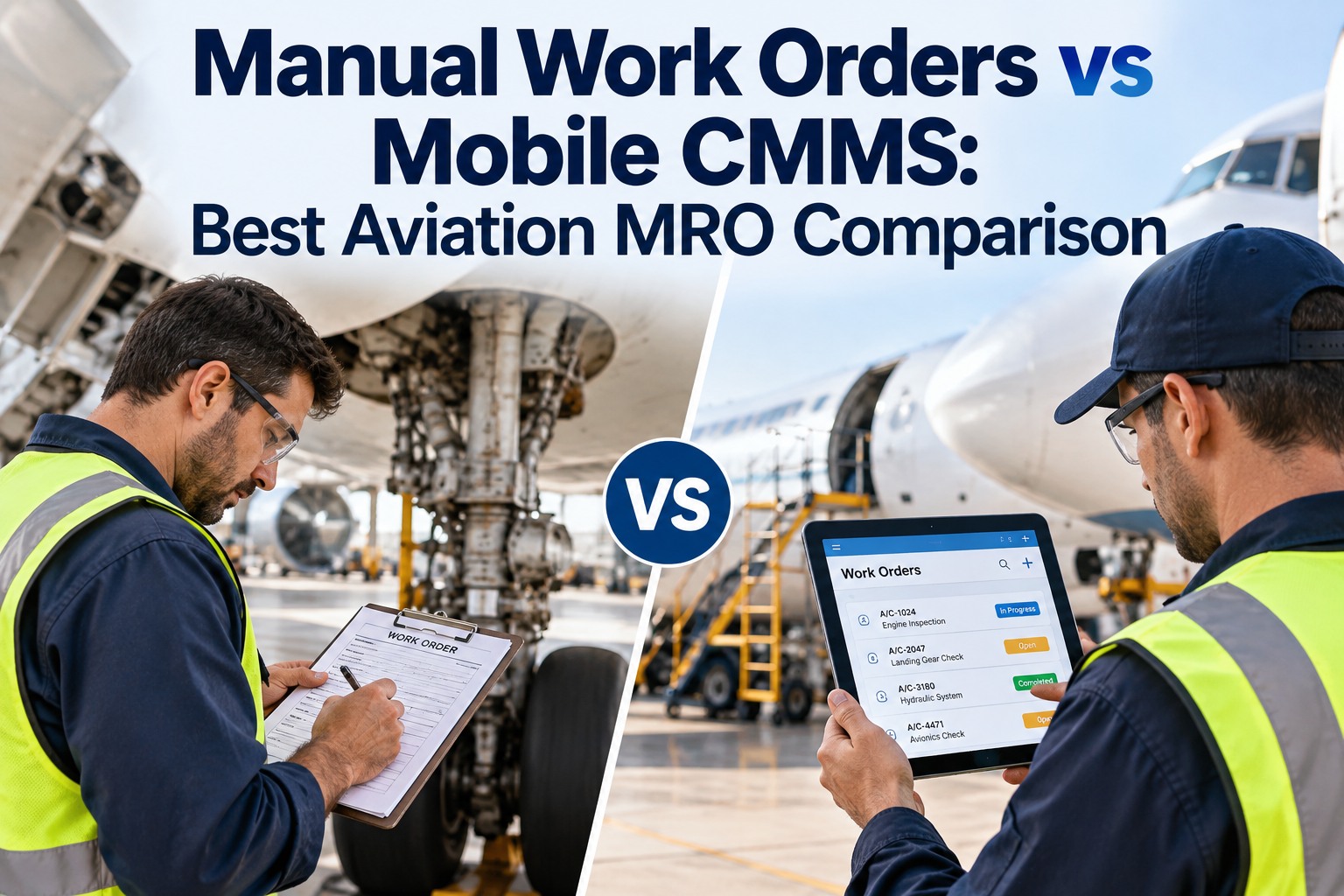
Manual work order creation in aviation MRO averages 18–35 minutes per task. AI auto-dispatch compresses that to seconds — and every minute saved is a minute of AOG cost avoided.
ALERT-TO-WORK-ORDER PIPELINE
How aviation AI work order generation closes the prediction-to-execution loop
The alert-to-WO pipeline is the connective tissue between predictive analytics and maintenance action. When a sensor on a landing gear hydraulic pump crosses a vibration threshold, OxMaint's CMMS AI auto work order engine fires a five-stage sequence — no planner intervention required.
Predictive alert triggered
Condition-monitoring sensors (vibration, temperature, oil debris) cross an AI-defined threshold. OxMaint ingests the signal via IoT integration and validates it against historical failure patterns — false-positive filtering removes ~22% of spurious alerts before they reach the WO queue.
Auto work order creation
Within 8–15 seconds the system creates a structured work order pre-populated with asset ID, fault code, priority level (AOG / non-AOG), ATA chapter reference and the triggering alert's full diagnostic context — data that would take a planner 20+ minutes to compile manually.
Parts list auto-populated
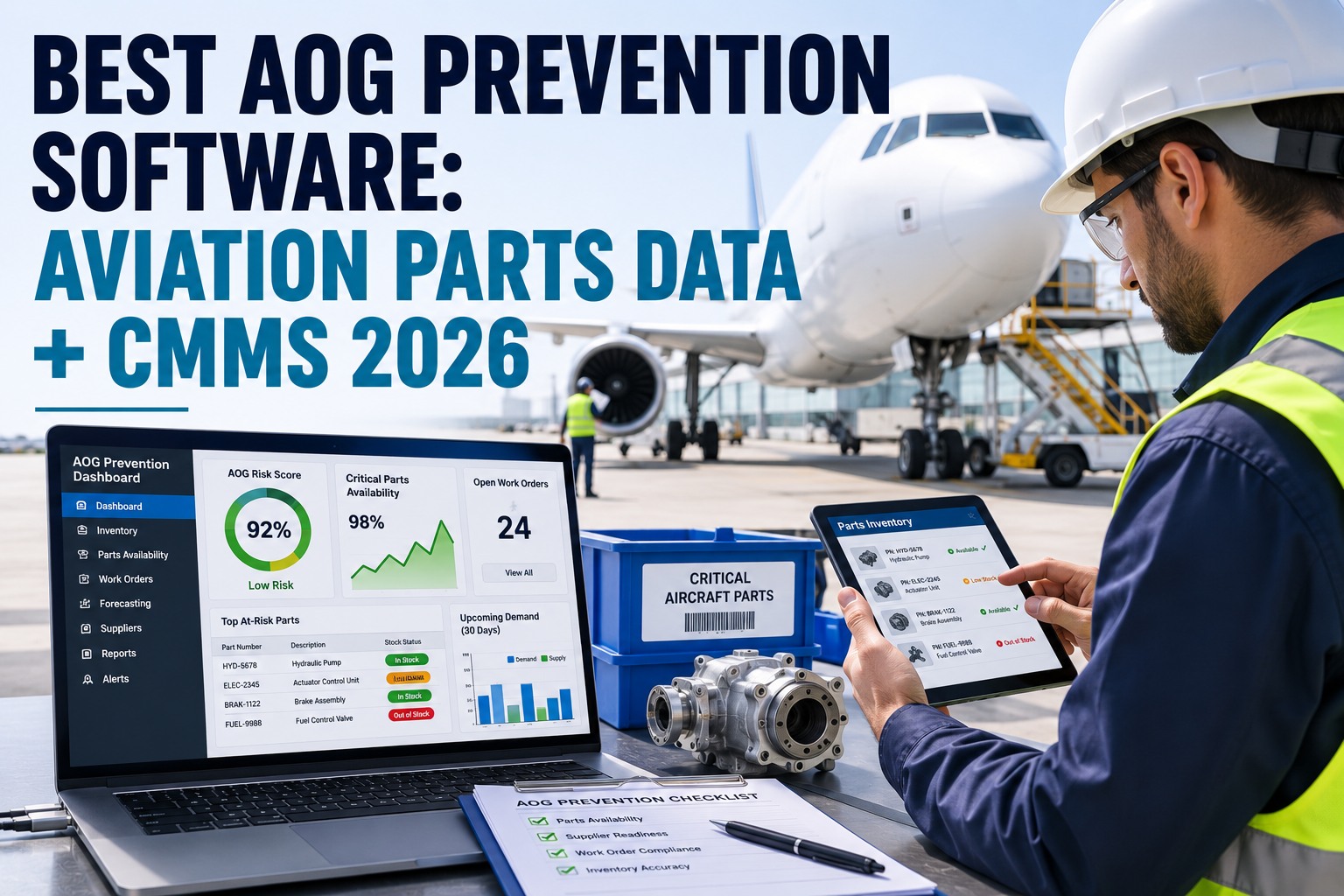
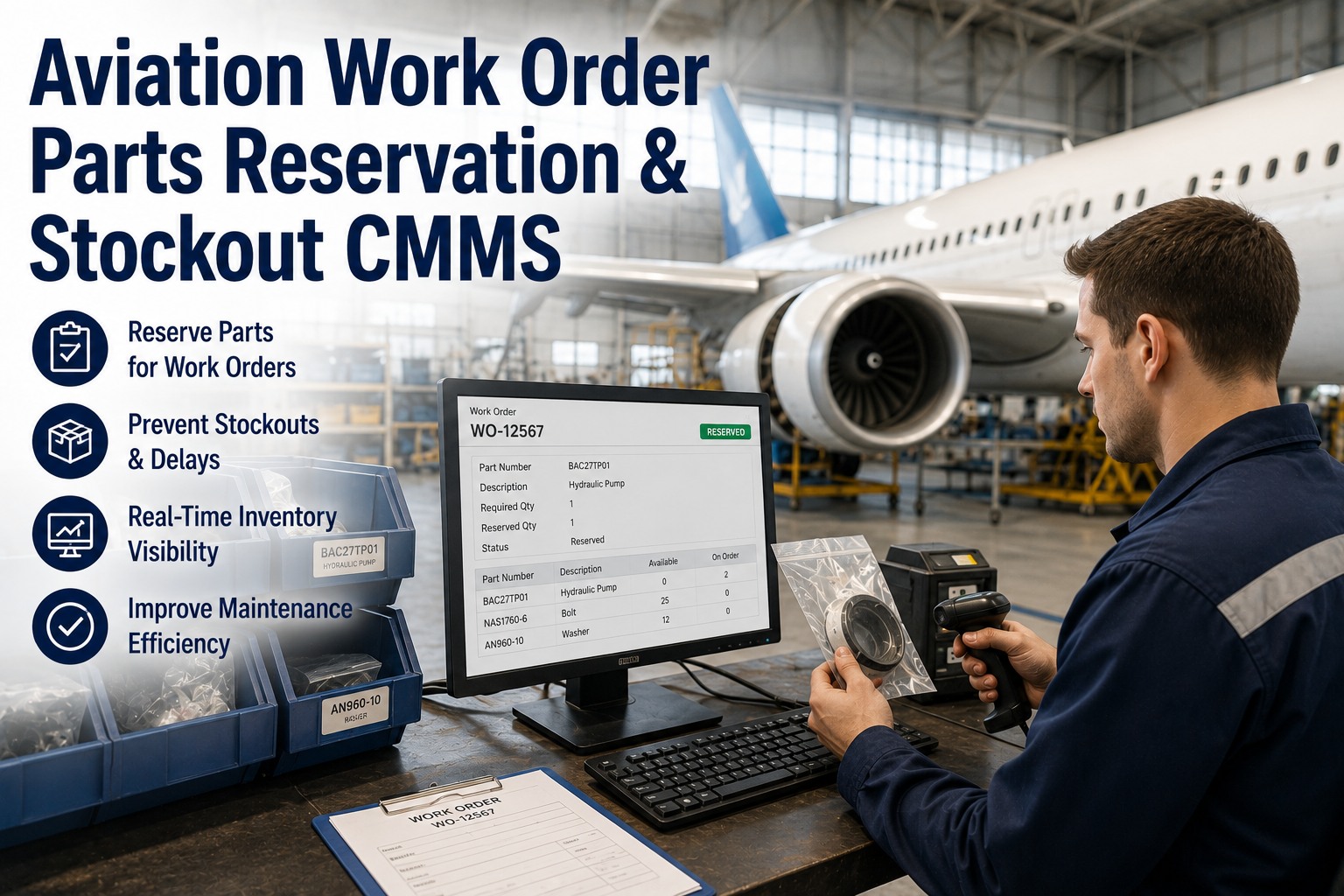
OxMaint cross-references the fault code against the aircraft's IPC (illustrated parts catalog) and bill of materials. Required spares — seals, bearings, hydraulic lines — are automatically reserved in inventory. If stock is below minimum, a purchase requisition is generated simultaneously.
Repair procedures attached
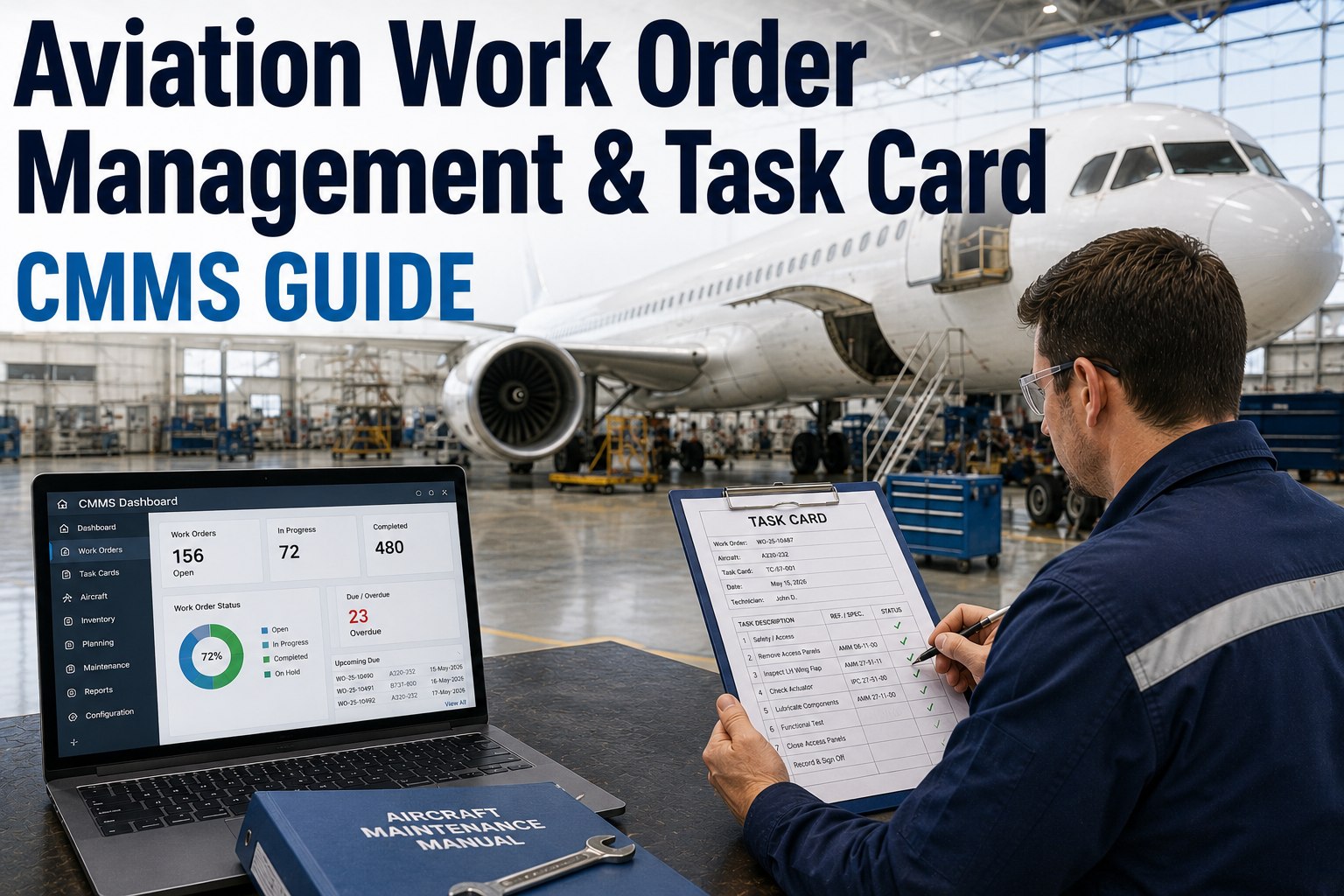
The relevant OEM maintenance manual section (e.g., AMM 32-42-11) and job card steps are embedded directly in the work order. Estimated labor hours, required tooling and safety lockout/tagout procedures are included — giving the technician a single-screen execution package.
Technician assignment & dispatch
CMMS auto-dispatch evaluates technician certifications (e.g., A&P license, type-rating), shift availability, location and current workload. The WO routes to the best-fit mechanic with a mobile push notification — including bay assignment, parts pickup location and estimated completion window.
PARTS & PROCEDURES AI
What goes inside an AI-generated aviation work order?
A work order without parts and procedures is just a title. OxMaint's CMMS AI procedures engine populates every field a technician, stores controller and auditor needs — from serialized part numbers to torque values — so execution is turnkey and audit-ready.
Intelligent parts recommendation
AI matches the fault code to the IPC and historical consumption data, recommending exact part numbers with alternates. Average parts-lookup time drops from 12 minutes to under 30 seconds — and kit completeness on first attempt rises above 96%.
OEM procedure auto-attachment
The correct AMM, IPC or CMM section is linked inside the WO with step-by-step job card instructions, torque specs, inspection tolerances and required calibrated tooling — eliminating the technician's manual document hunt.
Skills-based auto dispatch
CMMS auto-dispatch matches technician certifications, type ratings and shift patterns to the WO's skill requirements. The right mechanic gets the job — no planner spreadsheet, no phone calls, no mismatched assignments.
Inventory reservation & procurement
Required parts are instantly reserved in the spare-parts inventory. If stock falls below the reorder point, OxMaint generates a purchase requisition with preferred vendor, lead time and expected delivery — keeping AOG recovery on schedule.
MANUAL VS AI WORK ORDERS
Manual work order creation vs CMMS AI auto work order
A mid-size regional airline operating 45 aircraft generates roughly 8,000 corrective work orders per year. At an average of 22 minutes of planner time per manual WO, that's over 2,900 hours of administrative labor — the equivalent of 1.4 full-time planners — eliminated by AI auto-generation.
| Metric | Manual WO creation | OxMaint AI auto WO |
|---|---|---|
| Alert-to-WO creation time | 18–35 minutes | 8–15 seconds |
| Parts list accuracy (first attempt) | 68–74% | 96%+ |
| Procedure document attachment | Manual PDF lookup | Auto-linked AMM/CMM section |
| Technician assignment method | Planner phone calls / spreadsheet | Skills-based auto-dispatch |
| Mean time to notification (MTTN) | 45–90 minutes | Under 2 minutes |
| Audit trail completeness | 62% of WOs have gaps | 100% digital traceability |
| Annual planner hours saved (45-aircraft fleet) | — | ~2,900 hours |
A 120-aircraft narrow-body fleet
Consider a carrier operating 120 A320/B737 family aircraft with approximately 21,000 corrective work orders annually. At $85 per labor-hour for maintenance planners and an average AOG cost of $18,000 per hour, even a 15-minute reduction in alert-to-execution time saves the airline roughly $3.2M per year in AOG exposure and $89,000 in planner administrative overhead. That's the direct ROI of CMMS AI auto work order deployment — before counting the reliability gains from catching failures earlier.
HOW OXMAINT HELPS
How OxMaint's AI work order CMMS delivers measurable ROI for aviation
OxMaint is built for maintenance and reliability teams that can't afford manual lag. Every capability maps directly to a measurable outcome — from MTTN reduction to first-time-fix rate improvement. Here's what changes when you deploy OxMaint as your aviation CMMS.
Predictive alerts become assigned, kitted work orders in under 2 minutes — eliminating the planner bottleneck that delays AOG recovery.
AI cross-references fault codes with IPC and live inventory, so technicians get the right parts on the first trip to the stockroom — not the third.
By auto-generating work orders at the first predictive signal, OxMaint shifts maintenance from reactive to planned — recovering schedule integrity before failures cascade.
Every WO, parts transaction, procedure reference and technician signature is timestamped and traceable — satisfying FAA, EASA and ICAO Annex 6 documentation requirements instantly.
Alert-to-WO automation engine
OxMaint ingests sensor data and predictive model outputs, validates alerts against failure-history baselines and auto-generates prioritized work orders with full context — no human trigger required. Outcome: cut MTTN by up to 80% and eliminate missed-alert incidents.
Auto-populated parts & reservation
Fault codes map to IPC references; required spares are auto-reserved and procurement is triggered when stock is low. Outcome: raise first-time-fix rate above 92% and cut parts-related WO delays by 40%.
Embedded OEM repair procedures
AMM/CMM sections, job cards and safety procedures are auto-linked inside each WO — viewable on the technician's mobile device. Outcome: reduce procedure-lookup time by 90% and improve compliance audit pass rates to near-100%.
Skills-certified technician routing
Auto-dispatch evaluates licenses, type ratings, shift coverage and workload to route each WO to the right mechanic instantly. Outcome: eliminate assignment errors, reduce rework from unqualified interventions and balance technician utilization.
MTTN FORMULA
How to calculate the cost savings of AI auto work orders in aviation
The ROI of CMMS AI auto work order deployment is calculable. Use this formula to quantify what manual WO lag is costing your airline — and what OxMaint recovers.
Annual AOG cost recovered by AI auto work orders
Annual Savings = (Manual MTTN − AI MTTN) × AOG Events/Year × Hourly AOG Cost
Example — 120-aircraft fleet
(0.75 hrs − 0.03 hrs) × 1,400 events × $18,000/hr = $18.1M / year recovered
Plus $89K in planner labor savings and an estimated $1.2M in reduced rework from parts/procedure errors. Total estimated annual impact: ~$19.4M.
SEE IT ON YOUR FLEET
Book a 30-minute demo — watch a predictive alert become a kitted, assigned work order live
Bring your top 3 recurring fault codes. We'll show you exactly how OxMaint's aviation AI work order engine populates parts, procedures and dispatch — tailored to your aircraft types and operation.
FAQ
Aviation AI auto work order — frequently asked questions
How does an aviation AI work order system create work orders automatically?
When a condition-monitoring sensor or predictive model flags a developing fault, the CMMS AI auto work order engine validates the alert against historical failure patterns, then generates a structured work order within 8–15 seconds. The WO is pre-populated with asset ID, fault code, priority, ATA chapter, required parts (from the IPC), OEM repair procedures and the best-fit technician assignment — all without planner intervention. You can see this in action with a Book a Demo session.
What parts and procedures does an AI-generated aviation work order include?
Each AI-generated WO includes the exact part numbers and serials from the aircraft's illustrated parts catalog, alternate part recommendations, live inventory availability and auto-reservation. On the procedures side, it embeds the relevant AMM or CMM section with step-by-step job card instructions, torque values, inspection tolerances, required calibrated tooling and safety/lockout-tagout procedures — giving the technician a complete, single-screen execution package.
How does CMMS auto-dispatch assign the right technician in aviation maintenance?
OxMaint's auto-dispatch evaluates each technician's active certifications (A&P license, type ratings, specific ATA chapter authorizations), current shift status, location at the maintenance base and real-time workload. It routes the work order to the best-qualified, available mechanic via mobile push notification — including bay assignment, parts pickup location and estimated completion window. This eliminates the planner phone-call chain and prevents unqualified-assignment rework.
How much can airlines save by switching to AI auto work order generation?
Savings depend on fleet size and AOG frequency, but a 120-aircraft narrow-body airline typically recovers $15–20M annually by compressing mean time to notification from 45 minutes to under 2 minutes. This includes AOG cost avoidance ($18K/hr average), planner labor savings (~2,900 hrs/year for a 45-aircraft regional fleet) and reduced rework from parts and procedure errors. The Start Free Trial includes an ROI calculator tailored to your fleet.
Is an AI work order CMMS compliant with FAA and EASA maintenance documentation requirements?
Yes. OxMaint creates a 100% digital, timestamped audit trail for every work order — including the triggering alert, parts consumed (with serials), procedures referenced, technician who performed the work, inspector sign-off and return-to-service documentation. This satisfies FAA Part 145, EASA Part-145 and ICAO Annex 6 record-keeping requirements and makes regulatory audits substantially faster, since records are searchable and exportable on demand.
READY TO DEPLOY?
Stop writing work orders by hand. Let AI build them in seconds.
Deploy OxMaint's aviation AI work order engine and turn every predictive alert into a kitted, procedure-attached, technician-assigned work order — automatically. Your fleet flies more. Your planners focus on strategy, not data entry.
Free 14-day trial · No credit card