Aviation is experiencing its most significant technological transformation in decades. In 2026, airports worldwide are no longer static infrastructure hubs—they are evolving into intelligent, interconnected ecosystems powered by artificial intelligence, predictive analytics, and real-time data integration. From biometric boarding gates that recognize passengers instantly to digital twins that simulate entire airport operations before they happen, technology is reshaping every aspect of how airports operate, how passengers travel, and how facilities manage their critical infrastructure. The pressure to adopt these innovations has never been stronger: global air travel is projected to reach 18.9 billion passengers by 2047, sustainability mandates are tightening, and passenger expectations for seamless, contactless experiences continue to rise. This comprehensive guide explores the ten most transformative airport technology trends defining aviation operations in 2026 and beyond.
Transform Your Airport Operations with Next-Gen Technology
Oxmaint CMMS delivers AI-powered maintenance, predictive analytics, and digital asset intelligence built specifically for modern airport infrastructure management.
1. AI-Driven Predictive Operations: From Reactive to Proactive Airport Management
The aviation industry is witnessing a fundamental shift from reactive problem-solving to proactive, AI-powered operational management. Agent-based artificial intelligence systems are no longer experimental add-ons; they have become the operational backbone of intelligent airports. Unlike traditional AI that waits for human requests and provides suggestions, agent-based AI operates within closed-loop systems, processing massive data streams in real time to make immediate operational decisions without systematic manual intervention.
The practical impact is extraordinary. Modern AI systems anticipate security checkpoint congestion 20 minutes before it occurs by cross-referencing computer vision data with ground transportation arrival forecasts, then dynamically trigger checkpoint openings and reassign security personnel. When flight delays are detected in advance, AI systems automatically reassign gates for subsequent flights, reschedule ground support equipment, and adjust baggage loading slots—all without human intervention. This predictive capability delivers what industry experts call a "virtual terminal expansion," where airports increase their effective passenger capacity without pouring a single cubic meter of new concrete.
The technology stack powering these systems integrates Internet of Things sensors, edge computing infrastructure, machine learning models, and real-time decision engines. Together, these components analyze weather patterns, traffic density, airspace conditions, and historical performance data to deliver smarter, data-driven decisions that improve safety while reducing delays. For airport facility managers, this translates to optimized resource allocation, reduced operational costs, and significantly improved passenger flow management.
AI Predictive Operations in Action
2. Digital Twin Technology: Virtual Replicas Transforming Infrastructure Management
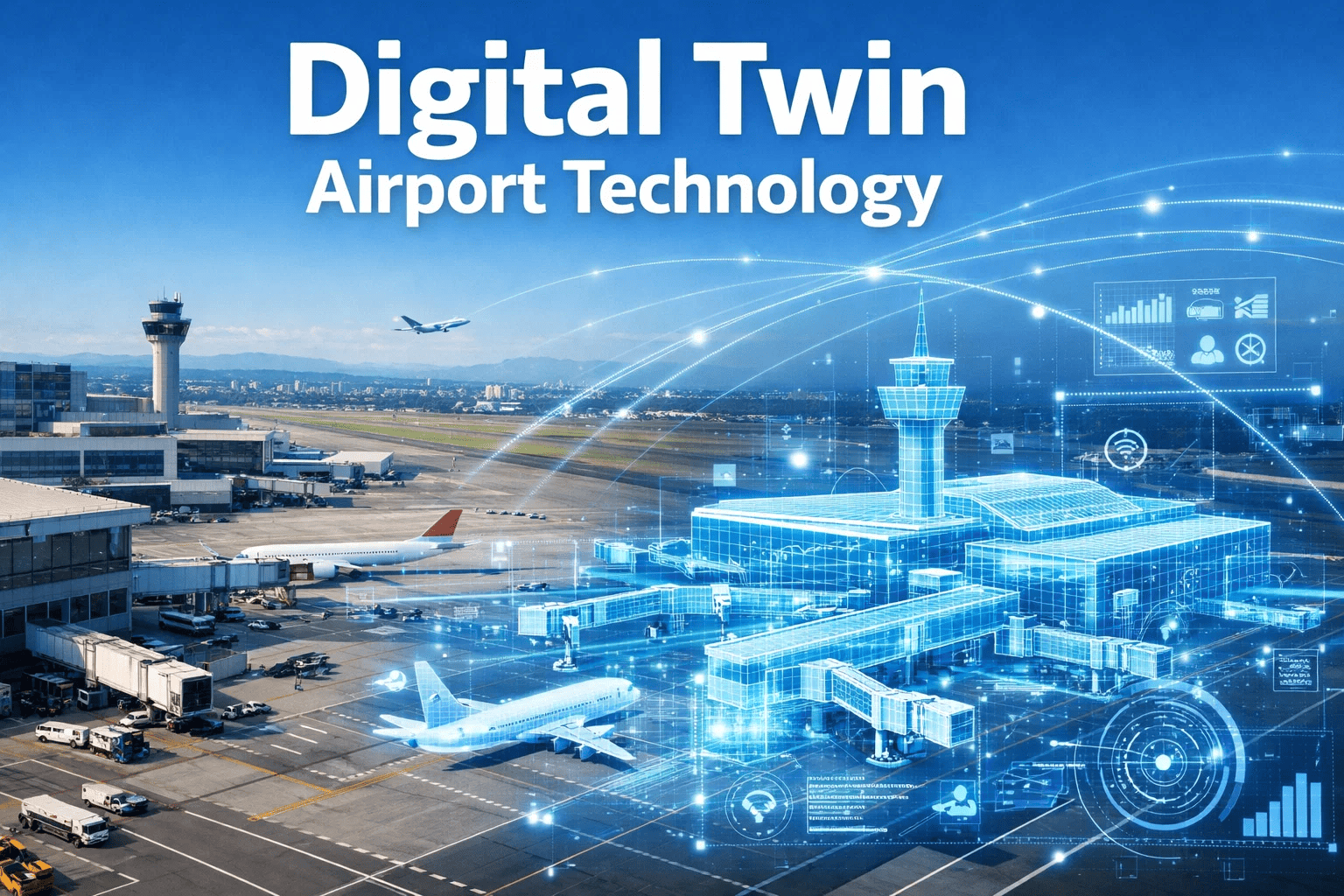
Digital twins represent one of the most powerful innovations in airport infrastructure management. These are no longer static 3D models but living organisms that react in real time, powered by massive IoT data streams. By combining equipment geolocation with performance sensors, building management systems, and passenger traffic data, digital twins create dynamic virtual replicas of entire airport operations.
The operational applications are transformative. Airports use digital twins to simulate emergencies, model crowd dynamics, optimize spatial configurations, and test what-if scenarios for planned projects and upgrades without disrupting live operations. When integrated with energy management systems, digital twins optimize HVAC and lighting consumption in real time by tracking exactly where passengers are located throughout the terminal. Energy is consumed only where passengers are actually present, delivering immediate carbon footprint reductions and significant decreases in energy-related operating costs.
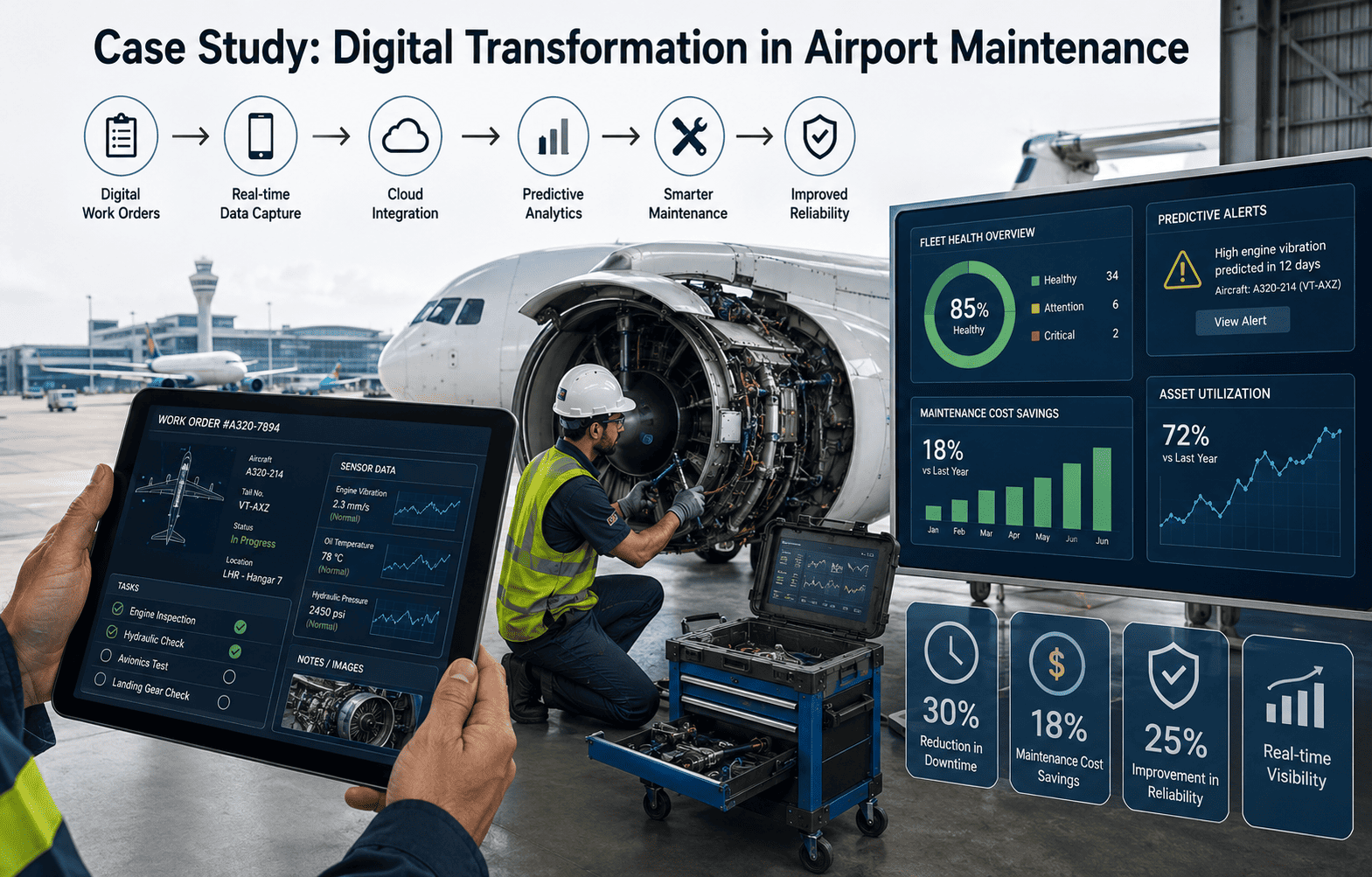
For maintenance operations, digital twins enable predictive infrastructure management at unprecedented scale. Facility managers can simulate the impact of equipment failures, test maintenance scenarios, model lifecycle degradation patterns, and optimize capital planning decisions based on actual asset health profiles rather than arbitrary replacement schedules. This technology transforms how airports manage everything from baggage handling systems to runway infrastructure, creating a comprehensive digital layer that makes invisible operations visible and predictable.
3. Biometric Identity Systems: The Paperless Journey Becomes Reality
Biometric technology is rapidly evolving from isolated pilot programs to comprehensive passenger processing systems. Nearly half of airports plan to implement biometric identity management systems by the end of 2026, marking a decisive shift toward contactless, document-free travel experiences. The technology enables single-token journeys where facial or iris recognition templates are linked to travel documents and boarding passes, allowing passengers to move seamlessly through check-in, bag drop, security screening, lounge access, and boarding gates without repeatedly presenting physical credentials.
The International Civil Aviation Organization is developing Digital Travel Credentials that will allow passengers to verify their identity without physical passports or boarding passes. The Transportation Security Administration has expanded its Digital ID program to more than 250 airports across the United States, allowing travelers to use mobile driver's licenses for identity verification. Leading airports including Singapore Changi, London Heathrow, and Atlanta Hartsfield-Jackson are deploying comprehensive biometric boarding and facial recognition systems to streamline processing times while maintaining stringent security standards.
Beyond passenger processing, biometric systems are being extended to commercial applications including lounge access, parking verification, and retail payments, creating more personalized offerings and smoother transaction experiences. The key shift in 2026 is moving from standalone deployments to integrated, multi-stakeholder strategies where airlines, airports, and border agencies collaborate to deliver truly seamless curb-to-gate experiences. Privacy-by-design frameworks ensure passengers maintain control over their biometric data while enjoying the convenience benefits.
Biometric Journey Transformation Points
4. Robotics and Autonomous Systems: Automating Ground Operations
Airport robotics has transitioned from futuristic concept demonstrations to operational deployment across baggage handling, aircraft maintenance, passenger services, and ground transportation. Airports are leveraging autonomous vehicles and robotic assistants to streamline workflows, reduce errors, and improve overall customer satisfaction. Self-driving passenger transport robots can now understand their environment, avoid obstacles, and navigate terminals autonomously, offering weary travelers the ability to be transported directly to their gates without physical effort.
Baggage handling represents one of the most promising applications for robotics. Automated systems provide constant baggage flow that reduces peak demand pressures, counters rising labor costs, and delivers higher reliability than manual operations. Journey Robotics and similar companies have developed autonomous baggage handling systems that are being validated through major airline accelerator programs and deployed at airports worldwide. These systems integrate with existing infrastructure while delivering measurable improvements in processing speed and error reduction.
Airside operations are also being transformed through autonomous ground support equipment. Electric autonomous vehicles handle aircraft towing, baggage transport, and equipment movement with greater precision and consistency than human-operated alternatives. The technology reduces fuel waste, lowers carbon emissions, and improves safety by eliminating human error in high-risk operational environments. As fleet coordination platforms mature and integrate with real-time operational data and AI decision engines, airports will unlock new levels of agility and resilience across both passenger-facing and behind-the-scenes operations.
5. Airport Predictive Operations Centers: Unified Command and Control
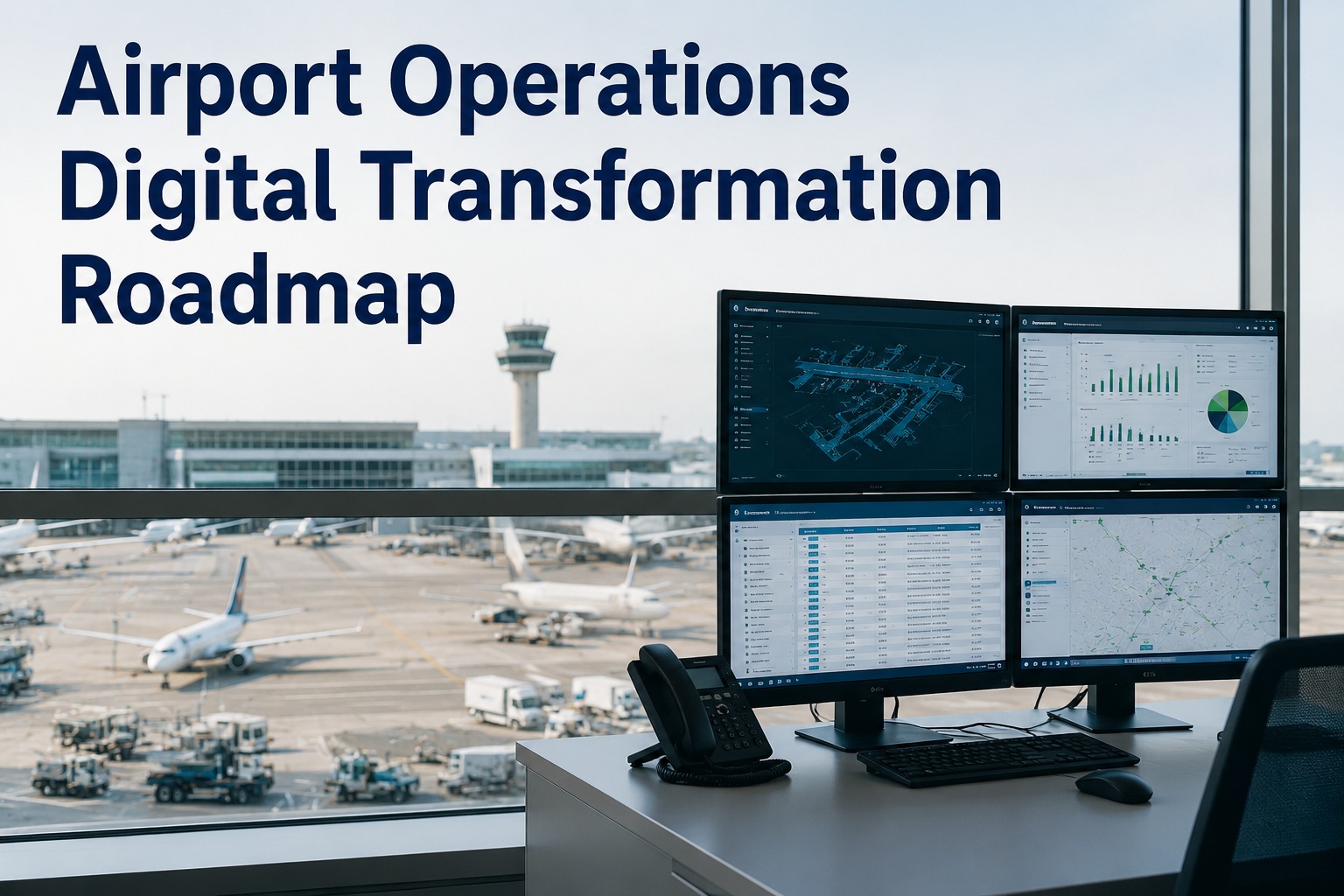
Modern Airport Predictive Operations Centers represent the evolution from fragmented management tools to integrated, cloud-based platforms that function as an airport's central operating system. Contemporary operations centers harness digital twins, AI, machine learning, big data analytics, and Internet of Things integration to deliver comprehensive real-time situational awareness across terminal, landside, and airside operations.
These platforms bring together demand and capacity forecasting across check-in counters, security lanes, immigration checkpoints, baggage systems, and gate assignments. Live operational dashboards provide alerts and scenario planning capabilities for airport operations control centers and all stakeholders. Resource management modules allocate counters, security lanes, aircraft stands, and staff based on live and forecasted demand patterns. Data integration capabilities ingest information from Airport Operational Databases, flight schedules, airline systems, ground handlers, security platforms, biometric processors, and IoT sensor networks into a single trusted source of operational truth.
The next frontier for these systems is real-time simulation: using current data to model future operational states, test hypothetical scenarios, and understand the downstream impact of schedule changes before they occur. This capability transforms airport management from reactive crisis response to proactive optimization. Facilities can identify bottlenecks before they materialize, allocate resources with surgical precision, and coordinate multi-stakeholder responses to disruptions with unprecedented speed and accuracy.
6. Sustainable Aviation Technology: Renewable Energy and Decarbonization
In 2026, technology is critical to turning climate pledges into measurable outcomes, with many airports pursuing energy self-sufficiency through large-scale renewable projects. Istanbul and Athens International Airports are approaching full electricity independence through vast solar farms integrated directly into their operations. Similar renewable energy projects are proliferating across Europe, the Middle East, and Asia, enabling airports to simultaneously reduce emissions and lower energy costs.
Microgrids integrating solar technology, battery storage, and advanced inverters are transforming airports into energy hubs capable of maintaining resilience during power disruptions. Predictive energy management systems powered by IoT sensors and artificial intelligence allow terminals to optimize energy consumption in real time based on passenger presence, weather conditions, and operational demand. London City Airport modernized its electrical infrastructure to connect solar panels, storage systems, and smart controls into one unified network, successfully doubling its electricity capacity while reducing grid dependence.
Electrification extends beyond building systems to ground operations. Electric ground support equipment and vehicles have become standard at many major airports, with operators investing heavily in charging infrastructure to enable fully zero-emission airside operations. Simultaneously, airports are preparing for a new fuel ecosystem built around sustainable aviation fuel, hydrogen, and e-fuels. This comprehensive approach to decarbonization positions forward-thinking airports as leaders in the global transition to sustainable aviation.
Ready to Modernize Your Airport Infrastructure?
Oxmaint delivers the predictive maintenance, asset intelligence, and operational analytics that power next-generation airport operations worldwide.
7. Contactless and Remote Processing: Extending Airport Experiences Beyond Terminals
Contactless technology has evolved far beyond its pandemic-era hygiene origins. In 2026, contactless systems are central to how airports manage capacity, reduce friction points, and extend the airport experience far beyond physical terminal buildings. Remote processing has progressed from isolated trials to strategic operational leverage for passenger satisfaction and smoother capacity management.
Remote bag drop and city check-in services now operate in city centers, hotels, cruise terminals, and convention centers, effectively shifting passenger demand away from peak periods at terminal curbs and check-in halls. Passengers can complete check-in and baggage processing before even arriving at the airport, dramatically reducing terminal congestion during high-traffic periods. This distributed processing model allows airports to handle increased passenger volumes without expanding physical terminal infrastructure.
Mobile applications have become essential airport operational tools. They provide passengers with real-time gate updates, queue time predictions, wayfinding assistance, and personalized retail recommendations based on their location and preferences. For airports, smartphone data delivers valuable insights into passenger behavior patterns, dwell time analytics, and space utilization metrics that enable tailored retail strategies and smarter terminal design decisions. The result is greater passenger choice, improved time efficiency, and enhanced commercial revenue—critical differentiators as airports compete to deliver superior travel experiences.
8. Advanced IoT and Smart Infrastructure: Connected Airport Ecosystems
The evolution of Internet of Things technology and smart infrastructure systems has created airport environments where every asset, sensor, and operational system communicates within a unified digital ecosystem. High-speed private networking, edge intelligence, and secure infrastructure enable real-time insights and automation at scale across all airport operations.
Modern IoT deployments extend across building management systems, environmental monitoring, asset tracking, passenger flow analysis, and equipment health monitoring. Sensors continuously stream data on temperature, humidity, air quality, energy consumption, equipment vibration, passenger density, and operational status. Edge computing infrastructure processes this data locally, enabling immediate automated responses without relying on cloud connectivity for time-critical decisions.
The practical applications are extensive. Smart HVAC systems automatically adjust temperature and ventilation based on real-time passenger occupancy and air quality readings. Asset tracking systems provide continuous visibility over ground support equipment, baggage carts, and maintenance tools, eliminating search time and preventing loss. Passenger flow sensors identify congestion patterns and trigger automated alerts to operations teams, enabling proactive intervention before queues become problematic. This comprehensive connectivity transforms airports from collections of independent systems into intelligent, self-optimizing operational environments.
Traditional vs. Smart Airport Infrastructure Comparison
| Operational Dimension | Traditional Airport | Smart Airport 2026 |
|---|---|---|
| Passenger Processing | Manual document checks, physical boarding passes, paper-based verification | Biometric recognition, digital credentials, single-token contactless journey |
| Operations Management | Fragmented systems, reactive problem-solving, manual coordination | Unified operations center, predictive AI, automated resource allocation |
| Energy Consumption | Fixed schedules, grid-dependent, manual controls | AI-optimized real-time adjustment, renewable microgrids, occupancy-based systems |
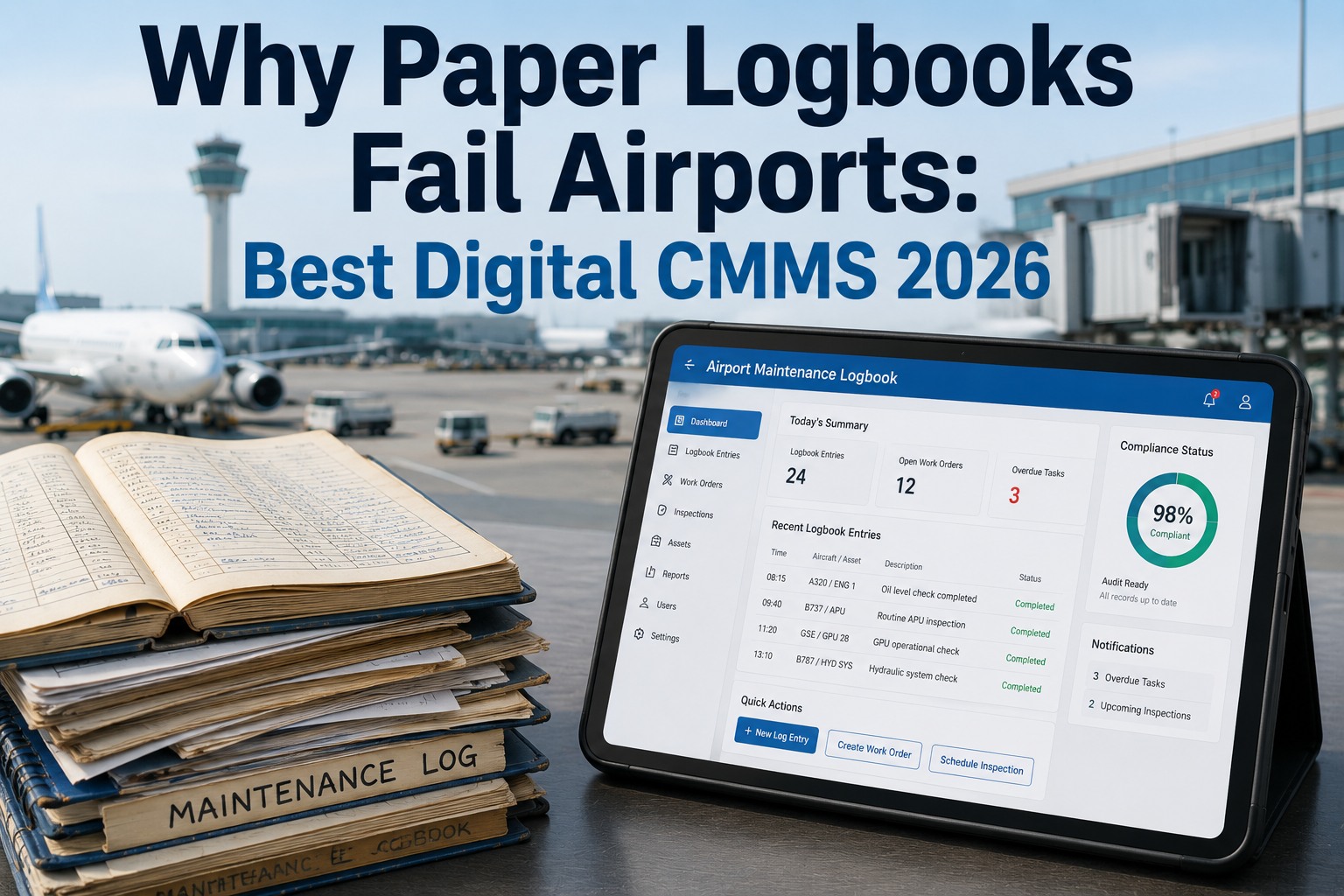
| Maintenance Strategy | Scheduled preventive maintenance, reactive repairs, paper records | Predictive analytics, digital twins, IoT monitoring, automated work orders |
| Baggage Handling | Manual sorting, human operators, high error rates | Autonomous robots, AI routing, constant flow optimization |
| Passenger Experience | Long queues, static information, one-size-fits-all service | Minimal wait times, personalized mobile updates, tailored retail recommendations |
| Decision Making | Historical data, gut instinct, delayed responses | Real-time simulation, predictive modeling, proactive scenario planning |
9. Cybersecurity and Resilient Infrastructure: Protecting Critical Systems
As airports become increasingly connected and dependent on digital systems, cybersecurity has emerged as a critical investment priority. The integration of biometric processing, IoT sensor networks, operational control systems, and passenger data platforms creates expanded attack surfaces that require sophisticated defense strategies.
Modern airport cybersecurity architectures implement zero-trust frameworks, AI-enhanced video analytics, perimeter intrusion detection systems, and continuous threat monitoring across all connected infrastructure. Strategic partnerships between technology providers and cybersecurity firms reinforce defense capabilities against escalating digital threats. Digital twin technology itself serves as a powerful cybersecurity tool, providing secure virtual environments to model cyber attack scenarios, test mitigation strategies, and validate incident response protocols without risking live operational systems.
Network resilience has become equally important. Major infrastructure upgrades strengthen connectivity redundancy and ensure continuous operations even during system failures or targeted attacks. Airports are implementing segmented networks, encrypted communications, and advanced authentication mechanisms to protect cargo tracking systems, flight operations databases, and passenger information platforms. As the sophistication of threats continues to evolve, airports recognize that cybersecurity is not a one-time implementation but an ongoing operational priority requiring constant vigilance and adaptation.
10. Extended Reality and Immersive Technologies: Training, Wayfinding, and Passenger Engagement
Extended reality technologies encompassing virtual reality, augmented reality, and mixed reality are transitioning from novelty applications to practical operational tools across training, wayfinding, maintenance, and passenger engagement. For airport operations teams, immersive technologies deliver realistic simulation environments for emergency response training, equipment operation certification, and collaborative planning exercises without the cost and risk of live drills.
Maintenance technicians use augmented reality headsets to access digital overlays showing equipment schematics, repair procedures, and diagnostic information while working hands-free on complex systems. This reduces training time for new technicians and improves accuracy for experienced staff performing infrequent specialized tasks. Virtual reality platforms enable architects and facility planners to experience proposed terminal renovations before construction begins, identifying design flaws and optimization opportunities that would be invisible in traditional 2D plans.
For passengers, augmented reality wayfinding applications overlay directional arrows and location information onto real-world terminal views through smartphone cameras, dramatically simplifying navigation in complex airport environments. Virtual lounges and immersive retail experiences create new revenue opportunities while reducing physical space requirements. As headset technology becomes lighter, more affordable, and more widely adopted, extended reality will evolve from experimental projects to standard operational tools that improve safety, efficiency, and passenger satisfaction across the entire airport ecosystem.
Key Implementation Priorities for Airport Technology Transformation
The Future of Airport Technology: What Comes Next
The airport technology landscape in 2026 represents a foundational shift from isolated digital tools to integrated intelligent ecosystems. The trends outlined above are not independent initiatives but interconnected components of comprehensive digital transformation strategies. Successful airports recognize that biometric systems generate data that feeds predictive operations centers, which coordinate with digital twins that optimize energy systems monitored by IoT sensors—creating compound value that exceeds the sum of individual technologies.
Looking ahead, the convergence of these technologies will accelerate. Agent-based AI will evolve to coordinate not just within single airports but across regional networks, optimizing passenger flows and resource allocation at ecosystem scale. Digital twins will expand from modeling individual facilities to simulating entire air traffic systems. Biometric systems will achieve true global interoperability, enabling passengers to travel internationally with a single digital identity recognized at every touchpoint.
For airport facility managers, operations directors, and infrastructure leaders, the imperative is clear: begin the digital transformation journey now with a structured, phased approach that delivers value at each stage while building toward comprehensive integration. Start with foundational technologies like CMMS platforms and asset intelligence systems that create the data infrastructure upon which advanced AI, digital twins, and predictive analytics depend. Prioritize technologies that address the highest-impact operational challenges first—typically critical asset reliability, passenger processing bottlenecks, and compliance documentation—then expand systematically as capabilities mature and ROI is proven.
The airports that thrive in the coming decade will be those that embrace technology not as a series of vendor solutions but as a strategic transformation of how airports operate at their core. The tools, platforms, and capabilities exist today. The question is not whether to digitally transform but how quickly and effectively your airport can execute the transition from legacy operations to intelligent, predictive, sustainable infrastructure that defines the future of aviation.
Begin Your Airport Digital Transformation Journey
Oxmaint provides the complete technology foundation for modern airport operations: predictive maintenance, digital asset intelligence, IoT integration, and automated compliance built into one unified platform.
Frequently Asked Questions
What are the most important airport technology trends in 2026?
The most transformative airport technology trends in 2026 include AI-driven predictive operations that anticipate problems before they occur, digital twin platforms that create virtual replicas of entire airport infrastructure, comprehensive biometric identity systems enabling paperless travel, robotics and autonomous systems automating ground operations, unified Airport Predictive Operations Centers, renewable energy microgrids achieving decarbonization targets, contactless and remote processing extending services beyond terminals, advanced IoT ecosystems connecting all airport systems, enhanced cybersecurity protecting critical infrastructure, and extended reality technologies improving training and passenger experiences.
How do digital twins improve airport operations?
Digital twins create dynamic virtual replicas of airport infrastructure and operations powered by real-time IoT sensor data. They enable airports to simulate emergencies and test responses without disrupting live operations, optimize energy consumption by tracking passenger locations and adjusting HVAC systems accordingly, predict equipment failures through continuous performance monitoring, model the impact of schedule changes before implementation, and support data-driven capital planning by providing actual asset health profiles rather than relying on arbitrary replacement schedules. This technology transforms reactive facility management into proactive, predictive optimization.
What role does artificial intelligence play in modern airport operations?
Artificial intelligence has evolved from providing suggestions to taking autonomous action through agent-based systems operating in closed-loop environments. AI predicts security checkpoint congestion 20 minutes in advance and automatically deploys resources, optimizes gate assignments and ground equipment scheduling when delays are detected, coordinates complex airside operations by analyzing real-time weather and traffic data, manages energy consumption through predictive building management systems, and enables virtual terminal expansion by optimizing passenger flow without physical construction. These capabilities shift airports from reactive crisis management to proactive operational excellence.
How are biometric systems changing the passenger experience?
Biometric identity systems enable single-token journeys where facial or iris recognition replaces physical documents throughout the entire airport process from check-in through boarding. Nearly half of airports are implementing these systems by the end of 2026, with over 250 US airports already deploying digital ID programs. Passengers move seamlessly through check-in, bag drop, security screening, lounge access, and boarding gates without repeatedly presenting credentials. Digital Travel Credentials stored on mobile devices provide verification without physical passports, while privacy-by-design frameworks ensure passenger control over biometric data. The result is dramatically reduced processing time and enhanced security.
What is the ROI timeline for airport technology investments?
Return on investment varies by technology type and implementation scope. Foundational systems like CMMS platforms and asset intelligence typically deliver positive ROI within 12 to 18 months through reduced emergency repairs and improved labor efficiency. Energy management and renewable installations show returns within 2 to 4 years through utility cost reductions and grid independence. Predictive AI systems require 12 to 24 months of data accumulation before achieving meaningful accuracy but then deliver sustained value through prevented failures and optimized maintenance. Comprehensive digital transformation programs unfold over 18 to 36 months with incremental value delivered at each phase, ensuring continuous ROI rather than waiting years for a single deployment to generate returns.
How can smaller regional airports afford advanced technology implementations?
Modern cloud-based platforms with scalable pricing make advanced airport technologies accessible to facilities of all sizes, not just major international hubs. Airports can begin with foundational CMMS implementations focused on high-criticality assets and expand incrementally as ROI is demonstrated. Subscription pricing spreads costs over time rather than requiring large capital outlays, while cloud deployment eliminates expensive on-premise server infrastructure. Many regional airports achieve rapid returns through reduced emergency repair costs, improved compliance documentation efficiency, and labor productivity gains that fund continued technology adoption. The key is phased implementation that prioritizes the highest-impact operational challenges first.