A way lube low-pressure alarm usually arrives at the worst time, mid-cycle on a long job, with the machine in feed hold and the operator waiting. Topping up the tank clears it about half the time. The other half is a clogged metering unit, a cracked line, a weak pump or the wrong oil grade, and each of those will score slideways if the alarm keeps getting reset without a fix. This guide walks through the lube system in order so the real cause gets found. Book a demo to see how lube alarms become tracked work, or start free.
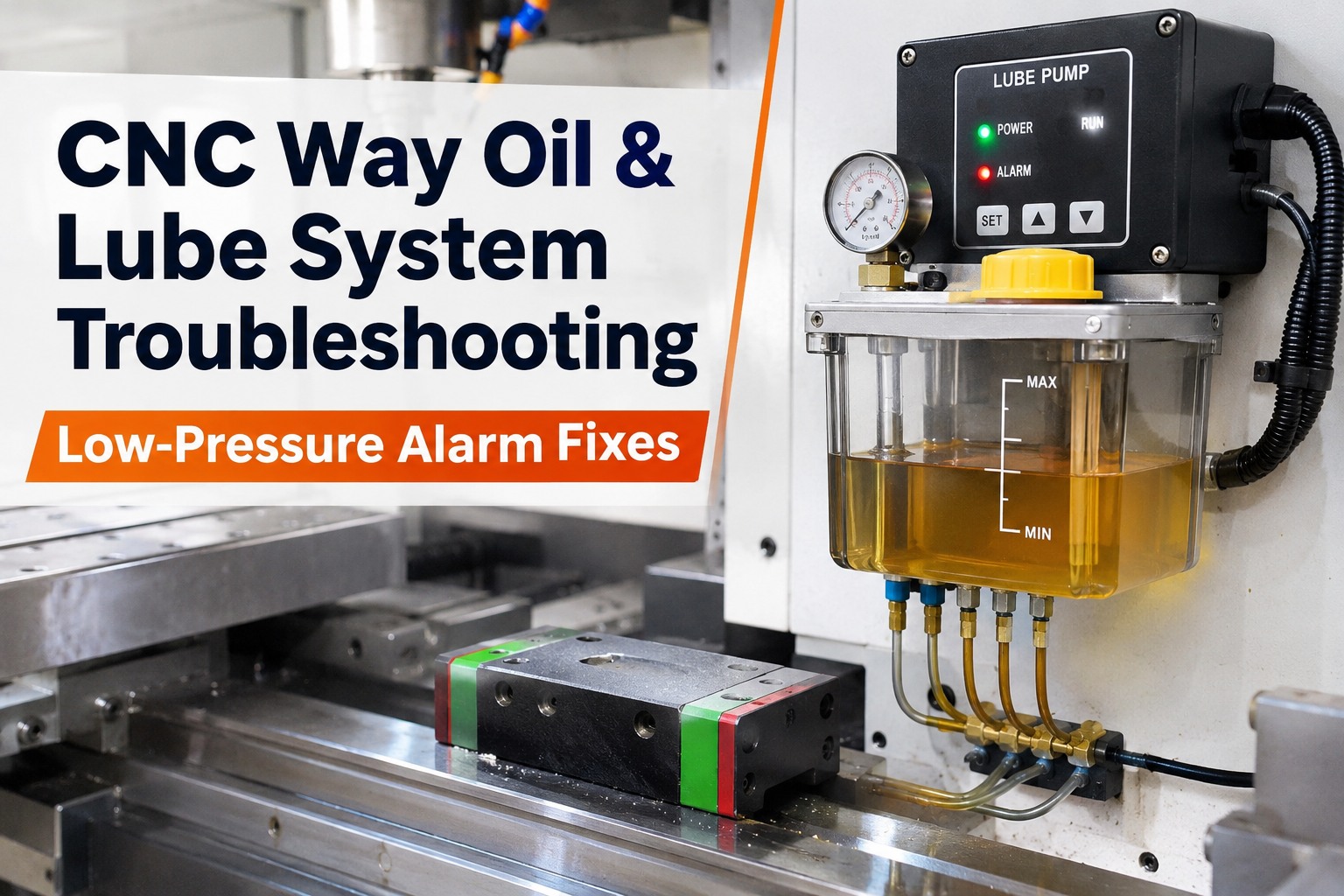
CNC Way Oil & Lube System Troubleshooting: Low-Pressure Alarm Fixes
A step-by-step path from the low-pressure alarm to the root cause, covering tank, pump, filter, lines, metering units and oil grade.
How a CNC Way Lube System Works
Most machining centers use a centralized system: a pump draws way oil from a tank, pushes it through a filter and main line to metering units or distributor blocks, and each meter delivers a measured shot to a slideway, carriage or ball screw nut. A pressure switch confirms the line reached pressure on each cycle. If pressure does not build in time, the control raises a lube alarm.
Wrong Oil, Wrong Result
- Using hydraulic oil in the way lube tank
- Mixing grades from different suppliers
- Resetting the alarm without finding the cause
- Ignoring oil that ends up in the coolant
- Use the grade the machine builder specifies
- Label tanks and keep one grade per machine
- Treat every repeat alarm as a work order
- Track oil consumption per machine over time
Stop Resetting the Same Lube Alarm
Log each lube fault as a work order with a failure code in Oxmaint AI, so repeat causes show up in the history.
Turning Lube Problems Into Records
| Event | What Oxmaint AI does |
|---|---|
| Weekly lube check fails | A failed inspection item opens a high-priority work order |
| Reading over its alarm limit | Opens a work order, or drafts one for a planner to approve, watch or decline |
| Repair done | As-found, as-left and failure code recorded on completion |
| Work order closed | Asset history written automatically |
| Oil and meters used | Parts forecast updated from actual usage |
Repeated lube alarms are a symptom, not a fault. Treat every repeat as a work order with a failure code and the history will show whether the problem is the pump, the meters, the lines or the oil being used.
Frequently Asked Questions
Fix the Cause, Not Just the Alarm
Track every lube fault with a failure code and see which machines need attention.